THE ADVENTURE COLLECTIVE® · Independent discovery and booking for outdoor travel

Walk the ramparts and streets of San Marino with a private guide who stitches together medieval defenses, civic architecture and cliffside views. This two‑hour tour focuses on towers, the basilica and living traditions that keep Europe’s oldest republic vivid.
Walk the ramparts and streets of San Marino with a private guide who stitches together medieval defenses, civic architecture and cliffside views. This two‑hour tour focuses on towers, the basilica and living traditions that keep Europe’s oldest republic vivid.
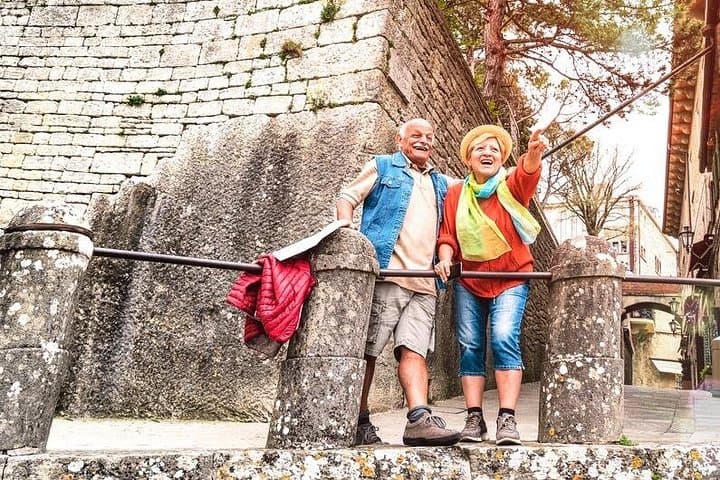
You step through Porta San Francesco and the modern world slips away—the road narrows, stone underfoot smooth from centuries of footsteps, and the towers of Mount Titano rise like watchful guardians.
Verified experiences and guided adventures in the surrounding area.
Operated by Opatrip.com Lithuania · San Marino, N/A
You step through Porta San Francesco and the modern world slips away—the road narrows, stone underfoot smooth from centuries of footsteps, and the towers of Mount Titano rise like watchful guardians.
This two-hour private walk threads together civic pride and medieval defense: the Palazzo Pubblico's neo‑renaissance façade, the Basilica's sober altars, and the three towers—Guaita and Falesia among them—that once readied the republic for battle. Geologically, Mount Titano is an exposed limestone ridge whose cliffs shape the town’s dramatic outlooks and give those towers their commanding lines. Culturally, San Marino retains rituals tied to its founding by Saint Marinus in the 4th century and a civic identity that predates many European states.
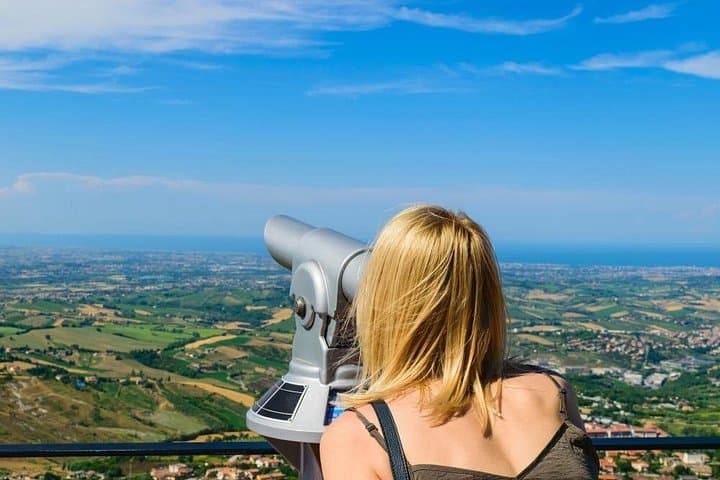
The guide narrates sieges and statutes as you climb narrow lanes and pass the Crossbowmen’s Quarry, where living traditions—flag‑throwing, crossbow practice—still animate public festivals. Expect close views from ramparts, museum displays of arms in Falesia, and quick photo stops with sweeping panoramas over the Adriatic plain toward Rimini.
Practical notes: cobbles and steps dominate—sturdy shoes and 1–1.5 liters of water are basic. Midday in summer gets hot and crowded; early morning or late afternoon reduces heat and tour bus traffic. Carry ID (San Marino is a microstate) and wear a light layer for wind on exposed terraces. Tickets are mobile; this private format means the guide times stops to match your pace, but accessibility is limited in the oldest sections.
With a little preparation you trade a compact itinerary for layered history, cliffside viewpoints, and the sense of walking a republic that has kept its own course for over sixteen centuries.
This private walking tour visits exterior viewpoints and some museums but entrance fees for specific museums may not be included—confirm when booking.
Meeting is typically at Porta San Francesco or a nearby agreed point in the historic center; the guide confirms the exact meeting location on booking.
Much of the oldest center has steep steps and narrow alleys; the tour is not fully accessible—contact the operator to discuss alternatives or partial routes.
There’s no routine border control between Italy and San Marino, but you should carry a passport or national ID for identification and any museum policies.
Opatrip.com Lithuania operates guided outdoor trips and adventures with an emphasis on safety, stewardship, and memorable experiences.
You step through Porta San Francesco and the modern world slips away—the road narrows, stone underfoot smooth from centuries of footsteps, and the towers of Mount Titano rise like watchful guardians.
You step through Porta San Francesco and the modern world slips away—the road narrows, stone underfoot smooth from centuries of footsteps, and the towers of Mount Titano rise like watchful guardians.
This two-hour private walk threads together civic pride and medieval defense: the Palazzo Pubblico's neo‑renaissance façade, the Basilica's sober altars, and the three towers—Guaita and Falesia among them—that once readied the republic for battle. Geologically, Mount Titano is an exposed limestone ridge whose cliffs shape the town’s dramatic outlooks and give those towers their commanding lines. Culturally, San Marino retains rituals tied to its founding by Saint Marinus in the 4th century and a civic identity that predates many European states.
The guide narrates sieges and statutes as you climb narrow lanes and pass the Crossbowmen’s Quarry, where living traditions—flag‑throwing, crossbow practice—still animate public festivals. Expect close views from ramparts, museum displays of arms in Falesia, and quick photo stops with sweeping panoramas over the Adriatic plain toward Rimini.
Practical notes: cobbles and steps dominate—sturdy shoes and 1–1.5 liters of water are basic. Midday in summer gets hot and crowded; early morning or late afternoon reduces heat and tour bus traffic. Carry ID (San Marino is a microstate) and wear a light layer for wind on exposed terraces. Tickets are mobile; this private format means the guide times stops to match your pace, but accessibility is limited in the oldest sections.
With a little preparation you trade a compact itinerary for layered history, cliffside viewpoints, and the sense of walking a republic that has kept its own course for over sixteen centuries.