THE ADVENTURE COLLECTIVE® · Independent discovery and booking for outdoor travel

Begin your visit to Angkor with a private airport pickup that moves at your pace — arrive for sunrise, skip lines, and explore Angkor Wat, Ta Prohm and Bayon with flexible timing and local insight. Practical tips cover passes, dress and hydration.
Begin your visit to Angkor with a private airport pickup that moves at your pace — arrive for sunrise, skip lines, and explore Angkor Wat, Ta Prohm and Bayon with flexible timing and local insight. Practical tips cover passes, dress and hydration.
You step from the humid airport air into the calm efficiency of a driver holding a name card — the beginning of a day that moves at your pace. The road from Siem Reap airport threads through rice paddies and small villages; palms lean like watchful guides as you head toward the low, horizon-dominating towers of Angkor.
Verified experiences and guided adventures in the surrounding area.
Operated by Siemreap Pick_up Drop_off Service · Siem Reap, Siem Reap Province
You step from the humid airport air into the calm efficiency of a driver holding a name card — the beginning of a day that moves at your pace. The road from Siem Reap airport threads through rice paddies and small villages; palms lean like watchful guides as you head toward the low, horizon-dominating towers of Angkor.
Angkor’s monuments were carved from sandstone and laterite during the Khmer Empire (9th–15th centuries), a civilization that engineered vast reservoirs and road systems across this flat alluvial plain. Angkor Wat’s galleries and bas-reliefs narrate gods, kings and daily life; nearby Ta Prohm wears its roots and ruins in equal measure, an intimate reminder of nature reclaiming human work. Local village markets and Khmer cuisine are part of the cultural fabric around the temples — expect friendly vendors, rice-field views and cyclists ferrying goods along dusty lanes.
Operationally, a private pickup/drop-off gives flexibility: arrive for sunrise, shuttle between Angkor Wat, Bayon and Ta Prohm, and return to Siem Reap without waiting for public transfers. Practicalities matter — Angkor Pass (day or multi-day) is required for temple entry, and mornings are cooler and less crowded. Dress respectfully: shoulders and knees should be covered. Footwear should handle uneven stone and heat-warped steps; bring sun protection and plenty of water. Tipping drivers and guides is customary; cash (riel or USD) is widely accepted. If you prefer a tailored pace — longer at a single ruin, a stop in a village, or a photography-focused morning — a private service lets you set that rhythm.
This is a land-anchored day: low elevation, easy roads, high cultural and visual payoff.
Yes — all visitors require an Angkor Pass (day, 3-day, or week options) to enter the main temple zones; purchase at the official ticket center or arrange in advance.
The service typically includes an English-speaking driver; a licensed guide can be requested or added if you want interpretive history and art explanations.
Yes — this private pickup/drop-off service can meet you at Siem Reap–Angkor International Airport or hotels within Siem Reap, with flight details collected in advance.
A full day covers Angkor Wat, Bayon (Angkor Thom) and Ta Prohm comfortably; multi-day passes let you explore more remote temples at a relaxed pace.
Siemreap Pick_up Drop_off Service operates guided outdoor trips and adventures with an emphasis on safety, stewardship, and memorable experiences.



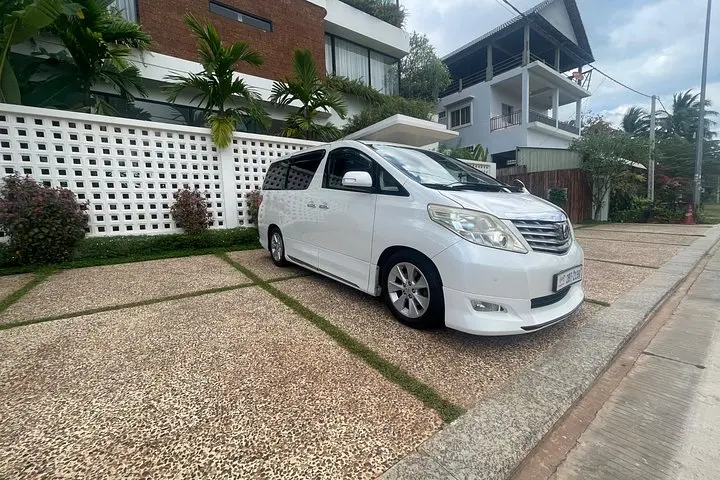
You step from the humid airport air into the calm efficiency of a driver holding a name card — the beginning of a day that moves at your pace. The road from Siem Reap airport threads through rice paddies and small villages; palms lean like watchful guides as you head toward the low, horizon-dominating towers of Angkor.
You step from the humid airport air into the calm efficiency of a driver holding a name card — the beginning of a day that moves at your pace. The road from Siem Reap airport threads through rice paddies and small villages; palms lean like watchful guides as you head toward the low, horizon-dominating towers of Angkor.
Angkor’s monuments were carved from sandstone and laterite during the Khmer Empire (9th–15th centuries), a civilization that engineered vast reservoirs and road systems across this flat alluvial plain. Angkor Wat’s galleries and bas-reliefs narrate gods, kings and daily life; nearby Ta Prohm wears its roots and ruins in equal measure, an intimate reminder of nature reclaiming human work. Local village markets and Khmer cuisine are part of the cultural fabric around the temples — expect friendly vendors, rice-field views and cyclists ferrying goods along dusty lanes.
Operationally, a private pickup/drop-off gives flexibility: arrive for sunrise, shuttle between Angkor Wat, Bayon and Ta Prohm, and return to Siem Reap without waiting for public transfers. Practicalities matter — Angkor Pass (day or multi-day) is required for temple entry, and mornings are cooler and less crowded. Dress respectfully: shoulders and knees should be covered. Footwear should handle uneven stone and heat-warped steps; bring sun protection and plenty of water. Tipping drivers and guides is customary; cash (riel or USD) is widely accepted. If you prefer a tailored pace — longer at a single ruin, a stop in a village, or a photography-focused morning — a private service lets you set that rhythm.
This is a land-anchored day: low elevation, easy roads, high cultural and visual payoff.