THE ADVENTURE COLLECTIVE® · Independent discovery and booking for outdoor travel

See the Ruhrgebiet from a private airplane: winding rivers, reclaimed industrial sites and lakes laid out beneath you. This short aerial tour from Dortmund offers big views with minimal effort — plan for weather, weight limits and a pilot‑led route.
See the Ruhrgebiet from a private airplane: winding rivers, reclaimed industrial sites and lakes laid out beneath you. This short aerial tour from Dortmund offers big views with minimal effort — plan for weather, weight limits and a pilot‑led route.
You taxi onto a short grass strip, engines warm, and the Ruhr valley spreads beneath like a living map: winding rivers cutting through former industrial fields, lake mirrors catching the sun, and textile towns hunched along rail lines. From a small private aircraft the scale shifts — slag heaps shrink, the grid of streets becomes pattern, and the Ruhr River dares you to follow its meanders from above.
Verified experiences and guided adventures in the surrounding area.
You taxi onto a short grass strip, engines warm, and the Ruhr valley spreads beneath like a living map: winding rivers cutting through former industrial fields, lake mirrors catching the sun, and textile towns hunched along rail lines. From a small private aircraft the scale shifts — slag heaps shrink, the grid of streets becomes pattern, and the Ruhr River dares you to follow its meanders from above.
The Ruhrgebiet is Germany’s industrial heartland, forged in 19th‑ and 20th‑century coal and steel. The landscape reflects geology and history: coal seams that drove rapid urbanization, river corridors that carried goods, and reclaimed brownfields now hosting parks, lakes and cultural sites such as the Zollverein Coal Mine. Flights reveal how industry, water and urban growth interlock across North Rhine‑Westphalia.
Culturally, local pilots often share personal stories of airfields, postwar rebuilding and the region’s evolving identity — a mix of grit, resilience and creative reuse. Geographically, expect sweeping views of the Ruhr and Emscher systems, Baldeneysee, and the patchwork of green corridors that now thread former industrial zones.
Practically, flights are private, planned with your pilot and limited to about four hours total; most guests book 30–90 minute windows for maximum payoff. Bring windproof layers, ear protection and a camera with a fast shutter. Listen closely during preflight briefings about weight limits, safety procedures and low‑altitude rules over populated areas. Weather determines go/no‑go — mornings and late afternoons often offer the calmest air and best light. For a low‑effort but high‑impact perspective on the Ruhr, a short private flight is hard to beat.
Departure airfield is selected based on pilot and aircraft availability; you’ll be matched after booking and given the confirmed meeting point.
Yes — small private aircraft have strict weight and seating limits. Provide accurate passenger weights when booking to ensure safe aircraft loading.
Flights are subject to cancellation or rescheduling for safety if winds, visibility, or cloud ceiling are outside safe limits; operators typically offer alternate dates.
Yes — pilots commonly act as guides and can tailor the route to highlight sites like Baldeneysee, Zollverein, and reclaimed industrial parks where permitted by airspace rules.
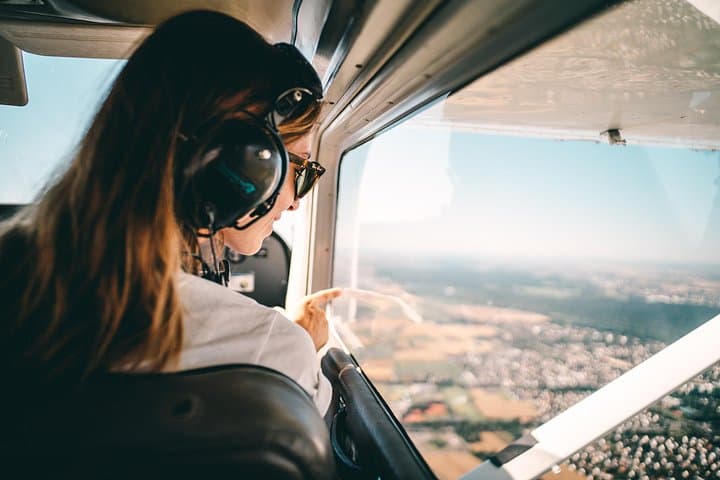
You taxi onto a short grass strip, engines warm, and the Ruhr valley spreads beneath like a living map: winding rivers cutting through former industrial fields, lake mirrors catching the sun, and textile towns hunched along rail lines. From a small private aircraft the scale shifts — slag heaps shrink, the grid of streets becomes pattern, and the Ruhr River dares you to follow its meanders from above.
You taxi onto a short grass strip, engines warm, and the Ruhr valley spreads beneath like a living map: winding rivers cutting through former industrial fields, lake mirrors catching the sun, and textile towns hunched along rail lines. From a small private aircraft the scale shifts — slag heaps shrink, the grid of streets becomes pattern, and the Ruhr River dares you to follow its meanders from above.
The Ruhrgebiet is Germany’s industrial heartland, forged in 19th‑ and 20th‑century coal and steel. The landscape reflects geology and history: coal seams that drove rapid urbanization, river corridors that carried goods, and reclaimed brownfields now hosting parks, lakes and cultural sites such as the Zollverein Coal Mine. Flights reveal how industry, water and urban growth interlock across North Rhine‑Westphalia.
Culturally, local pilots often share personal stories of airfields, postwar rebuilding and the region’s evolving identity — a mix of grit, resilience and creative reuse. Geographically, expect sweeping views of the Ruhr and Emscher systems, Baldeneysee, and the patchwork of green corridors that now thread former industrial zones.
Practically, flights are private, planned with your pilot and limited to about four hours total; most guests book 30–90 minute windows for maximum payoff. Bring windproof layers, ear protection and a camera with a fast shutter. Listen closely during preflight briefings about weight limits, safety procedures and low‑altitude rules over populated areas. Weather determines go/no‑go — mornings and late afternoons often offer the calmest air and best light. For a low‑effort but high‑impact perspective on the Ruhr, a short private flight is hard to beat.