THE ADVENTURE COLLECTIVE® · Independent discovery and booking for outdoor travel

A private, half-day to full-day loop from Reykjavík that visits Hraunfossar and Barnafoss, Europe's powerful Deildartunguhver hot spring, and the historic site of Reykholt. Expect dramatic geology, local folklore, and practical stops at accessible viewpoints.
A private, half-day to full-day loop from Reykjavík that visits Hraunfossar and Barnafoss, Europe's powerful Deildartunguhver hot spring, and the historic site of Reykholt. Expect dramatic geology, local folklore, and practical stops at accessible viewpoints.
A cold wind from the Atlantic trims the air as your private vehicle slips west out of Reykjavík and into the low, lava-carved valleys of Borgarfjörður. Within an hour the landscape changes: black lava fields smear the horizon, steam vents puncture greenhouses, and the river widens where water finds cracks in ancient rock.
Verified experiences and guided adventures in the surrounding area.
Operated by Iceland Paradise Tours · Reykjavik, Capital Region
A cold wind from the Atlantic trims the air as your private vehicle slips west out of Reykjavík and into the low, lava-carved valleys of Borgarfjörður. Within an hour the landscape changes: black lava fields smear the horizon, steam vents puncture greenhouses, and the river widens where water finds cracks in ancient rock.
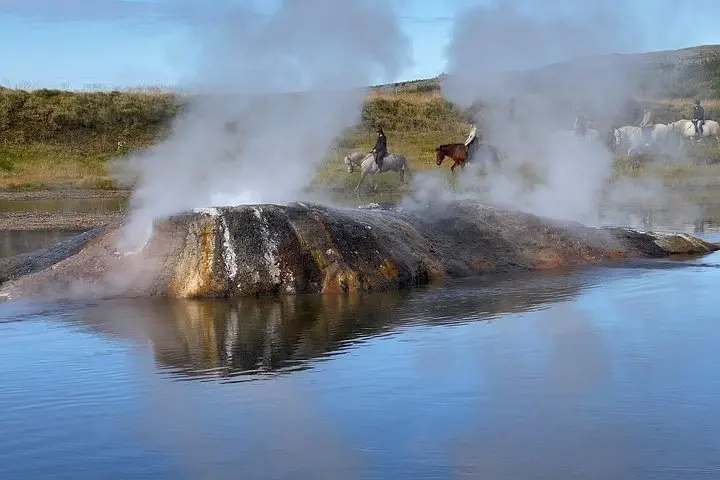
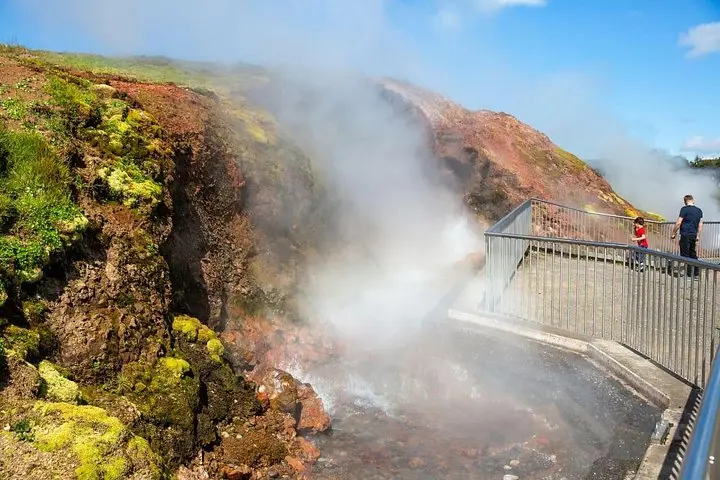
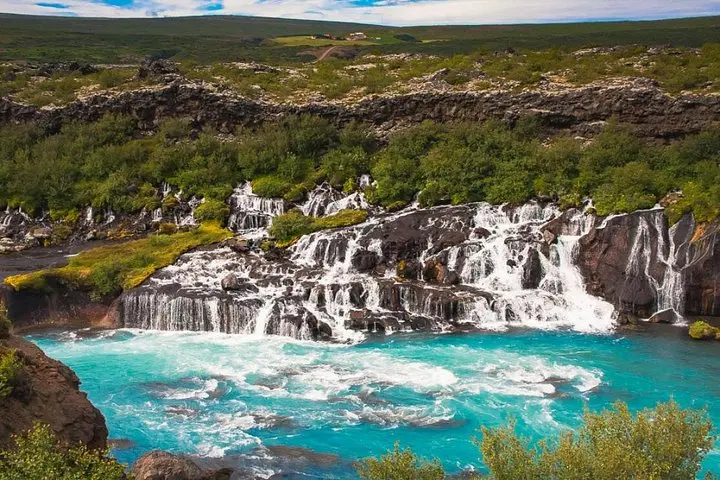
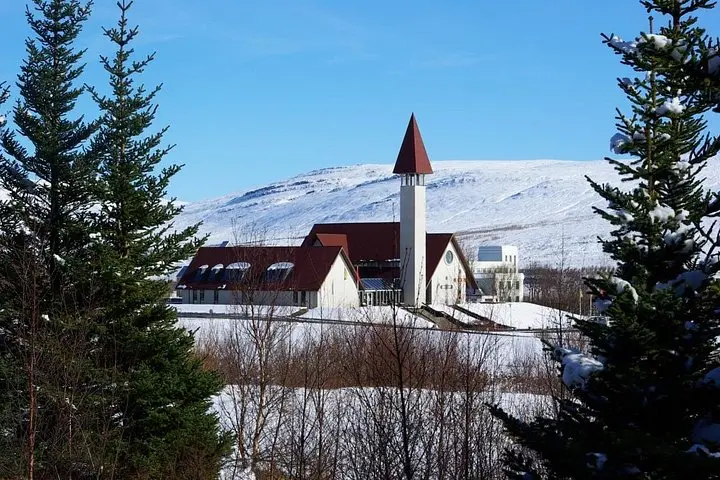
The tour stops first at Hraunfossar, where dozens of small rivulets pour from a lava field into the Hvítá—water seeming to appear from the rock itself. Nearby Barnafoss offers a sharper, more violent contrast; its churning rapids and narrow gorge carry a local folktale about a lost stone bridge and two children. Deildartunguhver, Europe’s most powerful hot spring, demonstrates Iceland’s geothermal plumbing—boiling water at massive flow rates that have long heated regional towns and greenhouses. The day finishes at Reykholt, once home to medieval scholar Snorri Sturluson; here a compact cultural site connects literature, law, and the pragmatic use of hot springs for daily life.
Geology is constant company: recent lava flows, columnar basalt, and visible geothermal alteration mark the route. Cultural touches—hand-built turf houses, greenhouse-grown vegetables, the quiet of sheep-dotted farms—add texture without distraction.
Practical notes: the full private loop runs about 5–7 hours with modest walking at viewpoints; footwear with good traction and windproof layers make the day comfortable. Expect gravel paths, short staircases, and variable weather—plan for rain and sun in a single afternoon. Photography windows are frequent; keep cameras dry and batteries warm.
Tours typically last 5–7 hours and include private pick-up and drop-off in Reykjavík with air-conditioned transport.
Many viewpoints are accessible and transport is wheelchair-accessible, but some paths and short staircases at waterfall lookouts may be challenging—confirm needs when booking.
Icelandic weather is changeable—bring layers, waterproofs, and check wind forecasts; summers are milder, while shoulder seasons can be windy and cool.
Iceland Paradise Tours operates guided outdoor trips and adventures with an emphasis on safety, stewardship, and memorable experiences.
A cold wind from the Atlantic trims the air as your private vehicle slips west out of Reykjavík and into the low, lava-carved valleys of Borgarfjörður. Within an hour the landscape changes: black lava fields smear the horizon, steam vents puncture greenhouses, and the river widens where water finds cracks in ancient rock.
A cold wind from the Atlantic trims the air as your private vehicle slips west out of Reykjavík and into the low, lava-carved valleys of Borgarfjörður. Within an hour the landscape changes: black lava fields smear the horizon, steam vents puncture greenhouses, and the river widens where water finds cracks in ancient rock.
The tour stops first at Hraunfossar, where dozens of small rivulets pour from a lava field into the Hvítá—water seeming to appear from the rock itself. Nearby Barnafoss offers a sharper, more violent contrast; its churning rapids and narrow gorge carry a local folktale about a lost stone bridge and two children. Deildartunguhver, Europe’s most powerful hot spring, demonstrates Iceland’s geothermal plumbing—boiling water at massive flow rates that have long heated regional towns and greenhouses. The day finishes at Reykholt, once home to medieval scholar Snorri Sturluson; here a compact cultural site connects literature, law, and the pragmatic use of hot springs for daily life.
Geology is constant company: recent lava flows, columnar basalt, and visible geothermal alteration mark the route. Cultural touches—hand-built turf houses, greenhouse-grown vegetables, the quiet of sheep-dotted farms—add texture without distraction.
Practical notes: the full private loop runs about 5–7 hours with modest walking at viewpoints; footwear with good traction and windproof layers make the day comfortable. Expect gravel paths, short staircases, and variable weather—plan for rain and sun in a single afternoon. Photography windows are frequent; keep cameras dry and batteries warm.