THE ADVENTURE COLLECTIVE® · Independent discovery and booking for outdoor travel
Skip the entrance line and move past the crowds into the gilded heart of Les Invalides. This private two-hour tour pairs close-up access to Napoleon’s tomb with focused context on France’s military past.
Skip the entrance line and move past the crowds into the gilded heart of Les Invalides. This private two-hour tour pairs close-up access to Napoleon’s tomb with focused context on France’s military past.
The first view is the dome itself — a gilded crown visible from the Seine, catching light as you approach the Place des Invalides. Your guide meets you at the main northern gate; footsteps and a murmur of voices become the background as you step into the broad courtyard where veterans once assembled under Louis XIV’s orders.
Verified experiences and guided adventures in the surrounding area.
Operated by Babylon Tours Paris · Paris, Île-de-France
The first view is the dome itself — a gilded crown visible from the Seine, catching light as you approach the Place des Invalides. Your guide meets you at the main northern gate; footsteps and a murmur of voices become the background as you step into the broad courtyard where veterans once assembled under Louis XIV’s orders.
The building began in the 1670s as a hospital and retirement home for soldiers, commissioned by the Sun King to organize care for wounded troops. Centuries of military history gather here: baroque architecture that frames medals and muskets, galleries that track France through revolution, empire, and two world wars. Geology is subtle but present — the stone façades carved from regional limestone that has weathered Parisian rains and time, while the gold leaf of the dome speaks to imperial ambition.
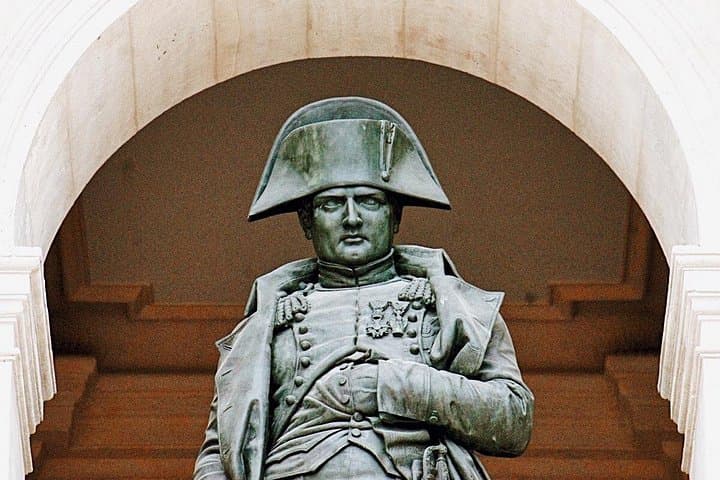
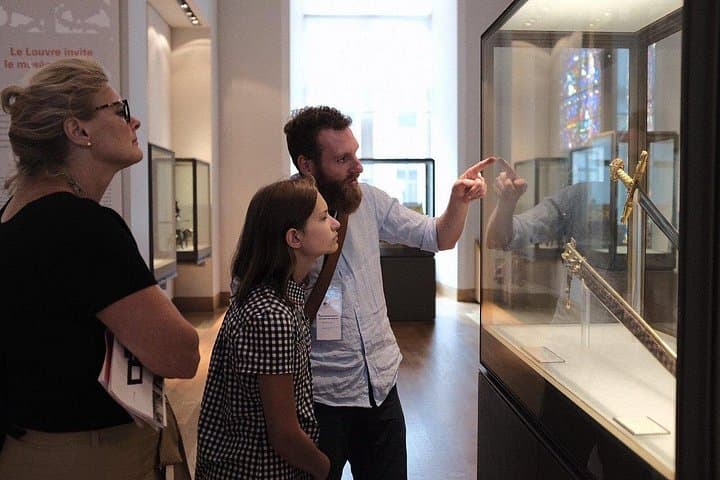
Culturally, the Invalides is both tomb and museum: Napoleon’s resting place under the dome, regimental flags, and cabinets of arms that reveal military craft and ceremony. Expect close-up artifacts — uniforms, maps, and model ships — and rooms with quiet rules where your guide will lower voices out of respect.
Practical guidance: arrive 10 minutes early, carry only a small bag, and be prepared for 60–90 minutes of walking and standing across polished stone floors and occasional stairs. Public transit puts you a short walk from the gate and wheelchair access is available for private bookings. Photography rules vary by room; follow your guide’s directions.
This two-hour guided visit is concise but deep — a tightly paced survey of France’s martial past with context that links objects to the people who made history.
Yes — the tour includes priority entrance, though security checks may still create brief queues; arrive on time to maximize skip-the-line benefit.
Wheelchair-friendly access is available but only for private tours; notify the operator in advance so arrangements can be made.
No large suitcases are permitted through security; small handbags and thin daypacks are accepted — check restrictions before you arrive.
Occasional closures occur; operators will provide an alternative if the museum opening is delayed more than one hour, but refunds are not guaranteed for partial closures.
Babylon Tours Paris operates guided outdoor trips and adventures with an emphasis on safety, stewardship, and memorable experiences.


The first view is the dome itself — a gilded crown visible from the Seine, catching light as you approach the Place des Invalides. Your guide meets you at the main northern gate; footsteps and a murmur of voices become the background as you step into the broad courtyard where veterans once assembled under Louis XIV’s orders.
The first view is the dome itself — a gilded crown visible from the Seine, catching light as you approach the Place des Invalides. Your guide meets you at the main northern gate; footsteps and a murmur of voices become the background as you step into the broad courtyard where veterans once assembled under Louis XIV’s orders.
The building began in the 1670s as a hospital and retirement home for soldiers, commissioned by the Sun King to organize care for wounded troops. Centuries of military history gather here: baroque architecture that frames medals and muskets, galleries that track France through revolution, empire, and two world wars. Geology is subtle but present — the stone façades carved from regional limestone that has weathered Parisian rains and time, while the gold leaf of the dome speaks to imperial ambition.
Culturally, the Invalides is both tomb and museum: Napoleon’s resting place under the dome, regimental flags, and cabinets of arms that reveal military craft and ceremony. Expect close-up artifacts — uniforms, maps, and model ships — and rooms with quiet rules where your guide will lower voices out of respect.
Practical guidance: arrive 10 minutes early, carry only a small bag, and be prepared for 60–90 minutes of walking and standing across polished stone floors and occasional stairs. Public transit puts you a short walk from the gate and wheelchair access is available for private bookings. Photography rules vary by room; follow your guide’s directions.
This two-hour guided visit is concise but deep — a tightly paced survey of France’s martial past with context that links objects to the people who made history.
