THE ADVENTURE COLLECTIVE® · Independent discovery and booking for outdoor travel

A full-day private drive along Iceland’s South Coast that pairs iconic waterfalls and black-sand beaches with a guided glacier approach to the Katla ice cave. Expect dramatic vistas, easy stops, and a guide-led cave experience requiring basic mobility.
A full-day private drive along Iceland’s South Coast that pairs iconic waterfalls and black-sand beaches with a guided glacier approach to the Katla ice cave. Expect dramatic vistas, easy stops, and a guide-led cave experience requiring basic mobility.
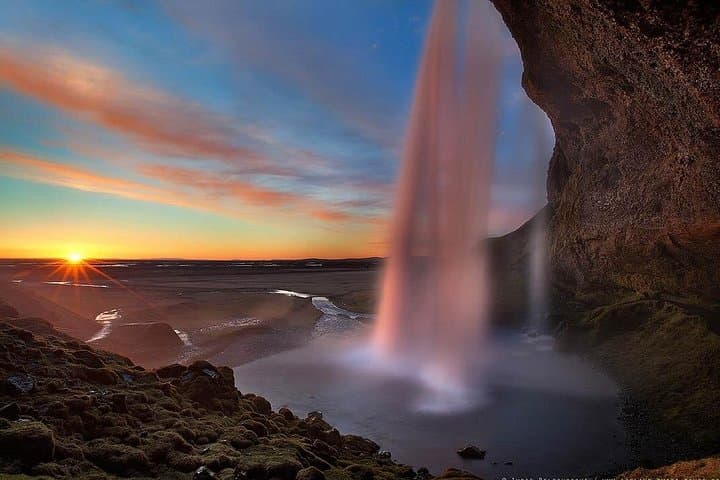
You leave Reykjavík before dawn and the road unspools east: low clouds skim the bonnet, cliffs and waterfalls alternating like punctuation. Seljalandsfoss greets you first, a curtain you can step behind as cold spray draws a line across your lens. A short scramble through a narrow creek reveals a hidden falls—Gljúfrabúi—its mossy throat offering quiet contrast to the broad, thunderous drop of Skógafoss where 527 steps climb to a wind-scrubbed ridge and a wide view of coastline and glacier.
Verified experiences and guided adventures in the surrounding area.
Operated by Gravel Travel · Vík, Southern Region
You leave Reykjavík before dawn and the road unspools east: low clouds skim the bonnet, cliffs and waterfalls alternating like punctuation. Seljalandsfoss greets you first, a curtain you can step behind as cold spray draws a line across your lens. A short scramble through a narrow creek reveals a hidden falls—Gljúfrabúi—its mossy throat offering quiet contrast to the broad, thunderous drop of Skógafoss where 527 steps climb to a wind-scrubbed ridge and a wide view of coastline and glacier.
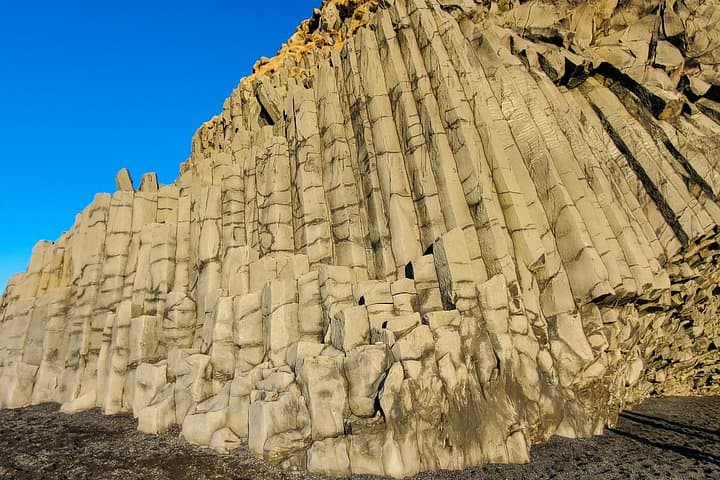
The geology of the south coast is live history: black sand born of basalt flows and explosive eruptions, and the slow, opaque mass of Mýrdalsjökull above it, hiding the Katla volcano whose occasional rumblings shaped settlement patterns here. Vik’s compact harbor sits beneath cliffs that host puffins in summer and Icelandic horses in fields dusted with lupine when it blooms.
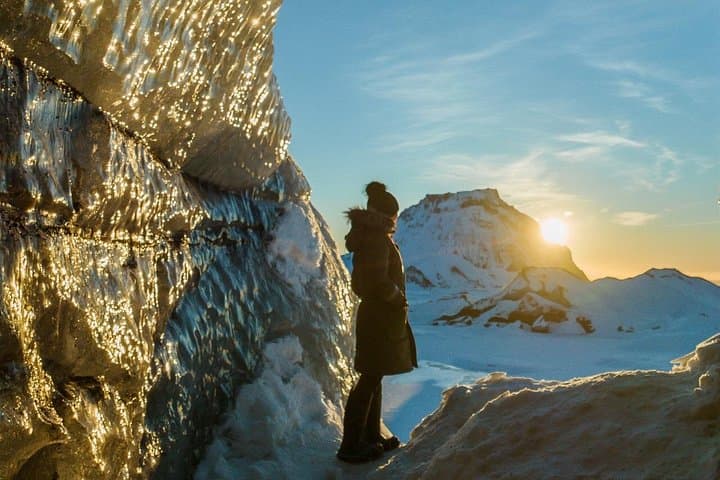
Your guide leads a glacier approach to an ice cave at Kötlujökull, where blue and black ice form striated vaults; crampons and helmets are standard and the cave is transient—conditions change seasonally.
Practical edge: dress in waterproof layers, expect wind and spray, and carry a small daypack with water and spare gloves. Photography rewards patient framing but respect restriction zones on the black beaches—sneaker waves are real. The tour balances short walks with wheelchair/stroller-accessible viewing at some stops, but the ice cave and cliff-top vantage require steady footing.
This is a full-day loop of elemental Iceland—water daring you closer, glaciers reshaping the horizon—best experienced with a local guide who reads the weather as carefully as the map.
No—guided ice-cave visits include safety equipment and instruction; you need basic mobility and to follow the guide’s directions.
Yes—private tours typically include pickup and drop-off from Reykjavík; confirm your pickup point when booking.
Beaches are accessible but keep children well back from the surf due to sneaker waves and strong currents.
Some viewing areas and waterfall approaches are stroller-accessible, but the ice cave and certain stairs are not wheelchair-friendly.
Gravel Travel operates guided outdoor trips and adventures with an emphasis on safety, stewardship, and memorable experiences.

You leave Reykjavík before dawn and the road unspools east: low clouds skim the bonnet, cliffs and waterfalls alternating like punctuation. Seljalandsfoss greets you first, a curtain you can step behind as cold spray draws a line across your lens. A short scramble through a narrow creek reveals a hidden falls—Gljúfrabúi—its mossy throat offering quiet contrast to the broad, thunderous drop of Skógafoss where 527 steps climb to a wind-scrubbed ridge and a wide view of coastline and glacier.
You leave Reykjavík before dawn and the road unspools east: low clouds skim the bonnet, cliffs and waterfalls alternating like punctuation. Seljalandsfoss greets you first, a curtain you can step behind as cold spray draws a line across your lens. A short scramble through a narrow creek reveals a hidden falls—Gljúfrabúi—its mossy throat offering quiet contrast to the broad, thunderous drop of Skógafoss where 527 steps climb to a wind-scrubbed ridge and a wide view of coastline and glacier.
The geology of the south coast is live history: black sand born of basalt flows and explosive eruptions, and the slow, opaque mass of Mýrdalsjökull above it, hiding the Katla volcano whose occasional rumblings shaped settlement patterns here. Vik’s compact harbor sits beneath cliffs that host puffins in summer and Icelandic horses in fields dusted with lupine when it blooms.
Your guide leads a glacier approach to an ice cave at Kötlujökull, where blue and black ice form striated vaults; crampons and helmets are standard and the cave is transient—conditions change seasonally.
Practical edge: dress in waterproof layers, expect wind and spray, and carry a small daypack with water and spare gloves. Photography rewards patient framing but respect restriction zones on the black beaches—sneaker waves are real. The tour balances short walks with wheelchair/stroller-accessible viewing at some stops, but the ice cave and cliff-top vantage require steady footing.
This is a full-day loop of elemental Iceland—water daring you closer, glaciers reshaping the horizon—best experienced with a local guide who reads the weather as carefully as the map.