THE ADVENTURE COLLECTIVE® · Independent discovery and booking for outdoor travel

Walk Stone Town’s labyrinth of carved doors, coral-stone alleys and market stalls with a private guide who connects city scenes to two centuries of Indian Ocean trade. This 3‑hour tour balances cultural context with practical routing for visitors.
Walk Stone Town’s labyrinth of carved doors, coral-stone alleys and market stalls with a private guide who connects city scenes to two centuries of Indian Ocean trade. This 3‑hour tour balances cultural context with practical routing for visitors.
The alley opens like a dictionary of weathered wood and carved metal—each door a paragraph, each narrow street an argument between shade and ocean breeze. A private walking tour of Stone Town threads you through lanes so tight the day feels redistributed into cool pockets; voices, spice stalls and the surf at the harbor push and pull as you move.
Verified experiences and guided adventures in the surrounding area.
Operated by COASTLINE TOURS AND TRAVEL · Stone Town, Zanzibar
The alley opens like a dictionary of weathered wood and carved metal—each door a paragraph, each narrow street an argument between shade and ocean breeze. A private walking tour of Stone Town threads you through lanes so tight the day feels redistributed into cool pockets; voices, spice stalls and the surf at the harbor push and pull as you move.
Stone Town is a port-city built by trade: Omani sultans, Portuguese occupiers and Swahili merchants shaped its coral-stone buildings and layered architecture. The House of Wonders (Beit-al-Ajaib), the Old Fort and the Anglican Cathedral mark stages of that history—from ivory and clove trade to the grim business of the 19th-century slave market.
Geology here is literal: coral rag walls cut from reef, porous and pale, hold centuries of salt and sun. Culture feels immediate—mosques, churches and temples stand block-to-block, and local markets hum with fishmongers and spice sellers who still measure by hand.
For travelers, this is a walk of observation and context. A guide will point to carved Indian-influenced doors, tell the story of the slave market memorials and lead you to rooftop viewpoints where the harbor and the ocean trade still converse. Expect uneven flagstones, narrow gutters and shaded courtyards.
Practical notes: wear closed-toe shoes, carry sun protection and a refillable water bottle, and plan the route for morning or late afternoon to avoid midday heat. Respect mosque hours and modest dress in religious areas. With a private guide, you’ll move at your own pace—enough time to read plaques, taste a snack at Forodhani, and stand quietly at sites that hold difficult histories.
Meeting typically takes place at the entrance gate in front of the Old Fort (Ngome Kongwe) in Stone Town's main square.
The tour notes include the entrance fee at the Slave Market as an inclusion; confirm at booking if additional museum fees apply.
The route is family-friendly but narrow streets and steps make strollers difficult; carriers are easier for infants and toddlers.
This is a private tour—route and pacing are flexible. Inform your guide of special interests or mobility needs when booking.
COASTLINE TOURS AND TRAVEL operates guided outdoor trips and adventures with an emphasis on safety, stewardship, and memorable experiences.
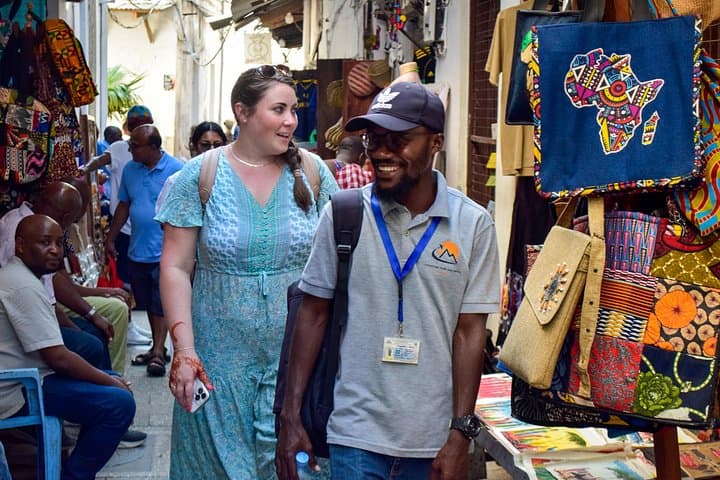


The alley opens like a dictionary of weathered wood and carved metal—each door a paragraph, each narrow street an argument between shade and ocean breeze. A private walking tour of Stone Town threads you through lanes so tight the day feels redistributed into cool pockets; voices, spice stalls and the surf at the harbor push and pull as you move.
The alley opens like a dictionary of weathered wood and carved metal—each door a paragraph, each narrow street an argument between shade and ocean breeze. A private walking tour of Stone Town threads you through lanes so tight the day feels redistributed into cool pockets; voices, spice stalls and the surf at the harbor push and pull as you move.
Stone Town is a port-city built by trade: Omani sultans, Portuguese occupiers and Swahili merchants shaped its coral-stone buildings and layered architecture. The House of Wonders (Beit-al-Ajaib), the Old Fort and the Anglican Cathedral mark stages of that history—from ivory and clove trade to the grim business of the 19th-century slave market.
Geology here is literal: coral rag walls cut from reef, porous and pale, hold centuries of salt and sun. Culture feels immediate—mosques, churches and temples stand block-to-block, and local markets hum with fishmongers and spice sellers who still measure by hand.
For travelers, this is a walk of observation and context. A guide will point to carved Indian-influenced doors, tell the story of the slave market memorials and lead you to rooftop viewpoints where the harbor and the ocean trade still converse. Expect uneven flagstones, narrow gutters and shaded courtyards.
Practical notes: wear closed-toe shoes, carry sun protection and a refillable water bottle, and plan the route for morning or late afternoon to avoid midday heat. Respect mosque hours and modest dress in religious areas. With a private guide, you’ll move at your own pace—enough time to read plaques, taste a snack at Forodhani, and stand quietly at sites that hold difficult histories.