THE ADVENTURE COLLECTIVE® · Independent discovery and booking for outdoor travel

Escape Rome for a private day in Tivoli to explore Hadrian’s Villa and Villa d’Este. This guided tour combines imperial ruins, Renaissance waterworks, and convenient hotel pick-up.
Escape Rome for a private day in Tivoli to explore Hadrian’s Villa and Villa d’Este. This guided tour combines imperial ruins, Renaissance waterworks, and convenient hotel pick-up.
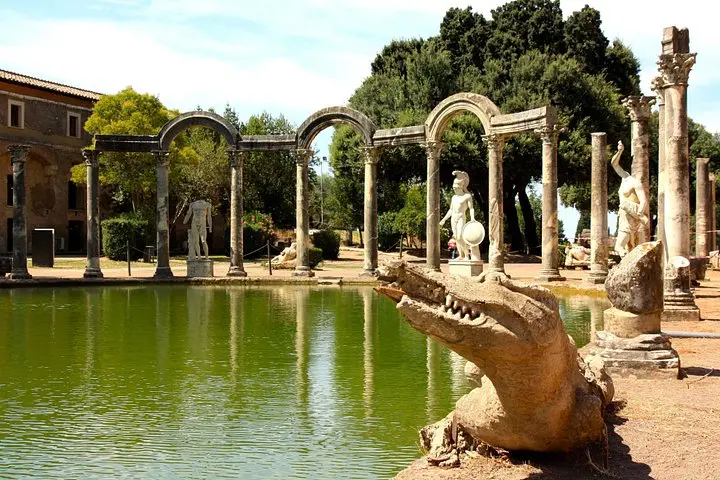
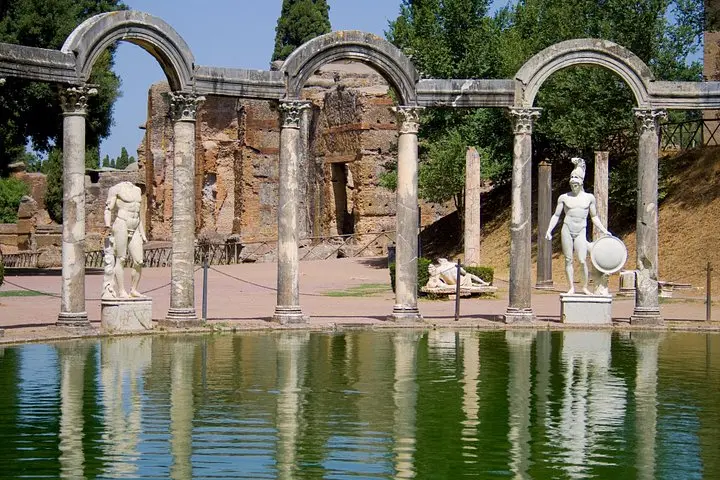
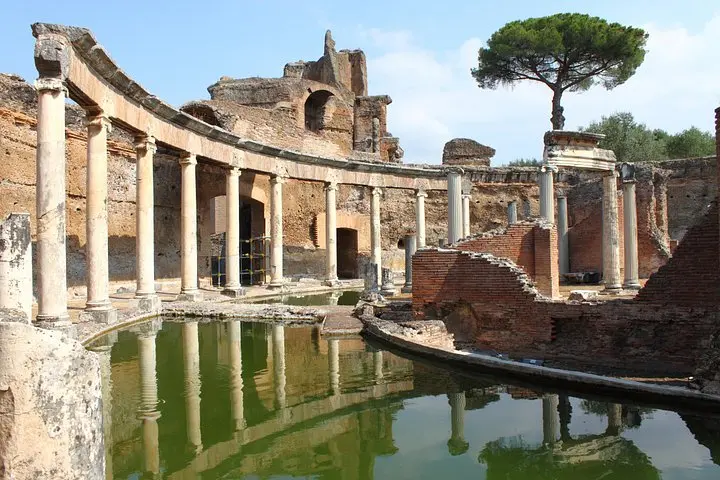
A private car slips out of Rome’s morning bustle and the landscape changes: open fields, old stone villas, the distant silhouette of Tivoli rising above the Aniene valley. Guests step from the vehicle into dappled light among fragmented colonnades and ruined baths at Hadrian’s Villa, where the scale of Roman ambition feels tangible underfoot.
Verified experiences and guided adventures in the surrounding area.
Operated by Exploro Tours · Tivoli, Lazio
A private car slips out of Rome’s morning bustle and the landscape changes: open fields, old stone villas, the distant silhouette of Tivoli rising above the Aniene valley. Guests step from the vehicle into dappled light among fragmented colonnades and ruined baths at Hadrian’s Villa, where the scale of Roman ambition feels tangible underfoot.
Hadrian’s Villa (Villa Adriana) is a sprawling complex of baths, theaters, and reflecting pools built in the 2nd century CE by an emperor who repurposed marble and motifs from across the empire; its ruins reveal construction techniques and the emperor’s cosmopolitan tastes. Villa d’Este, by contrast, is a Renaissance exercise in water and sound—fountains, terraces, and a water organ that direct a creek through carved marble, designed to awe Cardinal Ippolito d’Este and his visitors.
Geology and hydrology shape both sites: local travertine and tuff were quarried for construction, and the Aniene’s flow was manipulated for Renaissance hydraulics. Cultural notes: Tivoli has long been a Roman retreat, a place where elites staged power through architecture and gardens.
Practically, expect uneven stone paths, steps, and open-air walking across several hectares; comfortable walking shoes and a hat are sensible. The tour includes private pick-up and skip-the-line admission, so timing is flexible—morning visits avoid afternoon crowds and heat. Bring water, wear layered clothing for changing shade and breeze in the valley, and allow a full day to absorb both the imperial ruins and Renaissance spectacle.
Yes; the private tour includes skip-the-line admission tickets for Hadrian’s Villa and Villa d’Este.
Driving is about 40–60 minutes each way depending on traffic; the itinerary allocates roughly three hours at Hadrian’s Villa and one hour at Villa d’Este.
Both transportation and some areas are wheelchair accessible, but historic site terrain includes uneven stone and steps—check specific access points in advance.
Yes; the tour allows return to your accommodation or an alternate drop-off location within Rome as arranged with the operator.
Exploro Tours operates guided outdoor trips and adventures with an emphasis on safety, stewardship, and memorable experiences.

A private car slips out of Rome’s morning bustle and the landscape changes: open fields, old stone villas, the distant silhouette of Tivoli rising above the Aniene valley. Guests step from the vehicle into dappled light among fragmented colonnades and ruined baths at Hadrian’s Villa, where the scale of Roman ambition feels tangible underfoot.
A private car slips out of Rome’s morning bustle and the landscape changes: open fields, old stone villas, the distant silhouette of Tivoli rising above the Aniene valley. Guests step from the vehicle into dappled light among fragmented colonnades and ruined baths at Hadrian’s Villa, where the scale of Roman ambition feels tangible underfoot.
Hadrian’s Villa (Villa Adriana) is a sprawling complex of baths, theaters, and reflecting pools built in the 2nd century CE by an emperor who repurposed marble and motifs from across the empire; its ruins reveal construction techniques and the emperor’s cosmopolitan tastes. Villa d’Este, by contrast, is a Renaissance exercise in water and sound—fountains, terraces, and a water organ that direct a creek through carved marble, designed to awe Cardinal Ippolito d’Este and his visitors.
Geology and hydrology shape both sites: local travertine and tuff were quarried for construction, and the Aniene’s flow was manipulated for Renaissance hydraulics. Cultural notes: Tivoli has long been a Roman retreat, a place where elites staged power through architecture and gardens.
Practically, expect uneven stone paths, steps, and open-air walking across several hectares; comfortable walking shoes and a hat are sensible. The tour includes private pick-up and skip-the-line admission, so timing is flexible—morning visits avoid afternoon crowds and heat. Bring water, wear layered clothing for changing shade and breeze in the valley, and allow a full day to absorb both the imperial ruins and Renaissance spectacle.