THE ADVENTURE COLLECTIVE® · Independent discovery and booking for outdoor travel

A licensed private guide turns a visit to the Taj Mahal and Agra Fort into a focused 3–5 hour exploration of Mughal architecture, inlay craft and riverside atmosphere. Learn logistics, entry rules and the best times to avoid crowds.
A licensed private guide turns a visit to the Taj Mahal and Agra Fort into a focused 3–5 hour exploration of Mughal architecture, inlay craft and riverside atmosphere. Learn logistics, entry rules and the best times to avoid crowds.
You step through the gateway and the marble appears, an unexpected brightness that reorganizes the afternoon light. The Yamuna river runs quietly behind the mausoleum, pushing a cool breeze across the gardens as your guide frames the story: Shah Jahan’s grief, craftsmen from distant regions, and a façade carved with pietra dura.
Verified experiences and guided adventures in the surrounding area.
Operated by Taj Mahal Tour Guide Family Group · Agra, Uttar Pradesh
You step through the gateway and the marble appears, an unexpected brightness that reorganizes the afternoon light. The Yamuna river runs quietly behind the mausoleum, pushing a cool breeze across the gardens as your guide frames the story: Shah Jahan’s grief, craftsmen from distant regions, and a façade carved with pietra dura.
The Taj Mahal (1631–1653) is a UNESCO World Heritage Site and a masterwork of Mughal architecture; the site’s white marble slabs and inlay work reflect changing skies and meticulous engineering. A short drive away, Agra Fort — built and expanded over centuries in red sandstone and white marble — shows the practical side of Mughal power: courts, private chambers and defensive walls where emperors once paced.
Culturally the visit blends devotion, craft and commerce: marble inlay workshops near the complex are run by families whose techniques date back generations. Geologically, the region sits on alluvial plains; the marble’s sheen and the fort’s sandstone owe much to transported stone and skilled masonry rather than dramatic bedrock.
Practical guidance: tours typically run 3–5 hours with walking on paved paths and steps; shoe covers are required for the main mausoleum. Expect security checks, strict rules about food, flags and large bags, and midday crowds and heat in summer. Bring hydration, sun protection and a camera with a charged battery; if you want quieter light and fewer people, book the earliest time slot possible. A licensed English-speaking guide (department-approved) adds historical context and manages tickets and routing so you get the most from both sites.
Tickets can be purchased on-site but booking ahead saves time; many private guides can handle ticket purchase as part of the tour.
Yes—many tours or entry points provide shoe covers; wearing socks under the covers is more comfortable.
Yes; the route is physically easy, but the main tomb is not wheelchair accessible and strollers may be restricted in some areas.
Food, large bags, flags, smoking materials, sharp objects and certain commercial items are prohibited—follow site-specific security lists.
Taj Mahal Tour Guide Family Group operates guided outdoor trips and adventures with an emphasis on safety, stewardship, and memorable experiences.
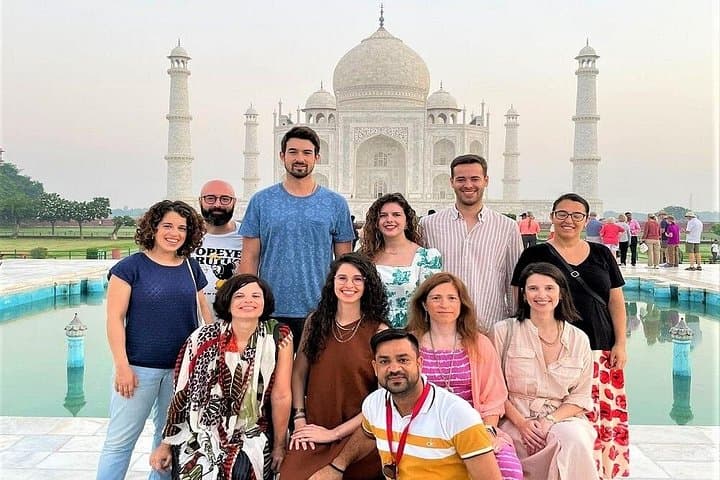
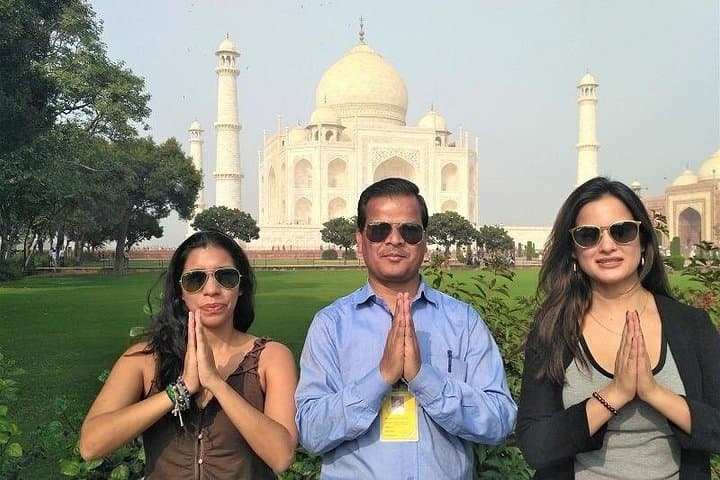
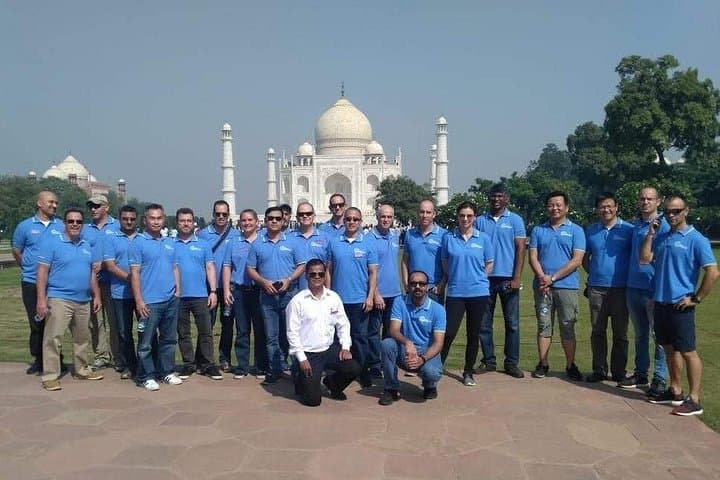

You step through the gateway and the marble appears, an unexpected brightness that reorganizes the afternoon light. The Yamuna river runs quietly behind the mausoleum, pushing a cool breeze across the gardens as your guide frames the story: Shah Jahan’s grief, craftsmen from distant regions, and a façade carved with pietra dura.
You step through the gateway and the marble appears, an unexpected brightness that reorganizes the afternoon light. The Yamuna river runs quietly behind the mausoleum, pushing a cool breeze across the gardens as your guide frames the story: Shah Jahan’s grief, craftsmen from distant regions, and a façade carved with pietra dura.
The Taj Mahal (1631–1653) is a UNESCO World Heritage Site and a masterwork of Mughal architecture; the site’s white marble slabs and inlay work reflect changing skies and meticulous engineering. A short drive away, Agra Fort — built and expanded over centuries in red sandstone and white marble — shows the practical side of Mughal power: courts, private chambers and defensive walls where emperors once paced.
Culturally the visit blends devotion, craft and commerce: marble inlay workshops near the complex are run by families whose techniques date back generations. Geologically, the region sits on alluvial plains; the marble’s sheen and the fort’s sandstone owe much to transported stone and skilled masonry rather than dramatic bedrock.
Practical guidance: tours typically run 3–5 hours with walking on paved paths and steps; shoe covers are required for the main mausoleum. Expect security checks, strict rules about food, flags and large bags, and midday crowds and heat in summer. Bring hydration, sun protection and a camera with a charged battery; if you want quieter light and fewer people, book the earliest time slot possible. A licensed English-speaking guide (department-approved) adds historical context and manages tickets and routing so you get the most from both sites.