THE ADVENTURE COLLECTIVE® · Independent discovery and booking for outdoor travel

Traverse 4,500 years of history in one half-day: climb the Giza Plateau to stand before the Great Pyramids, then step into the Egyptian Museum to see Tutankhamun’s treasures. This private guided tour pairs outdoor scale with museum depth, ideal for travelers short on time who want context and comfort.
Traverse 4,500 years of history in one half-day: climb the Giza Plateau to stand before the Great Pyramids, then step into the Egyptian Museum to see Tutankhamun’s treasures. This private guided tour pairs outdoor scale with museum depth, ideal for travelers short on time who want context and comfort.
Sun-baked limestone cuts a hard silhouette against Cairo’s wide sky as visitors step from an air-conditioned van onto the Giza Plateau. The wind here has a voice — it pushes fine sand across ancient stones and carries the faint chatter of sellers below. A private guide leads the group past the broad faces of Cheops, Chephren and Mykerinus, translating scale into story: capstones lost, labor organized, astronomical alignments debated.
Verified experiences and guided adventures in the surrounding area.
Operated by Egypt Sunny Tours · Cairo, Cairo
Sun-baked limestone cuts a hard silhouette against Cairo’s wide sky as visitors step from an air-conditioned van onto the Giza Plateau. The wind here has a voice — it pushes fine sand across ancient stones and carries the faint chatter of sellers below. A private guide leads the group past the broad faces of Cheops, Chephren and Mykerinus, translating scale into story: capstones lost, labor organized, astronomical alignments debated.
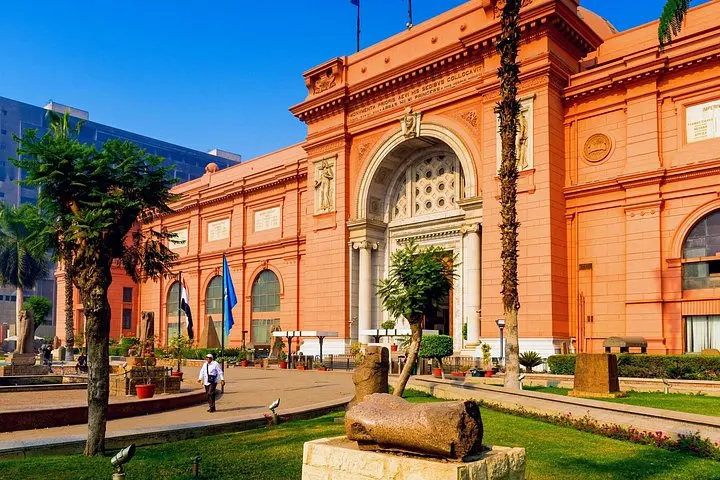
The itinerary then shifts into the cooler, dim galleries of the Museum of Egyptian Antiquities at Tahrir Square, where rows of statuary and the gold of Tutankhamun reflect a different kind of craft—intricate metalwork and funerary ritual that reveal social and religious life across five millennia. Geology and engineering appear in tandem at Giza: quarried local limestone, retaining walls and the plateau’s natural rise that made the site suitable for monumental burial. Culturally, the tour threads Pharaonic power with modern Cairo’s role as custodian; many guides emphasize respectful behavior around fragile monuments.
Practically, expect roughly 4–5 hours on this private loop: about two hours at the plateau with uneven walking and steps, then up to two hours in museum galleries. Wear closed, comfortable shoes for grit and stone, carry at least 1–2 liters of water, and bring sunscreen and a hat — shade is sparse at Giza. Cameras are allowed at the plateau but check signs for photography rules inside museum exhibits. Aim for a morning start to avoid peak heat and the largest crowds. With a local guide and transport, this half-day balances sweeping open-air awe with curated archaeological context — efficient, informative, and physically approachable for most travelers.
This private tour typically does not include site admission fees; check your booking details and have local currency if needed for tickets or optional tomb access.
Access inside pyramids is limited and often requires a separate ticket or restricted access; the guide can advise current availability and regulations.
The Museum of Egyptian Antiquities has accessibility features and the tour lists wheelchair-accessible options, but some older exhibition spaces may have limitations—confirm in advance for specific needs.
Early morning offers cooler temperatures and softer light at Giza; late afternoon is also good for lighting but can be busier and warmer in summer.
Egypt Sunny Tours operates guided outdoor trips and adventures with an emphasis on safety, stewardship, and memorable experiences.
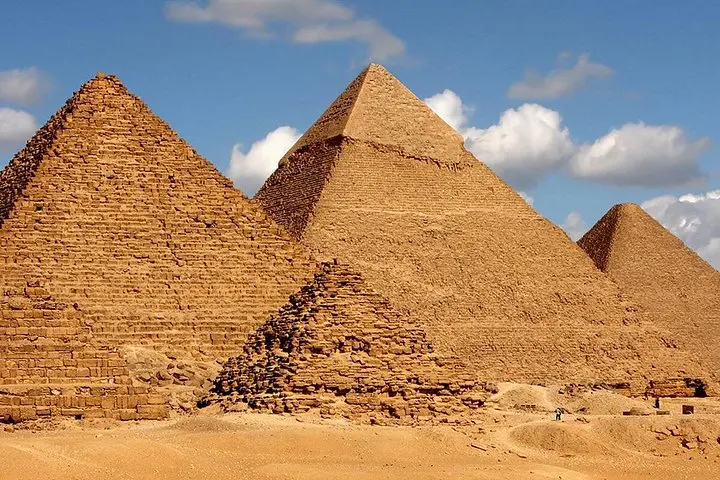
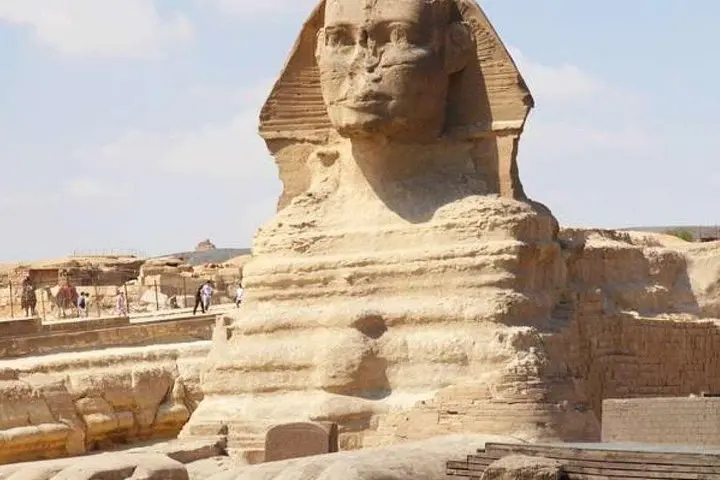
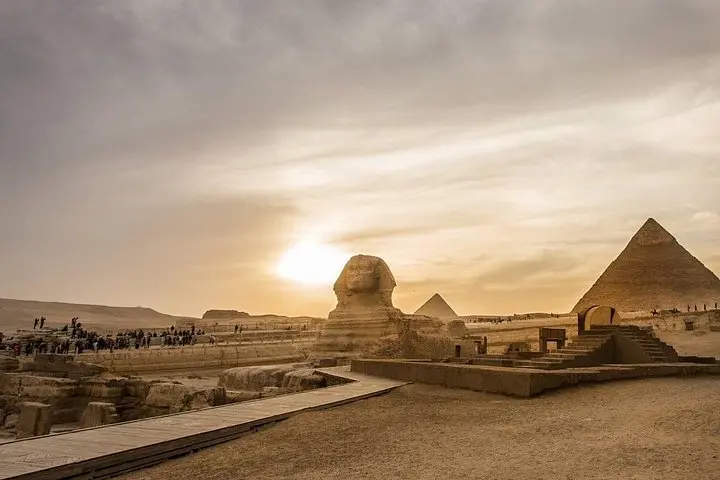
Sun-baked limestone cuts a hard silhouette against Cairo’s wide sky as visitors step from an air-conditioned van onto the Giza Plateau. The wind here has a voice — it pushes fine sand across ancient stones and carries the faint chatter of sellers below. A private guide leads the group past the broad faces of Cheops, Chephren and Mykerinus, translating scale into story: capstones lost, labor organized, astronomical alignments debated.
Sun-baked limestone cuts a hard silhouette against Cairo’s wide sky as visitors step from an air-conditioned van onto the Giza Plateau. The wind here has a voice — it pushes fine sand across ancient stones and carries the faint chatter of sellers below. A private guide leads the group past the broad faces of Cheops, Chephren and Mykerinus, translating scale into story: capstones lost, labor organized, astronomical alignments debated.
The itinerary then shifts into the cooler, dim galleries of the Museum of Egyptian Antiquities at Tahrir Square, where rows of statuary and the gold of Tutankhamun reflect a different kind of craft—intricate metalwork and funerary ritual that reveal social and religious life across five millennia. Geology and engineering appear in tandem at Giza: quarried local limestone, retaining walls and the plateau’s natural rise that made the site suitable for monumental burial. Culturally, the tour threads Pharaonic power with modern Cairo’s role as custodian; many guides emphasize respectful behavior around fragile monuments.
Practically, expect roughly 4–5 hours on this private loop: about two hours at the plateau with uneven walking and steps, then up to two hours in museum galleries. Wear closed, comfortable shoes for grit and stone, carry at least 1–2 liters of water, and bring sunscreen and a hat — shade is sparse at Giza. Cameras are allowed at the plateau but check signs for photography rules inside museum exhibits. Aim for a morning start to avoid peak heat and the largest crowds. With a local guide and transport, this half-day balances sweeping open-air awe with curated archaeological context — efficient, informative, and physically approachable for most travelers.