THE ADVENTURE COLLECTIVE® · Independent discovery and booking for outdoor travel

Explore four distinct cenotes on a private Riviera Maya tour—open pools, semi-open sinkholes, caves and subterranean waters—guided with snorkeling gear and cultural context. Ideal for travelers who want a paced, intimate encounter with these freshwater sinkholes.
Explore four distinct cenotes on a private Riviera Maya tour—open pools, semi-open sinkholes, caves and subterranean waters—guided with snorkeling gear and cultural context. Ideal for travelers who want a paced, intimate encounter with these freshwater sinkholes.
The morning light in the Riviera Maya cuts through jungle leaves and turns the water in a cenote an impossible blue. On a private tour to four cenotes, travelers move from open-air pools warmed by sun to shadowed caverns where shafts of light score the surface; each cenote has its own voice, from the bright laughter of surface waters to the hushed depths of underground chambers.
Verified experiences and guided adventures in the surrounding area.
Operated by Riviera Maya Tours Guide · Playa del Carmen, Quintana Roo
The morning light in the Riviera Maya cuts through jungle leaves and turns the water in a cenote an impossible blue. On a private tour to four cenotes, travelers move from open-air pools warmed by sun to shadowed caverns where shafts of light score the surface; each cenote has its own voice, from the bright laughter of surface waters to the hushed depths of underground chambers.
Geologically, cenotes are collapsed limestone above a flooded karst system that drains into the Yucatán aquifer; they expose freshwater that has carved caverns for millennia. For the Maya, these sinkholes were entrances to the underworld and freshwater sources—many sites contain archaeological remains or traditional stories that guides often share.
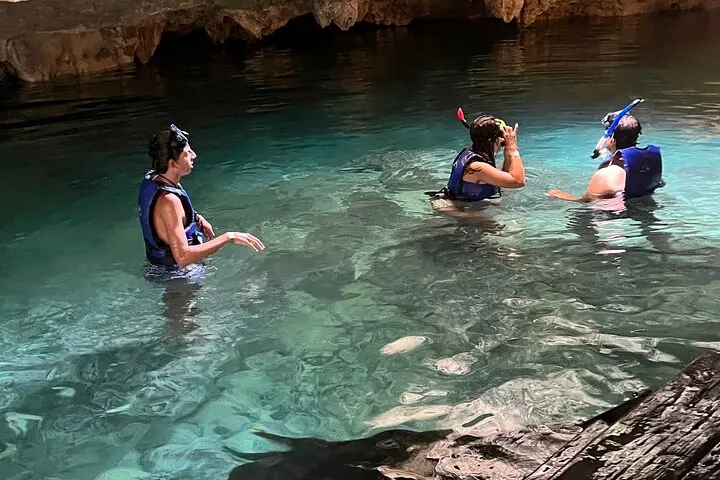
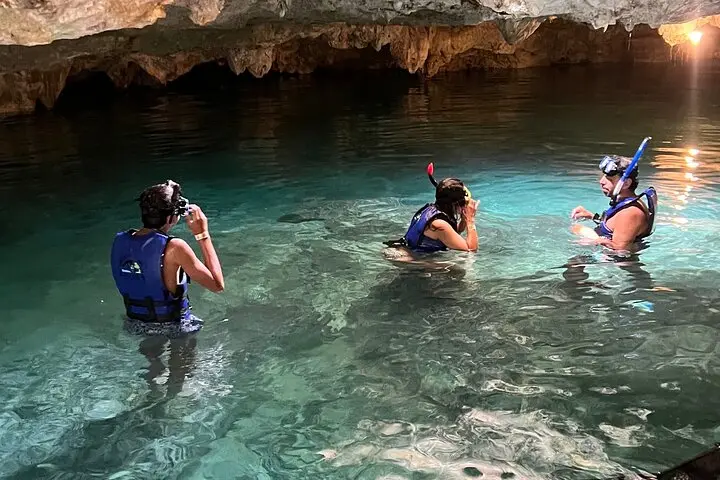
Expect a mix of environments: open-air pools with grassy banks, semi-open sinkholes with hanging roots, cavernous spaces spotlighted by sunbeams, and narrow underground passages where echoes follow you. Wildlife is subtle—tropical fish, bats, and familiar wetland birds—while plant life clings to the limestone rims.
Practically, this is a half-day outing: plan for about six hours door-to-door if pickup is included. Wear water shoes for slick steps, reef-safe sunscreen, and a swimsuit under quick-dry clothing. Bring a small waterproof bag for phone and keys; a guide typically provides masks and snorkel gear. Pay attention to depth and current when swimming—some cenotes drop quickly. Respect cultural guidelines at sacred sites: no soaps, avoid disturbing rock or archaeological features, and follow your guide’s instructions. A private tour gives time to photograph, snorkel, and move at your pace while learning the geology and cultural history that make cenotes singular to the Yucatán.
Most private tours provide life jackets on request—ask at booking if traveling with non‑swimmers or children.
Yes; a waterproof case or camera is recommended—some caves have low light so use wide settings or a dedicated camera.
On this private itinerary, admission to the listed cenotes and use of snorkel equipment are typically included; confirm details at booking.
Children may join if supervised and wearing life jackets; cenote entry is not recommended for pregnant travelers or those with serious back/heart problems—follow operator guidance.
Riviera Maya Tours Guide operates guided outdoor trips and adventures with an emphasis on safety, stewardship, and memorable experiences.
The morning light in the Riviera Maya cuts through jungle leaves and turns the water in a cenote an impossible blue. On a private tour to four cenotes, travelers move from open-air pools warmed by sun to shadowed caverns where shafts of light score the surface; each cenote has its own voice, from the bright laughter of surface waters to the hushed depths of underground chambers.
The morning light in the Riviera Maya cuts through jungle leaves and turns the water in a cenote an impossible blue. On a private tour to four cenotes, travelers move from open-air pools warmed by sun to shadowed caverns where shafts of light score the surface; each cenote has its own voice, from the bright laughter of surface waters to the hushed depths of underground chambers.
Geologically, cenotes are collapsed limestone above a flooded karst system that drains into the Yucatán aquifer; they expose freshwater that has carved caverns for millennia. For the Maya, these sinkholes were entrances to the underworld and freshwater sources—many sites contain archaeological remains or traditional stories that guides often share.
Expect a mix of environments: open-air pools with grassy banks, semi-open sinkholes with hanging roots, cavernous spaces spotlighted by sunbeams, and narrow underground passages where echoes follow you. Wildlife is subtle—tropical fish, bats, and familiar wetland birds—while plant life clings to the limestone rims.
Practically, this is a half-day outing: plan for about six hours door-to-door if pickup is included. Wear water shoes for slick steps, reef-safe sunscreen, and a swimsuit under quick-dry clothing. Bring a small waterproof bag for phone and keys; a guide typically provides masks and snorkel gear. Pay attention to depth and current when swimming—some cenotes drop quickly. Respect cultural guidelines at sacred sites: no soaps, avoid disturbing rock or archaeological features, and follow your guide’s instructions. A private tour gives time to photograph, snorkel, and move at your pace while learning the geology and cultural history that make cenotes singular to the Yucatán.