THE ADVENTURE COLLECTIVE® · Independent discovery and booking for outdoor travel

Spend a day beyond Rome exploring a living medieval village and the 8th‑century Farfa Abbey. This private tour combines guided history, local food options and gentle walking through cobbled streets and cloisters.
Spend a day beyond Rome exploring a living medieval village and the 8th‑century Farfa Abbey. This private tour combines guided history, local food options and gentle walking through cobbled streets and cloisters.
Morning light spills across the Sabine hills as a private minibus eases out of Rome and toward a village that still moves at an older clock. Cobbled lanes open like pages, and the abbey’s stone façade—older than many European states—quietly dominates the skyline.
Verified experiences and guided adventures in the surrounding area.
Operated by Roman Holidays Eventi srl · Fara in Sabina, Lazio
Morning light spills across the Sabine hills as a private minibus eases out of Rome and toward a village that still moves at an older clock. Cobbled lanes open like pages, and the abbey’s stone façade—older than many European states—quietly dominates the skyline.
The Abbey of Farfa dates to the 8th century and played a leading role in medieval monastic networks across central Italy. Geologically the Sabina is a mix of limestone ridges and clay valleys; the village perches where drainages cut narrow gullies and olive terraces hold soil on gentle slopes. Local life is agricultural—olive groves and small vineyards—and that rural economy shapes how the village feels and how visitors move through it.
A guided visit here emphasizes art, liturgy and manuscript collections; expect Romanesque and later architectural layers and a cloister that frames the abbey’s history. Lunch at the abbey refectory or a nearby trattoria offers seasonal dishes built from local produce—simple, direct food that reflects Sabine culinary culture.
Practical side: the full excursion runs about nine hours including roughly 45 minutes each way by private transport from Rome, and several hours on foot across uneven cobbles and steps. Wear sturdy shoes, bring sun protection and water, and plan for stair climbs inside the abbey. The tour moves at a moderate pace with interpretive stops; photography in some sacred spaces may be restricted. For quieter visits, book morning departures and check seasonal opening hours. This is a day that blends history, landscape and straightforward logistics—ideal for travelers who want a concentrated cultural immersion outside the capital.
The private bus transfer takes about 45 minutes each way from central Rome depending on traffic.
Lunch at the abbey is not included; guides will suggest on-site dining options or local trattorie nearby.
Some areas include stairs and uneven surfaces; the tour notes advise moderate fitness and it may not be suitable for those with spinal or serious mobility issues.
Yes—this private tour requires booking ahead to guarantee the private transportation and guide for the scheduled date.
Roman Holidays Eventi srl operates guided outdoor trips and adventures with an emphasis on safety, stewardship, and memorable experiences.
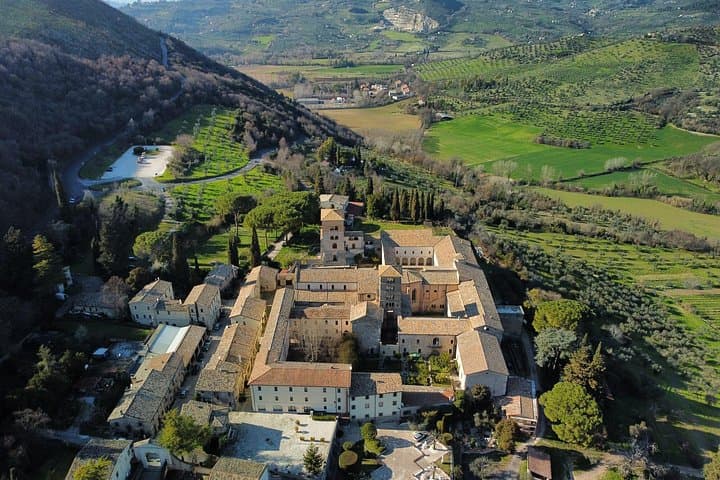


Morning light spills across the Sabine hills as a private minibus eases out of Rome and toward a village that still moves at an older clock. Cobbled lanes open like pages, and the abbey’s stone façade—older than many European states—quietly dominates the skyline.
Morning light spills across the Sabine hills as a private minibus eases out of Rome and toward a village that still moves at an older clock. Cobbled lanes open like pages, and the abbey’s stone façade—older than many European states—quietly dominates the skyline.
The Abbey of Farfa dates to the 8th century and played a leading role in medieval monastic networks across central Italy. Geologically the Sabina is a mix of limestone ridges and clay valleys; the village perches where drainages cut narrow gullies and olive terraces hold soil on gentle slopes. Local life is agricultural—olive groves and small vineyards—and that rural economy shapes how the village feels and how visitors move through it.
A guided visit here emphasizes art, liturgy and manuscript collections; expect Romanesque and later architectural layers and a cloister that frames the abbey’s history. Lunch at the abbey refectory or a nearby trattoria offers seasonal dishes built from local produce—simple, direct food that reflects Sabine culinary culture.
Practical side: the full excursion runs about nine hours including roughly 45 minutes each way by private transport from Rome, and several hours on foot across uneven cobbles and steps. Wear sturdy shoes, bring sun protection and water, and plan for stair climbs inside the abbey. The tour moves at a moderate pace with interpretive stops; photography in some sacred spaces may be restricted. For quieter visits, book morning departures and check seasonal opening hours. This is a day that blends history, landscape and straightforward logistics—ideal for travelers who want a concentrated cultural immersion outside the capital.