THE ADVENTURE COLLECTIVE® · Independent discovery and booking for outdoor travel

See My Son's red-brick Cham towers with a private guide, then glide back to Hoi An on a covered boat along the Thu Bon River. This combo tour pairs a focused cultural visit with a scenic, low-key river return.
See My Son's red-brick Cham towers with a private guide, then glide back to Hoi An on a covered boat along the Thu Bon River. This combo tour pairs a focused cultural visit with a scenic, low-key river return.
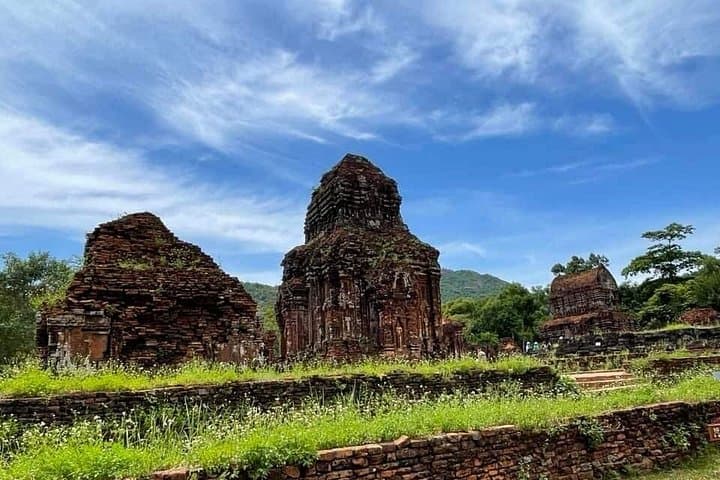
Morning light slices across the lowland rice paddies as your minivan pulls away from Hoi An, and the Thu Bon River tugs at reflections of palms. By 8 a.m. the approach to My Son begins - bamboo and scrub giving way to red-brick tower silhouettes rising from green.
Verified experiences and guided adventures in the surrounding area.
Operated by Private Tourguides in Da Nang Hoi An Hue · Duy Xuyen, Quang Nam
Morning light slices across the lowland rice paddies as your minivan pulls away from Hoi An, and the Thu Bon River tugs at reflections of palms. By 8 a.m. the approach to My Son begins - bamboo and scrub giving way to red-brick tower silhouettes rising from green.
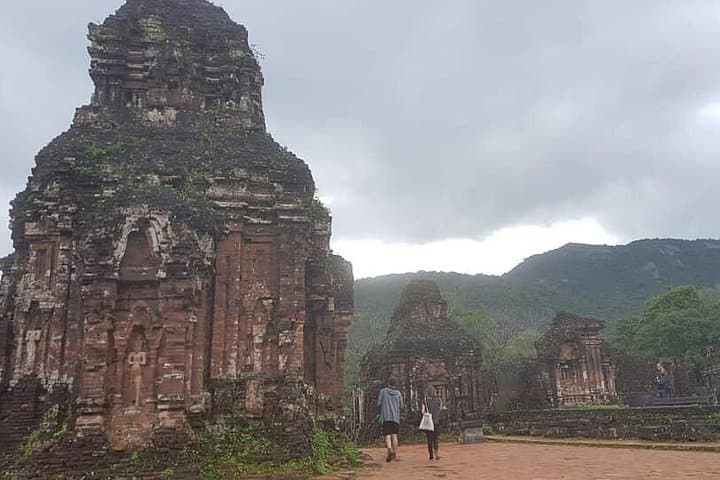
My Son is a compact complex of Cham tower-temples built and rebuilt between the 4th and 13th centuries, a spiritual heart of the Champa kingdom. Carved sandstone and kiln-fired bricks fit without mortar; bas-reliefs record Hindu iconography and dynastic pride. The surrounding valley is an alluvial bowl cut by the Thu Bon's meanders; lateritic hills and seasonal streams shape the site's sightlines and acoustics.
Local guides explain how ritual, river trade and Cham engineering shaped this place, and how wartime damage and conservation have altered access. Culture here feels pragmatic: temples as civic memory, farmers tending nearby fields, boatmen threading the river. Off the beaten path, fragments of towers crouch beneath fig trees and birds patrol the ruins like attentive stewards.
Practical note: entrance paths are short but uneven; electric golf carts cover the initial drop-off. Expect warm, humid air and strong sun - carry water and layers that breathe. The itinerary returns by a covered boat along the Thu Bon, offering low-angle afternoon light and fewer crowds at Hoi An dock. Bring a camera with a polarizer for river reflections, and allow time for slow viewing: these ruins reward observation as much as speed. Arrive early to avoid heat and crowds.
Pickup typically departs around 7:00 a.m.; the drive to My Son from Hoi An is about 35–60 minutes depending on traffic.
Paths and transfer points include some wheelchair-accessible routes and the operator provides electric cars from the drop-off; check specific accessibility needs when booking.
Yes — entrance tickets to My Son are included as part of this private tour package.
The guided visit includes free moments for photos and independent viewing, but the schedule follows the guide's timing to meet the boat connection.
Private Tourguides in Da Nang Hoi An Hue operates guided outdoor trips and adventures with an emphasis on safety, stewardship, and memorable experiences.
Morning light slices across the lowland rice paddies as your minivan pulls away from Hoi An, and the Thu Bon River tugs at reflections of palms. By 8 a.m. the approach to My Son begins - bamboo and scrub giving way to red-brick tower silhouettes rising from green.
Morning light slices across the lowland rice paddies as your minivan pulls away from Hoi An, and the Thu Bon River tugs at reflections of palms. By 8 a.m. the approach to My Son begins - bamboo and scrub giving way to red-brick tower silhouettes rising from green.
My Son is a compact complex of Cham tower-temples built and rebuilt between the 4th and 13th centuries, a spiritual heart of the Champa kingdom. Carved sandstone and kiln-fired bricks fit without mortar; bas-reliefs record Hindu iconography and dynastic pride. The surrounding valley is an alluvial bowl cut by the Thu Bon's meanders; lateritic hills and seasonal streams shape the site's sightlines and acoustics.
Local guides explain how ritual, river trade and Cham engineering shaped this place, and how wartime damage and conservation have altered access. Culture here feels pragmatic: temples as civic memory, farmers tending nearby fields, boatmen threading the river. Off the beaten path, fragments of towers crouch beneath fig trees and birds patrol the ruins like attentive stewards.
Practical note: entrance paths are short but uneven; electric golf carts cover the initial drop-off. Expect warm, humid air and strong sun - carry water and layers that breathe. The itinerary returns by a covered boat along the Thu Bon, offering low-angle afternoon light and fewer crowds at Hoi An dock. Bring a camera with a polarizer for river reflections, and allow time for slow viewing: these ruins reward observation as much as speed. Arrive early to avoid heat and crowds.