THE ADVENTURE COLLECTIVE® · Independent discovery and booking for outdoor travel

A private 2–3 hour visit to Syambhunath Stupa offers sweeping city views, layered religious history, and close-up encounters with prayer wheels and resident monkeys. This guide covers what to expect, how to prepare, and the best times to visit.
A private 2–3 hour visit to Syambhunath Stupa offers sweeping city views, layered religious history, and close-up encounters with prayer wheels and resident monkeys. This guide covers what to expect, how to prepare, and the best times to visit.
You arrive through Kathmandu traffic, the city folding back into low hills, and then the stupa appears above a tangle of rooftops—white dome gleaming, gilded eyes watching the valley. A short private drive and a switchback road bring you to the base; from there a broad staircase of roughly 365 steps climbs past prayer wheels, fluttering flags and small shrines. At the summit, the city spreads below and the high ridges beyond hold the Himalaya like a distant promise.
Verified experiences and guided adventures in the surrounding area.
Operated by AM Travels and Tours · Kathmandu, Bagmati Province
You arrive through Kathmandu traffic, the city folding back into low hills, and then the stupa appears above a tangle of rooftops—white dome gleaming, gilded eyes watching the valley. A short private drive and a switchback road bring you to the base; from there a broad staircase of roughly 365 steps climbs past prayer wheels, fluttering flags and small shrines. At the summit, the city spreads below and the high ridges beyond hold the Himalaya like a distant promise.
Syambhunath is one of Kathmandu’s oldest religious complexes. Its name—often spelled Swayambhu—means "self-existent," a reference to a sacred flame that legend says rose from the ancient lake that once filled the valley. Architecturally the site blends Newar craftsmanship with Tibetan and Buddhist iconography: prayer wheels, carved chaityas, and the central hemispherical stupa topped by a square harmika painted with the Buddha’s all-seeing eyes.
Culturally the hill is shared space: Buddhists and Hindus come to circumambulate, light butter lamps, and leave offerings; monkeys move opportunistically through the terraces. The guide’s explanations will place symbols in context and point out quieter corners—roof terraces and monastery courtyards—where the view and atmosphere are less crowded.
Practicalities: the private tour is typically 2–3 hours with round-trip hotel transfer included. Wear sturdy shoes for steps, dress modestly for a religious site, and carry water and a small packet of tissues. Mornings offer softer light and fewer people; afternoons can be busier but warmer. Respect the monks, don’t feed the monkeys, and leave no litter—those small choices keep the hill open and welcoming for everyone.
The private tour typically lasts 2–3 hours, including about 45 minutes of driving from central Kathmandu and time at the stupa.
Both: a prominent staircase of roughly 365 steps leads to the summit, and a winding road allows vehicle access closer to the complex for those with mobility concerns.
There is no major entrance fee to view the stupa, though donations at temples are customary; check with your operator for any included local fees.
Monkeys are common and can be bold; do not feed them, keep belongings secure, and follow your guide’s instructions if monkeys approach.
AM Travels and Tours operates guided outdoor trips and adventures with an emphasis on safety, stewardship, and memorable experiences.
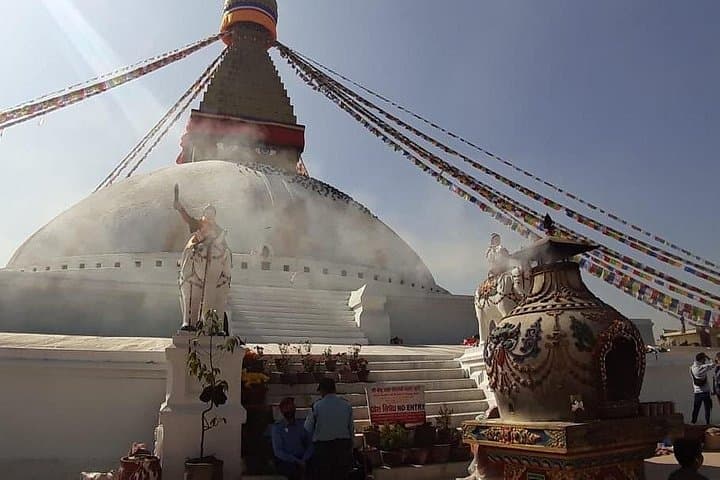
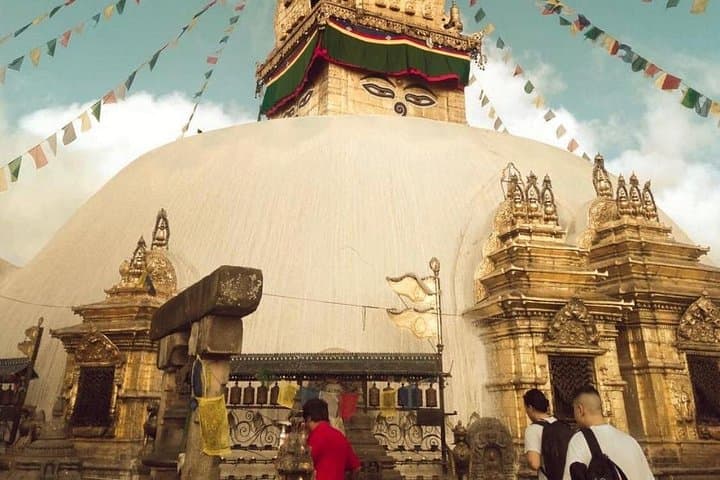


You arrive through Kathmandu traffic, the city folding back into low hills, and then the stupa appears above a tangle of rooftops—white dome gleaming, gilded eyes watching the valley. A short private drive and a switchback road bring you to the base; from there a broad staircase of roughly 365 steps climbs past prayer wheels, fluttering flags and small shrines. At the summit, the city spreads below and the high ridges beyond hold the Himalaya like a distant promise.
You arrive through Kathmandu traffic, the city folding back into low hills, and then the stupa appears above a tangle of rooftops—white dome gleaming, gilded eyes watching the valley. A short private drive and a switchback road bring you to the base; from there a broad staircase of roughly 365 steps climbs past prayer wheels, fluttering flags and small shrines. At the summit, the city spreads below and the high ridges beyond hold the Himalaya like a distant promise.
Syambhunath is one of Kathmandu’s oldest religious complexes. Its name—often spelled Swayambhu—means "self-existent," a reference to a sacred flame that legend says rose from the ancient lake that once filled the valley. Architecturally the site blends Newar craftsmanship with Tibetan and Buddhist iconography: prayer wheels, carved chaityas, and the central hemispherical stupa topped by a square harmika painted with the Buddha’s all-seeing eyes.
Culturally the hill is shared space: Buddhists and Hindus come to circumambulate, light butter lamps, and leave offerings; monkeys move opportunistically through the terraces. The guide’s explanations will place symbols in context and point out quieter corners—roof terraces and monastery courtyards—where the view and atmosphere are less crowded.
Practicalities: the private tour is typically 2–3 hours with round-trip hotel transfer included. Wear sturdy shoes for steps, dress modestly for a religious site, and carry water and a small packet of tissues. Mornings offer softer light and fewer people; afternoons can be busier but warmer. Respect the monks, don’t feed the monkeys, and leave no litter—those small choices keep the hill open and welcoming for everyone.