THE ADVENTURE COLLECTIVE® · Independent discovery and booking for outdoor travel

Spend a day moving from the monumental geometry of the Giza Plateau to the artifact-packed halls of the Egyptian Museum. This private, 6–8 hour tour balances archaeology, local insight, and practical pacing for first-time visitors to Cairo.
Spend a day moving from the monumental geometry of the Giza Plateau to the artifact-packed halls of the Egyptian Museum. This private, 6–8 hour tour balances archaeology, local insight, and practical pacing for first-time visitors to Cairo.
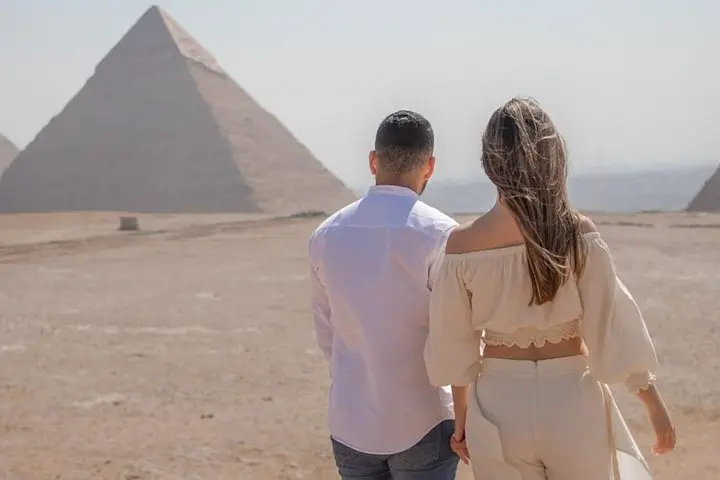
You arrive before the heat has fully settled over the Giza Plateau: limestone glows gold, and the Great Pyramid dominates the horizon—exact, geometric, indifferent to time. Your guide moves between stones and stories, pointing out the lines of dressed blocks and the measured angles that still provoke debate.
Verified experiences and guided adventures in the surrounding area.
Operated by HorizonTravel · Cairo, Cairo Governorate
You arrive before the heat has fully settled over the Giza Plateau: limestone glows gold, and the Great Pyramid dominates the horizon—exact, geometric, indifferent to time. Your guide moves between stones and stories, pointing out the lines of dressed blocks and the measured angles that still provoke debate.
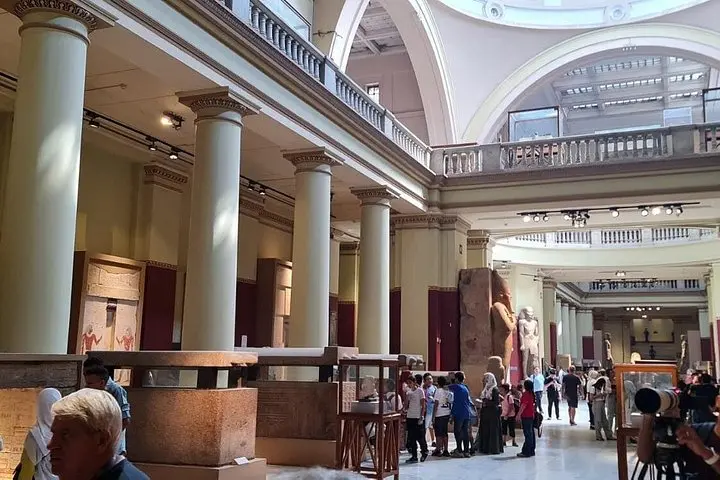
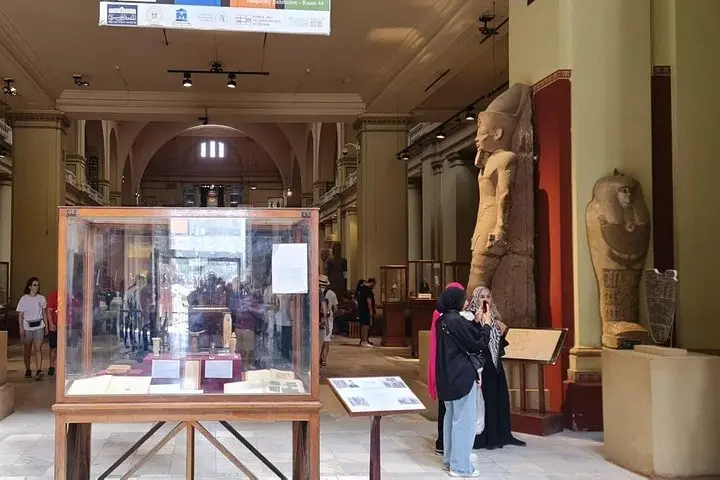
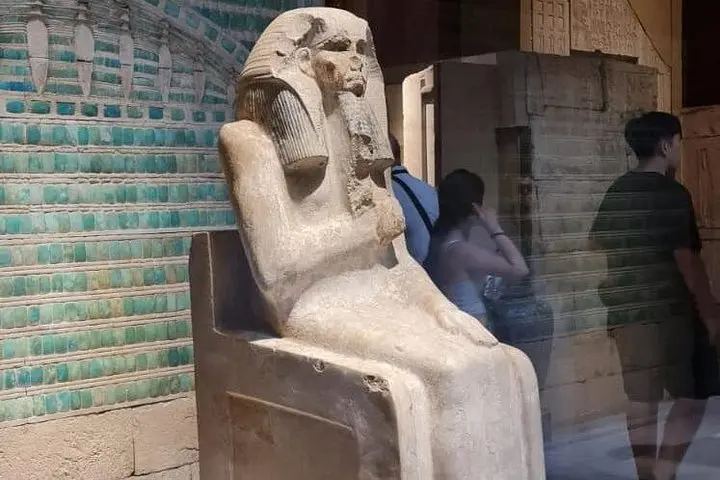
The day pairs two sides of Egypt’s heritage. On the plateau, Fourth Dynasty engineering and funerary culture converge: Khufu’s pyramid, Khafre’s slightly higher ridge, and Menkaure’s smaller stone presence speak to royal ambition and ritual. The Sphinx keeps its forward gaze, an ancient guardian carved from bedrock. In downtown Cairo, the Egyptian Museum (founded 1902) gathers millennia of material culture—Tutankhamun’s funerary treasures, intricately carved sarcophagi, and mummified remains framed by early-20th-century display cases.
Geology and placement matter: the pyramids exploit local limestone quarried from the plateau, while the Nile’s annual rhythms shaped settlement and supply chains that made monumental building possible. Culturally, expect layered narratives—archaeological fact, medieval chronicling, and modern national pride.
Practical guidance: plan for a 6–8 hour day with walking on uneven surfaces, bring sun protection, and carry local currency for entry fees, tips, and optional camel rides. Midday heat alters pacing—start early or target late afternoon light for photographs. Museums are crowded; prioritize key rooms and ask your guide to streamline the highlights. Respect protective barriers at monuments and follow local regulations; conservation depends on visitor behavior. This private tour gives historical depth while keeping logistics straightforward—an efficient way to see Cairo’s signature sites in a single, revealing day.
Most tour rates exclude official entrance fees; confirm with the operator whether pyramid zone and museum tickets are covered or paid locally.
Access to inner chambers varies by ticketing and conservation rules; many tours do not include interior access due to restrictions and extra fees.
The Egyptian Museum has some accessible routes, but the Giza Plateau has uneven terrain and limited mobility access—discuss needs when booking for accommodations.
Tipping is customary for guides, drivers, and service staff; small amounts in local currency at each stop are appropriate and appreciated.
HorizonTravel operates guided outdoor trips and adventures with an emphasis on safety, stewardship, and memorable experiences.
You arrive before the heat has fully settled over the Giza Plateau: limestone glows gold, and the Great Pyramid dominates the horizon—exact, geometric, indifferent to time. Your guide moves between stones and stories, pointing out the lines of dressed blocks and the measured angles that still provoke debate.
You arrive before the heat has fully settled over the Giza Plateau: limestone glows gold, and the Great Pyramid dominates the horizon—exact, geometric, indifferent to time. Your guide moves between stones and stories, pointing out the lines of dressed blocks and the measured angles that still provoke debate.
The day pairs two sides of Egypt’s heritage. On the plateau, Fourth Dynasty engineering and funerary culture converge: Khufu’s pyramid, Khafre’s slightly higher ridge, and Menkaure’s smaller stone presence speak to royal ambition and ritual. The Sphinx keeps its forward gaze, an ancient guardian carved from bedrock. In downtown Cairo, the Egyptian Museum (founded 1902) gathers millennia of material culture—Tutankhamun’s funerary treasures, intricately carved sarcophagi, and mummified remains framed by early-20th-century display cases.
Geology and placement matter: the pyramids exploit local limestone quarried from the plateau, while the Nile’s annual rhythms shaped settlement and supply chains that made monumental building possible. Culturally, expect layered narratives—archaeological fact, medieval chronicling, and modern national pride.
Practical guidance: plan for a 6–8 hour day with walking on uneven surfaces, bring sun protection, and carry local currency for entry fees, tips, and optional camel rides. Midday heat alters pacing—start early or target late afternoon light for photographs. Museums are crowded; prioritize key rooms and ask your guide to streamline the highlights. Respect protective barriers at monuments and follow local regulations; conservation depends on visitor behavior. This private tour gives historical depth while keeping logistics straightforward—an efficient way to see Cairo’s signature sites in a single, revealing day.