THE ADVENTURE COLLECTIVE® · Independent discovery and booking for outdoor travel

Spend a day traveling from Luxor to two of Upper Egypt’s most powerful temple sites. Explore Dendera’s Hathor complex and Abydos’ Seti I temple with a private Egyptologist guide on this full-day cultural drive.
Spend a day traveling from Luxor to two of Upper Egypt’s most powerful temple sites. Explore Dendera’s Hathor complex and Abydos’ Seti I temple with a private Egyptologist guide on this full-day cultural drive.
A pale desert morning unfurls as the minivan leaves Luxor and the Nile nudges the valley awake. Road dust gives way to broad, sun-baked plains; the Temple of Hathor at Dendera rises from that plain like a painted ledger of gods and stars. Inside, the Zodiac ceiling tilts over you—figures still sharp after millennia—and the columns hum with carved music and worship.
Verified experiences and guided adventures in the surrounding area.
Operated by Icon Tours Egypt · Luxor, Luxor Governorate
A pale desert morning unfurls as the minivan leaves Luxor and the Nile nudges the valley awake. Road dust gives way to broad, sun-baked plains; the Temple of Hathor at Dendera rises from that plain like a painted ledger of gods and stars. Inside, the Zodiac ceiling tilts over you—figures still sharp after millennia—and the columns hum with carved music and worship.
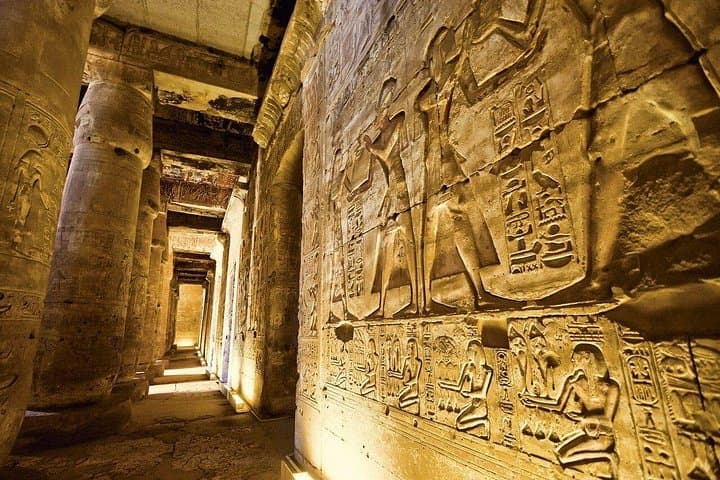
The route continues west toward Abydos, a site older in ritual gravity than its stone suggests. Seti I's temple holds corridors of reliefs and the Abydos King List, a formal roll call of pharaohs carved with careful omission and intent. Geology here is simple: limestone bedrock and wind-polished sand, with temples built on raised masonry plinths to stay dry above the Nile's alluvial plain.
Culturally, both sites mark the overlap of Pharaonic devotion and later Ptolemaic embellishment; guides typically explain iconography, ritual spaces, and how these temples functioned within pilgrimage networks.
Practically, expect a full-day private transfer from Luxor, roughly 8 hours on-site and on the road, and extended periods of standing and walking on stone floors with steps. Wear sturdy shoes, sun protection, and bring cash for souvenirs and tipping. Photography is allowed but be mindful of restricted areas and fragile reliefs. Hydrate frequently—the desert will remind you to drink. The experience rewards curiosity: quiet hypostyle halls, crisp hieroglyphs, and the sense of following ancient footsteps between two of Upper Egypt's most resonant temples.
The full-day private tour is about 8 hours total, including driving time and visits at both temples.
Yes; entrance fees to Dendera and Abydos are included in the itinerary price.
Yes; the tour is rated easy physically, but participants should be able to walk short distances and climb temple steps.
Photography is generally allowed but flash or tripod use may be restricted in some chambers; follow the guide’s instructions.
Icon Tours Egypt operates guided outdoor trips and adventures with an emphasis on safety, stewardship, and memorable experiences.



A pale desert morning unfurls as the minivan leaves Luxor and the Nile nudges the valley awake. Road dust gives way to broad, sun-baked plains; the Temple of Hathor at Dendera rises from that plain like a painted ledger of gods and stars. Inside, the Zodiac ceiling tilts over you—figures still sharp after millennia—and the columns hum with carved music and worship.
A pale desert morning unfurls as the minivan leaves Luxor and the Nile nudges the valley awake. Road dust gives way to broad, sun-baked plains; the Temple of Hathor at Dendera rises from that plain like a painted ledger of gods and stars. Inside, the Zodiac ceiling tilts over you—figures still sharp after millennia—and the columns hum with carved music and worship.
The route continues west toward Abydos, a site older in ritual gravity than its stone suggests. Seti I's temple holds corridors of reliefs and the Abydos King List, a formal roll call of pharaohs carved with careful omission and intent. Geology here is simple: limestone bedrock and wind-polished sand, with temples built on raised masonry plinths to stay dry above the Nile's alluvial plain.
Culturally, both sites mark the overlap of Pharaonic devotion and later Ptolemaic embellishment; guides typically explain iconography, ritual spaces, and how these temples functioned within pilgrimage networks.
Practically, expect a full-day private transfer from Luxor, roughly 8 hours on-site and on the road, and extended periods of standing and walking on stone floors with steps. Wear sturdy shoes, sun protection, and bring cash for souvenirs and tipping. Photography is allowed but be mindful of restricted areas and fragile reliefs. Hydrate frequently—the desert will remind you to drink. The experience rewards curiosity: quiet hypostyle halls, crisp hieroglyphs, and the sense of following ancient footsteps between two of Upper Egypt's most resonant temples.