THE ADVENTURE COLLECTIVE® · Independent discovery and booking for outdoor travel

Turn a transit day between Agra and Jaipur into a cultural detour. This private transfer stops at Fatehpur Sikri’s Mughal palaces and Chand Baori’s dramatic stepwell for a focused half-day of sightseeing en route.
Turn a transit day between Agra and Jaipur into a cultural detour. This private transfer stops at Fatehpur Sikri’s Mughal palaces and Chand Baori’s dramatic stepwell for a focused half-day of sightseeing en route.
You step into an air-conditioned car outside Agra as the city’s bustle slips behind you and the road opens to red sandstone silhouettes. The transfer is a travel day reframed as a corridor of monuments: Fatehpur Sikri rises like a fortified stage, and later the symmetrical descent of Chand Baori forces a long, cool pause.
Verified experiences and guided adventures in the surrounding area.
Operated by Atul Holidays · Fatehpur Sikri, Uttar Pradesh
You step into an air-conditioned car outside Agra as the city’s bustle slips behind you and the road opens to red sandstone silhouettes. The transfer is a travel day reframed as a corridor of monuments: Fatehpur Sikri rises like a fortified stage, and later the symmetrical descent of Chand Baori forces a long, cool pause.
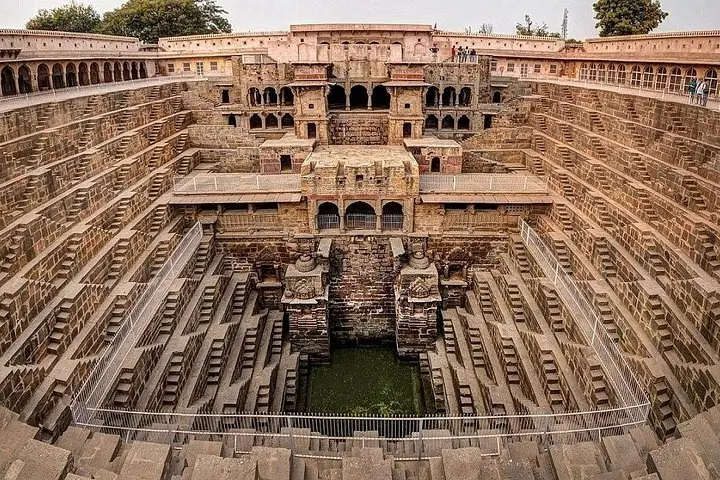
Fatehpur Sikri was founded in the 16th century by Emperor Akbar and served briefly as the Mughal capital; its marble tombs, Buland Darwaza gate and the ornate Diwan-e-Khas reveal a deliberate blend of Hindu and Islamic design. Chand Baori, an architectural solution to seasonal water scarcity in Rajasthan, drops roughly 30 meters into the earth with hundreds of geometric steps that create striking light and shadow.
Geology shifts as you travel—river plains near Agra give way to the drier, more eroded terrain of eastern Rajasthan; sandstone and lime-plaster facades tell the story of local materials and centuries of monsoon exposure. Local culture is visible in roadside markets, temple shrines and the slow pace of villages where camels and tractors share the road.
Practical notes: plan for about eight hours including stops, bring sun protection and sturdy shoes for uneven stone at both sites, and carry cash for local vendors and small entry fees. The transfer is private and accessible to most fitness levels, but weather can make site surfaces slick; aim for an early start to avoid heat and crowds. Expect a compact itinerary—sightseeing, photo stops and a smooth handoff in Jaipur.
No—this transfer includes sightseeing time but not site admission; expect to pay separate entry fees at each monument.
Pickup is arranged in Agra; the service drives west to Fatehpur Sikri, then to Chand Baori before continuing to Jaipur for drop-off.
The vehicle portion is accessible, but both sites have stairs and uneven stone surfaces that may be difficult for those with limited mobility.
Private transfers are often flexible—confirm route and stop durations at booking, but some adjustments may affect price and timing.
Atul Holidays operates guided outdoor trips and adventures with an emphasis on safety, stewardship, and memorable experiences.
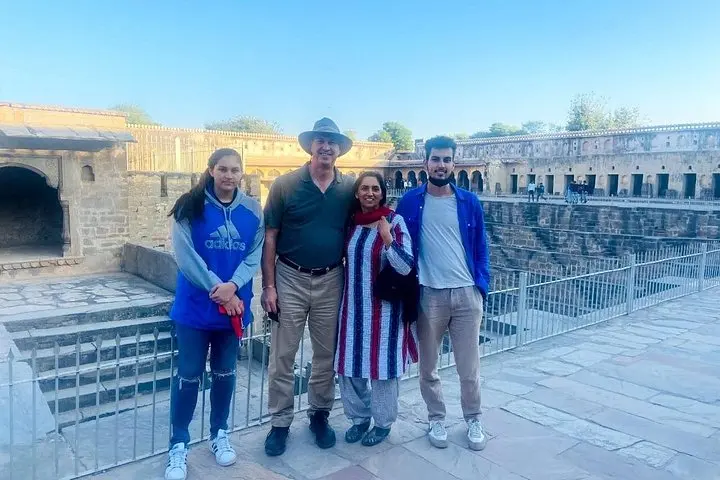
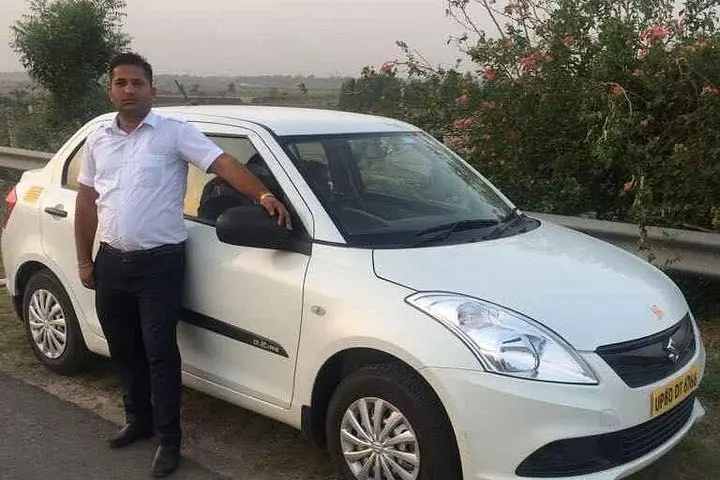

You step into an air-conditioned car outside Agra as the city’s bustle slips behind you and the road opens to red sandstone silhouettes. The transfer is a travel day reframed as a corridor of monuments: Fatehpur Sikri rises like a fortified stage, and later the symmetrical descent of Chand Baori forces a long, cool pause.
You step into an air-conditioned car outside Agra as the city’s bustle slips behind you and the road opens to red sandstone silhouettes. The transfer is a travel day reframed as a corridor of monuments: Fatehpur Sikri rises like a fortified stage, and later the symmetrical descent of Chand Baori forces a long, cool pause.
Fatehpur Sikri was founded in the 16th century by Emperor Akbar and served briefly as the Mughal capital; its marble tombs, Buland Darwaza gate and the ornate Diwan-e-Khas reveal a deliberate blend of Hindu and Islamic design. Chand Baori, an architectural solution to seasonal water scarcity in Rajasthan, drops roughly 30 meters into the earth with hundreds of geometric steps that create striking light and shadow.
Geology shifts as you travel—river plains near Agra give way to the drier, more eroded terrain of eastern Rajasthan; sandstone and lime-plaster facades tell the story of local materials and centuries of monsoon exposure. Local culture is visible in roadside markets, temple shrines and the slow pace of villages where camels and tractors share the road.
Practical notes: plan for about eight hours including stops, bring sun protection and sturdy shoes for uneven stone at both sites, and carry cash for local vendors and small entry fees. The transfer is private and accessible to most fitness levels, but weather can make site surfaces slick; aim for an early start to avoid heat and crowds. Expect a compact itinerary—sightseeing, photo stops and a smooth handoff in Jaipur.