THE ADVENTURE COLLECTIVE® · Independent discovery and booking for outdoor travel

Turn a transfer into an outing: this private ride from Dubrovnik to Split stops in Ston to walk medieval walls, see ancient salt pans and taste local oysters. Expect 3–5 hours total with short, flat walks and coastal scenery.
Turn a transfer into an outing: this private ride from Dubrovnik to Split stops in Ston to walk medieval walls, see ancient salt pans and taste local oysters. Expect 3–5 hours total with short, flat walks and coastal scenery.
A low, salt-scented breeze meets the van as it rounds the Pelješac shoulder toward Ston. Limestone cliffs give way to salt pans that flatten the shore into a mirror for sky; fishermen tend racks of oysters in shallow coves while a medieval stone wall crowns the ridge above. The scene reads like a coastal chapter between Dubrovnik and Split — the drive itself an active part of the day.
Verified experiences and guided adventures in the surrounding area.
Operated by CROATIA PRIVATE TOURS · Ston, Dubrovnik-Neretva County
A low, salt-scented breeze meets the van as it rounds the Pelješac shoulder toward Ston. Limestone cliffs give way to salt pans that flatten the shore into a mirror for sky; fishermen tend racks of oysters in shallow coves while a medieval stone wall crowns the ridge above. The scene reads like a coastal chapter between Dubrovnik and Split — the drive itself an active part of the day.
Ston’s ramparts were begun in the 14th century to protect valuable saltworks and the Republic of Ragusa’s maritime trade; the surviving stretch (commonly cited at roughly 5.5 km) remains one of Europe’s longest preserved defensive walls. Geologically, the area is karst — hard limestone, low scrub, and terraces shaped by centuries of salt harvesting. Oyster farming here traces Roman-era practices, and local tavernas still sell freshly shucked shellfish beside harvested salt pools whose evaporation pans date back to at least the 9th century.
Practically speaking, expect a 3–5 hour door-to-door transfer depending on stops and traffic, with roughly 230 km of coastal driving if continuing to Split. The visit typically includes short walks up to the walls, flat paths around the pans, and time at a small oyster farm or tasting spot. Bring layered sun protection, comfortable walking shoes, and a small daypack for purchases and water. Travelers should allow time for narrow village streets and ask ahead about luggage limits; this is a relaxed, accessible excursion that turns a transit day into a compact cultural and coastal immersion.
Typical itineraries allow approximately 60–90 minutes in Ston for a walk on the walls, a look at the salt pans, and a short visit to oyster farms or a tasting spot.
Sections include stone steps and narrow paths but are generally short and manageable; choose comfortable shoes and take your time on exposed stretches.
Most operators limit passengers to one suitcase and one carry-on; oversized or specialized gear (bikes, surfboards) must be approved in advance to avoid surcharges or refusal.
Oyster visits are commonly offered as a stop but tastings are often optional and may incur an additional charge depending on the operator.
CROATIA PRIVATE TOURS operates guided outdoor trips and adventures with an emphasis on safety, stewardship, and memorable experiences.
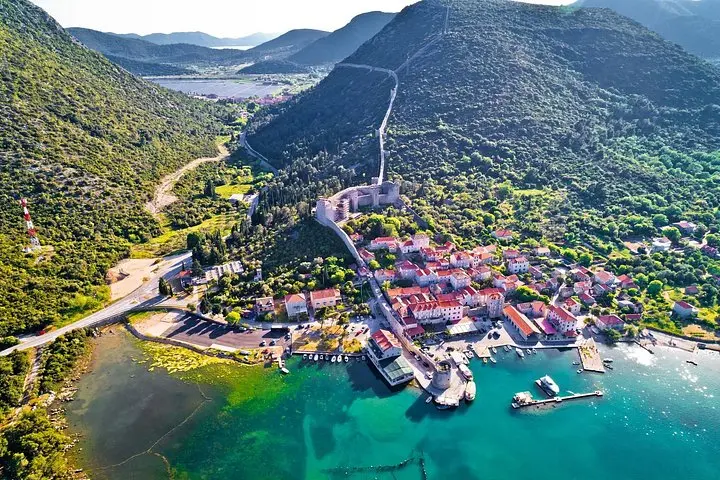
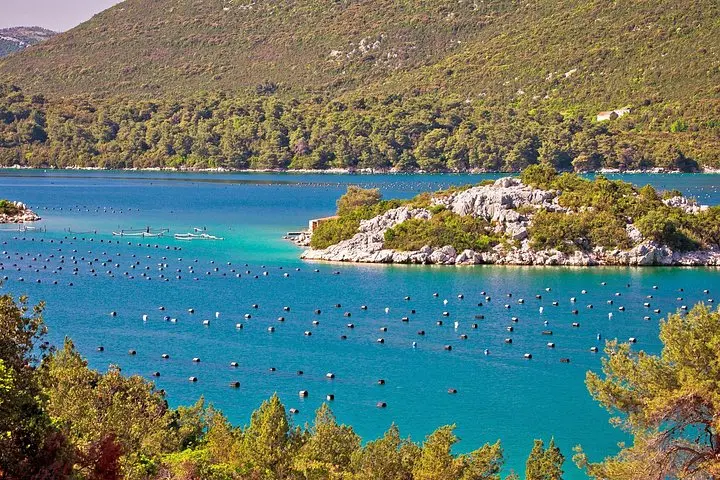
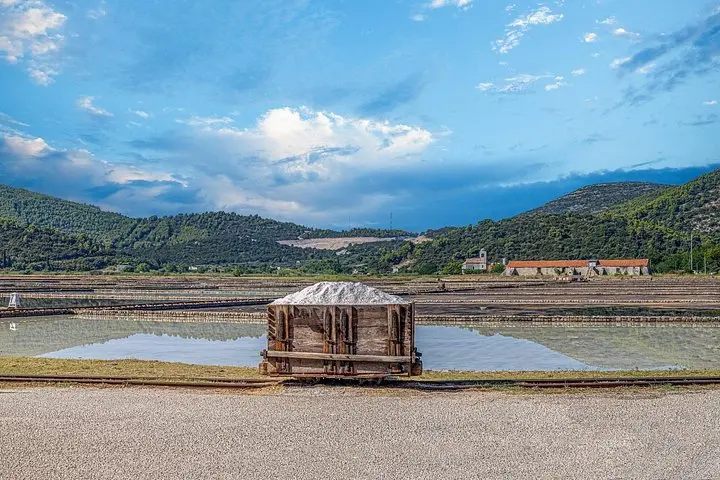
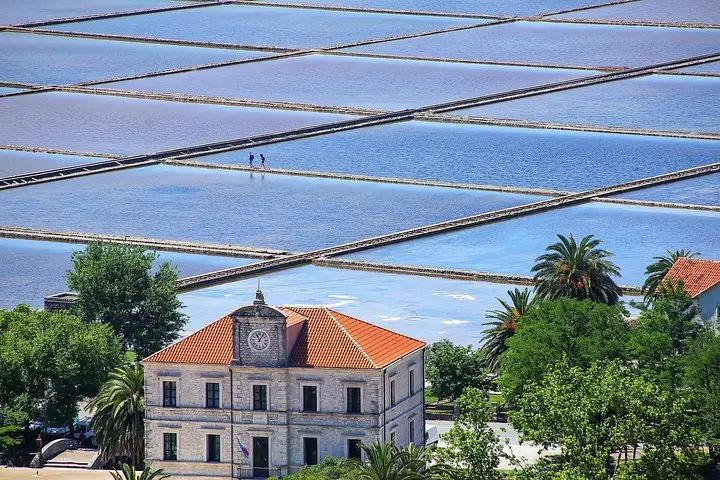
A low, salt-scented breeze meets the van as it rounds the Pelješac shoulder toward Ston. Limestone cliffs give way to salt pans that flatten the shore into a mirror for sky; fishermen tend racks of oysters in shallow coves while a medieval stone wall crowns the ridge above. The scene reads like a coastal chapter between Dubrovnik and Split — the drive itself an active part of the day.
A low, salt-scented breeze meets the van as it rounds the Pelješac shoulder toward Ston. Limestone cliffs give way to salt pans that flatten the shore into a mirror for sky; fishermen tend racks of oysters in shallow coves while a medieval stone wall crowns the ridge above. The scene reads like a coastal chapter between Dubrovnik and Split — the drive itself an active part of the day.
Ston’s ramparts were begun in the 14th century to protect valuable saltworks and the Republic of Ragusa’s maritime trade; the surviving stretch (commonly cited at roughly 5.5 km) remains one of Europe’s longest preserved defensive walls. Geologically, the area is karst — hard limestone, low scrub, and terraces shaped by centuries of salt harvesting. Oyster farming here traces Roman-era practices, and local tavernas still sell freshly shucked shellfish beside harvested salt pools whose evaporation pans date back to at least the 9th century.
Practically speaking, expect a 3–5 hour door-to-door transfer depending on stops and traffic, with roughly 230 km of coastal driving if continuing to Split. The visit typically includes short walks up to the walls, flat paths around the pans, and time at a small oyster farm or tasting spot. Bring layered sun protection, comfortable walking shoes, and a small daypack for purchases and water. Travelers should allow time for narrow village streets and ask ahead about luggage limits; this is a relaxed, accessible excursion that turns a transit day into a compact cultural and coastal immersion.