THE ADVENTURE COLLECTIVE® · Independent discovery and booking for outdoor travel

Move from Halong Bay’s limestone towers to Sapa’s terraced highlands in a private, air-conditioned car. This one‑way transfer takes about 6–7 hours with flexible pickup and short stops along the route.
Move from Halong Bay’s limestone towers to Sapa’s terraced highlands in a private, air-conditioned car. This one‑way transfer takes about 6–7 hours with flexible pickup and short stops along the route.
The road unwinds out of Halong’s limestone scaffolding and climbs into rice terraces that widen into Sapa’s cool highlands. In a private car the landscape moves deliberately: karst islands recede, provincial towns slip past, and the air changes from humid bay mist to crisp mountain breath.
Verified experiences and guided adventures in the surrounding area.
Operated by Hanoi Vip Transfer · Sapa, Lào Cai
The road unwinds out of Halong’s limestone scaffolding and climbs into rice terraces that widen into Sapa’s cool highlands. In a private car the landscape moves deliberately: karst islands recede, provincial towns slip past, and the air changes from humid bay mist to crisp mountain breath.
This route links two very different chapters of northern Vietnam. Ha Long Bay’s karst towers are the product of hundreds of millions of years of limestone weathering; Sapa is a colonial-era hill station surrounded by terraced fields tended by Hmong and Dao communities. Along the way you’ll pass working villages, highway marketplaces, and forested ridgelines that tell the story of a region shaped by geology and human stewardship.
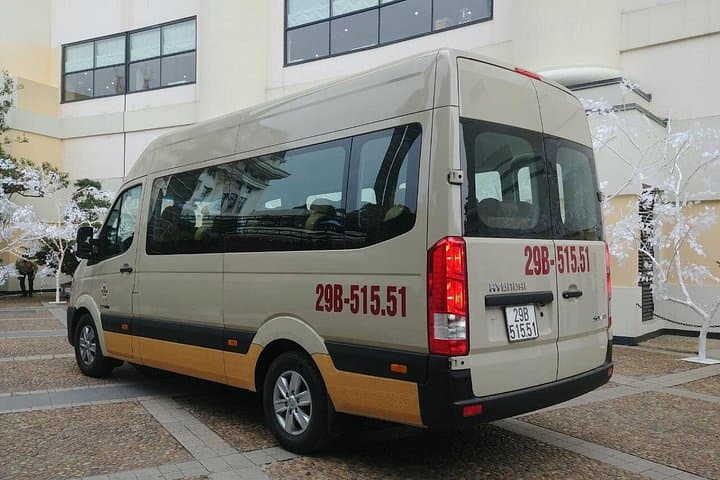
The service is straightforward: a modern, air-conditioned private vehicle, bottled water, an English-speaking driver with local knowledge, and flexible pickup/drop-off at hotels, ports, or accessible roadside points. Expect about 500 kilometers and roughly 6–7 hours of driving with short restroom and leg-stretch stops. Roads are a mix of highway and mountain passes—comfortable but sometimes winding in the last stretches toward Sapa.
Practical guidance: book a departure time that avoids peak holiday traffic, bring layered clothing for the temperature swing, carry motion-sickness remedies if you’re sensitive to switchbacks, and have local cash ready for small snacks or roadside purchases. If you want a detour—Silver Waterfall or Tram Ton Pass—confirm extra time in advance. Drivers handle tolls and fuel; infants must sit on laps. For a long single-day transfer this private ride balances comfort and control while leaving you free to watch northern Vietnam unfold outside the window.
Typical travel time is about 6–7 hours (approximately 500 kilometers) including short restroom and stretch breaks.
Yes—short detours (e.g., Silver Waterfall or Tram Ton Pass) are possible but must be arranged and paid for in advance as extra time.
Yes; gasoline, tolls, and basic fees are included in the booking price according to the operator’s listing.
Infants are required to sit on an adult’s lap for this service; request details from the operator if you need a child restraint.
Hanoi Vip Transfer operates guided outdoor trips and adventures with an emphasis on safety, stewardship, and memorable experiences.


The road unwinds out of Halong’s limestone scaffolding and climbs into rice terraces that widen into Sapa’s cool highlands. In a private car the landscape moves deliberately: karst islands recede, provincial towns slip past, and the air changes from humid bay mist to crisp mountain breath.
The road unwinds out of Halong’s limestone scaffolding and climbs into rice terraces that widen into Sapa’s cool highlands. In a private car the landscape moves deliberately: karst islands recede, provincial towns slip past, and the air changes from humid bay mist to crisp mountain breath.
This route links two very different chapters of northern Vietnam. Ha Long Bay’s karst towers are the product of hundreds of millions of years of limestone weathering; Sapa is a colonial-era hill station surrounded by terraced fields tended by Hmong and Dao communities. Along the way you’ll pass working villages, highway marketplaces, and forested ridgelines that tell the story of a region shaped by geology and human stewardship.
The service is straightforward: a modern, air-conditioned private vehicle, bottled water, an English-speaking driver with local knowledge, and flexible pickup/drop-off at hotels, ports, or accessible roadside points. Expect about 500 kilometers and roughly 6–7 hours of driving with short restroom and leg-stretch stops. Roads are a mix of highway and mountain passes—comfortable but sometimes winding in the last stretches toward Sapa.
Practical guidance: book a departure time that avoids peak holiday traffic, bring layered clothing for the temperature swing, carry motion-sickness remedies if you’re sensitive to switchbacks, and have local cash ready for small snacks or roadside purchases. If you want a detour—Silver Waterfall or Tram Ton Pass—confirm extra time in advance. Drivers handle tolls and fuel; infants must sit on laps. For a long single-day transfer this private ride balances comfort and control while leaving you free to watch northern Vietnam unfold outside the window.