THE ADVENTURE COLLECTIVE® · Independent discovery and booking for outdoor travel

Spend a private day at Tulum’s coastal ruins and nearby cenotes with a certified guide. Combine Mayan history, limestone cavern swims and practical local tips in a single accessible tour.
Spend a private day at Tulum’s coastal ruins and nearby cenotes with a certified guide. Combine Mayan history, limestone cavern swims and practical local tips in a single accessible tour.
The tour begins at the pale stone gates of Tulum, where sea-salted wind pushes through the ruined walls and the Caribbean beyond waits like a bright promise. Visitors stand on low cliffs, watching waves measure time against an ancient watchtower while guide narration places each stone into Mayan life—trade, ritual and coastal defense.
Verified experiences and guided adventures in the surrounding area.
Operated by Viajes Tours Maya · Tulum, Quintana Roo
The tour begins at the pale stone gates of Tulum, where sea-salted wind pushes through the ruined walls and the Caribbean beyond waits like a bright promise. Visitors stand on low cliffs, watching waves measure time against an ancient watchtower while guide narration places each stone into Mayan life—trade, ritual and coastal defense.
Tulum was a late‑postclassic Maya port, its masonry and murals preserved by coastal aridity and intentional conservation. The geology shifts quickly here: porous limestone cliffs give way inland to sinkholes and caverns where cenotes form from collapsed cave roofs. In the cenotes the water holds a different light—green-blue and still—and bats and fish move like punctuation in the dark.
Culturally the day pairs archaeology with contemporary coastal life: expect explanations of Maya cosmology at the site and practical notes on modern Tulum’s tourism economy, local taxes and access. Guides generally provide snorkel gear, bottled water and basic safety instruction before entering semi‑open and open cenotes; most cenotes visited on private trips are shallow entry with platforms, but depths vary.
Practical guidance is straightforward: wear a biodegradable sunscreen, bring a swim layer and water shoes, and plan for about seven hours including transport. Early starts avoid the midday heat and busiest ruin hours; keep cash for local food and the modest municipal tax. The experience balances easy walking through ruins with calm swims in freshwater caverns—good for travelers who want culture and cooling water in a single, accessible day.
The itinerary indicates archaeological admission is included for Tulum; some cenote fees or the municipal tax may be handled by the operator but bring small cash in case.
Swimming is optional, but snorkel gear is provided and most visitors choose to enter—basic swimming ability is recommended.
Tulum’s main archaeological area has uneven paths and steps; some cenotes have platforms but most are not fully wheelchair accessible—check with the operator for specifics.
Full refund available if canceled at least 24 hours before the scheduled departure; weather can also trigger cancellations.
Viajes Tours Maya operates guided outdoor trips and adventures with an emphasis on safety, stewardship, and memorable experiences.

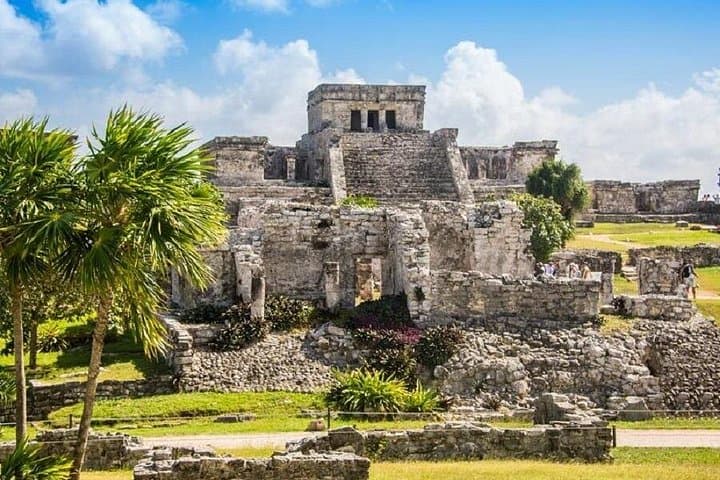

The tour begins at the pale stone gates of Tulum, where sea-salted wind pushes through the ruined walls and the Caribbean beyond waits like a bright promise. Visitors stand on low cliffs, watching waves measure time against an ancient watchtower while guide narration places each stone into Mayan life—trade, ritual and coastal defense.
The tour begins at the pale stone gates of Tulum, where sea-salted wind pushes through the ruined walls and the Caribbean beyond waits like a bright promise. Visitors stand on low cliffs, watching waves measure time against an ancient watchtower while guide narration places each stone into Mayan life—trade, ritual and coastal defense.
Tulum was a late‑postclassic Maya port, its masonry and murals preserved by coastal aridity and intentional conservation. The geology shifts quickly here: porous limestone cliffs give way inland to sinkholes and caverns where cenotes form from collapsed cave roofs. In the cenotes the water holds a different light—green-blue and still—and bats and fish move like punctuation in the dark.
Culturally the day pairs archaeology with contemporary coastal life: expect explanations of Maya cosmology at the site and practical notes on modern Tulum’s tourism economy, local taxes and access. Guides generally provide snorkel gear, bottled water and basic safety instruction before entering semi‑open and open cenotes; most cenotes visited on private trips are shallow entry with platforms, but depths vary.
Practical guidance is straightforward: wear a biodegradable sunscreen, bring a swim layer and water shoes, and plan for about seven hours including transport. Early starts avoid the midday heat and busiest ruin hours; keep cash for local food and the modest municipal tax. The experience balances easy walking through ruins with calm swims in freshwater caverns—good for travelers who want culture and cooling water in a single, accessible day.