THE ADVENTURE COLLECTIVE® · Independent discovery and booking for outdoor travel

Walk the cliff-edge ruins of Tulum where Caribbean blue meets ancient stone, then slip under the earth to float through Sac Actun’s cavernous halls. This private five-hour tour pairs coastal archaeology with an unforgettable underground snorkeling experience.
Walk the cliff-edge ruins of Tulum where Caribbean blue meets ancient stone, then slip under the earth to float through Sac Actun’s cavernous halls. This private five-hour tour pairs coastal archaeology with an unforgettable underground snorkeling experience.
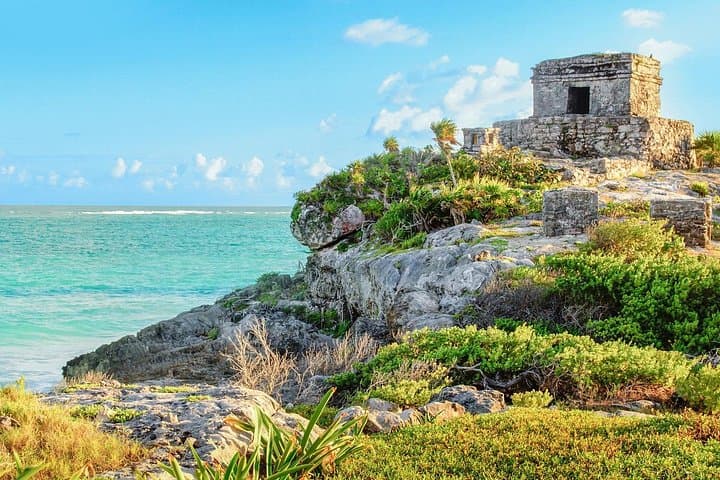
The breeze off the Caribbean lifts the salt from the sea and carries it across a sun-baked path toward a low stone wall. You step through the entrance gate and the ruins of Tulum open like a stage: a compact cluster of limestone temples perched over a turquoise shelf. For two hours the guide walks you through carved stucco fragments and the Castillo’s cliffside vantage point, where waves audibly score the shore below and the coastline unfolds toward Sian Ka’an.
Verified experiences and guided adventures in the surrounding area.
Operated by Trip To Mexico · Tulum, Quintana Roo
The breeze off the Caribbean lifts the salt from the sea and carries it across a sun-baked path toward a low stone wall. You step through the entrance gate and the ruins of Tulum open like a stage: a compact cluster of limestone temples perched over a turquoise shelf. For two hours the guide walks you through carved stucco fragments and the Castillo’s cliffside vantage point, where waves audibly score the shore below and the coastline unfolds toward Sian Ka’an.
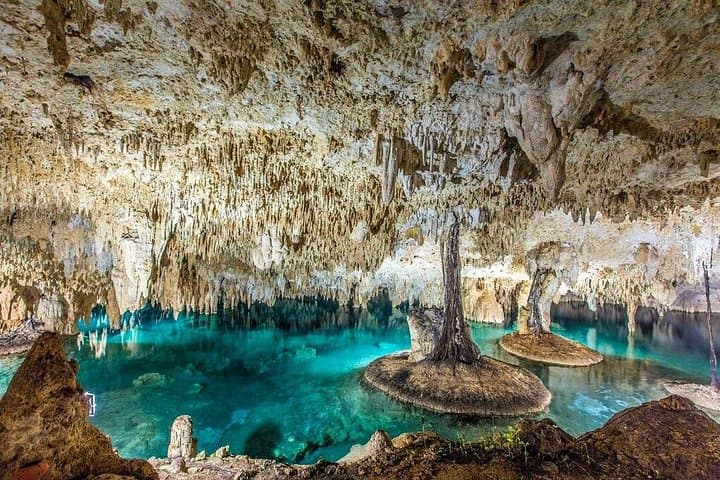
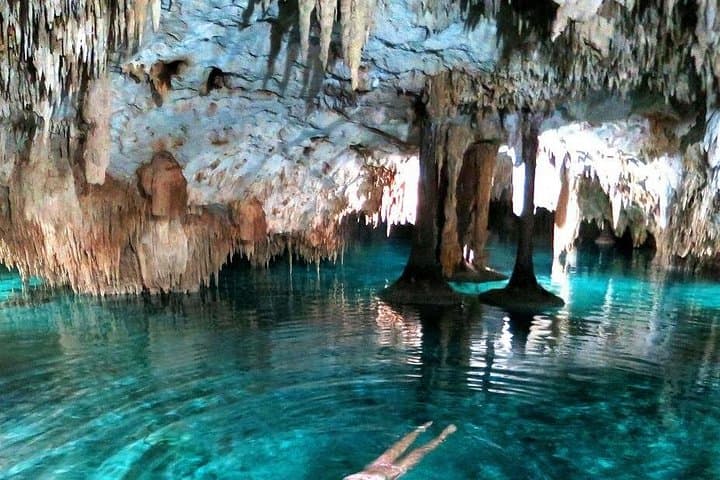
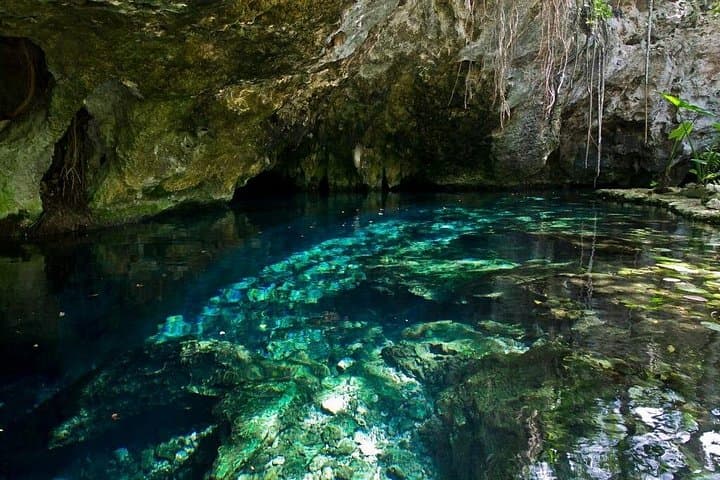
Then the day turns inward. A short drive through scrub forest delivers you to a sinkhole mouth where light collapses into shadow. Sac Actun—the ‘‘white cave’’ in Maya—invites you to slip into water that still remembers the Pleistocene. The cave system is the result of millions of years of limestone dissolution; passages stretch horizontally through a karst network that explorers connected into the modern Sac Actun complex in the early 2000s, making it one of the longest surveyed underwater cave systems on Earth. Stalactites and stalagmites hang like slow-motion architecture; when you glide through, the current is patient but insistent, nudging you through chambers carved by time.
Culturally, this route threads two facets of Yucatán: the coastal rituals and the subterranean rites. The Maya considered cenotes sacred portals; archaeologists still find ceremonial offerings and artifacts in underwater chambers. Today the caves are protected, and reputable operators emphasize low-impact visits—biodegradable sunscreen, no-touch policies for speleothems, and strict group sizes.
Practically, this is a five-hour private tour with hotel pickup across Puerto Morelos, Playa del Carmen and Playacar. Expect roughly two hours at Tulum’s archaeological site and about three hours at Sac Actun for changing, briefing, and guided snorkeling through mapped passages. Fitness requirements are moderate: you’ll swim short distances and tread water in life vests while a guide leads. Bring a swimsuit, quick-dry layers, water shoes, a small waterproof camera, and a change of clothes.
Timing matters. Arrive early to Tulum to avoid midday crowds and harsh light; early afternoon is best for entering Sac Actun when water temperatures are warmest. Photographers will favor low-angle light at the Castillo and the soft, filtered shafts in open cenote chambers. Above all, move deliberately—these are fragile landscapes where your smallest adjustments protect formations that have grown for millennia.
This pairing—ruins on the edge of the sea and an inland cathedral of stone and water—gives a compressed lesson in Yucatán geology, Mayan cosmology, and modern conservation practice. It’s scenic, tactile, and quietly humbling: the kind of day trip that leaves you with sun on your shoulders and the sense you’ve walked through layers of time.
Yes—tours provide life vests and a guide escorts the group through mapped passages; basic swimming comfort is required but full cave-diving skills are not.
Policies vary by operator, but children old enough to swim and wear a life vest are generally allowed—confirm with the supplier for infants or very young children.
Bring a swimsuit, towel, biodegradable sunscreen, a change of clothes, water shoes, and a small waterproof camera or dry bag.
Yes in many sections, but flash and touching formations are prohibited—follow your guide’s instructions to avoid harming delicate speleothems.
Drive times are typically 20–45 minutes depending on the cenote and traffic; the tour’s schedule accounts for transit and changing time.
Basic facilities are available at the cenote and the Tulum site, but they can be rustic—pack what you need for comfort.
Trip To Mexico operates guided outdoor trips and adventures with an emphasis on safety, stewardship, and memorable experiences.
The breeze off the Caribbean lifts the salt from the sea and carries it across a sun-baked path toward a low stone wall. You step through the entrance gate and the ruins of Tulum open like a stage: a compact cluster of limestone temples perched over a turquoise shelf. For two hours the guide walks you through carved stucco fragments and the Castillo’s cliffside vantage point, where waves audibly score the shore below and the coastline unfolds toward Sian Ka’an.
The breeze off the Caribbean lifts the salt from the sea and carries it across a sun-baked path toward a low stone wall. You step through the entrance gate and the ruins of Tulum open like a stage: a compact cluster of limestone temples perched over a turquoise shelf. For two hours the guide walks you through carved stucco fragments and the Castillo’s cliffside vantage point, where waves audibly score the shore below and the coastline unfolds toward Sian Ka’an.
Then the day turns inward. A short drive through scrub forest delivers you to a sinkhole mouth where light collapses into shadow. Sac Actun—the ‘‘white cave’’ in Maya—invites you to slip into water that still remembers the Pleistocene. The cave system is the result of millions of years of limestone dissolution; passages stretch horizontally through a karst network that explorers connected into the modern Sac Actun complex in the early 2000s, making it one of the longest surveyed underwater cave systems on Earth. Stalactites and stalagmites hang like slow-motion architecture; when you glide through, the current is patient but insistent, nudging you through chambers carved by time.
Culturally, this route threads two facets of Yucatán: the coastal rituals and the subterranean rites. The Maya considered cenotes sacred portals; archaeologists still find ceremonial offerings and artifacts in underwater chambers. Today the caves are protected, and reputable operators emphasize low-impact visits—biodegradable sunscreen, no-touch policies for speleothems, and strict group sizes.
Practically, this is a five-hour private tour with hotel pickup across Puerto Morelos, Playa del Carmen and Playacar. Expect roughly two hours at Tulum’s archaeological site and about three hours at Sac Actun for changing, briefing, and guided snorkeling through mapped passages. Fitness requirements are moderate: you’ll swim short distances and tread water in life vests while a guide leads. Bring a swimsuit, quick-dry layers, water shoes, a small waterproof camera, and a change of clothes.
Timing matters. Arrive early to Tulum to avoid midday crowds and harsh light; early afternoon is best for entering Sac Actun when water temperatures are warmest. Photographers will favor low-angle light at the Castillo and the soft, filtered shafts in open cenote chambers. Above all, move deliberately—these are fragile landscapes where your smallest adjustments protect formations that have grown for millennia.
This pairing—ruins on the edge of the sea and an inland cathedral of stone and water—gives a compressed lesson in Yucatán geology, Mayan cosmology, and modern conservation practice. It’s scenic, tactile, and quietly humbling: the kind of day trip that leaves you with sun on your shoulders and the sense you’ve walked through layers of time.