THE ADVENTURE COLLECTIVE® · Independent discovery and booking for outdoor travel

Turn Renaissance masterpieces into a family adventure: a private, kid-friendly 2.5-hour tour of the Uffizi that mixes storytelling, games, and curated stops at Botticelli, Leonardo, and more. Practical tips on accessibility, ID requirements, and timing help families plan an engaging museum visit.
Turn Renaissance masterpieces into a family adventure: a private, kid-friendly 2.5-hour tour of the Uffizi that mixes storytelling, games, and curated stops at Botticelli, Leonardo, and more. Practical tips on accessibility, ID requirements, and timing help families plan an engaging museum visit.
You step into Piazza della Signoria, the bronze Horse of Cosimo at your back and the wide loggia of Renaissance façades pushing the city's history into the open air.
Verified experiences and guided adventures in the surrounding area.
Operated by Mamma Mia! Tours · Florence, Tuscany
You step into Piazza della Signoria, the bronze Horse of Cosimo at your back and the wide loggia of Renaissance façades pushing the city's history into the open air.
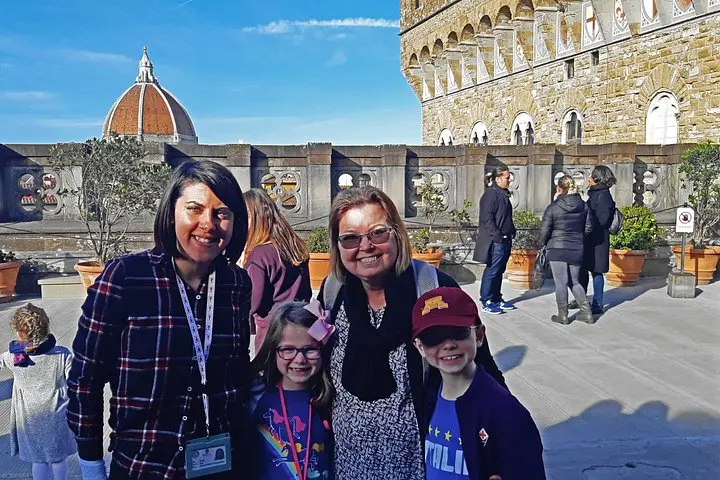
Inside the Uffizi, rooms curve around light-filled galleries where Botticelli's figures hold court and carved marble eyes follow you from centuries past. A kid-focused guide keeps the pace brisk: short games, scorecards and questions that turn masterpieces into puzzles rather than lectures.
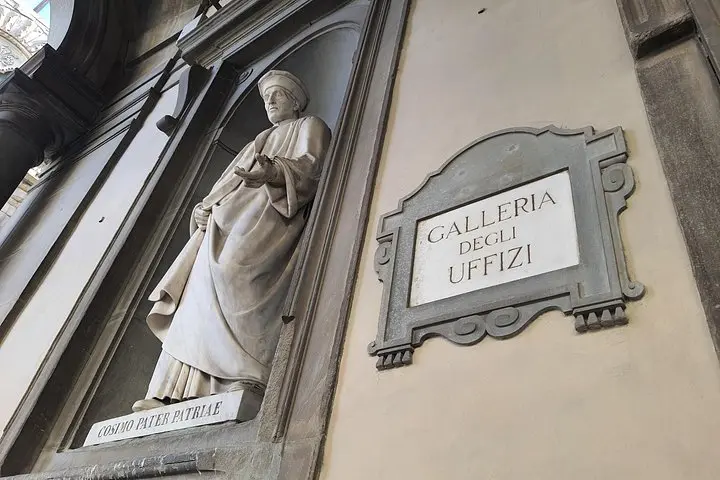
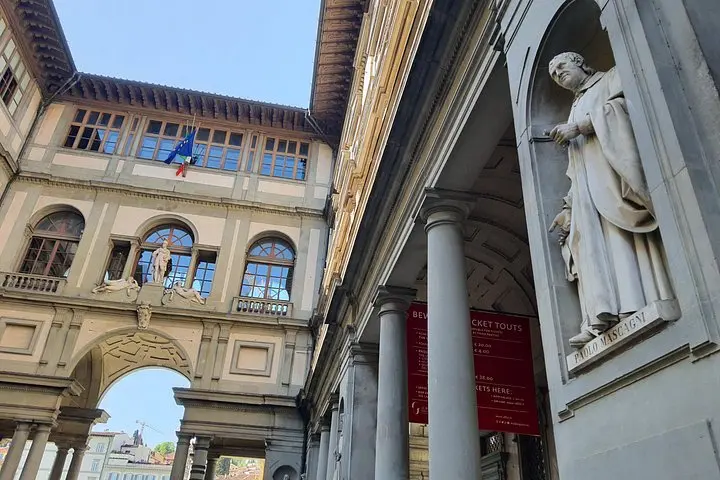
The Uffizi began as offices for Cosimo I de' Medici in the mid-16th century, designed by Giorgio Vasari to face the Arno and link civic power with artistic patronage. The collection charted here maps Florence's central role in the Renaissance—Botticelli, Leonardo, Raphael, Caravaggio—and shows the city's shift from merchant hub to artistic engine. Geology is minimal inside, but step outside to the Arno terraces and you’ll see the river's shaping of Florence’s street plan and bridge-building history.
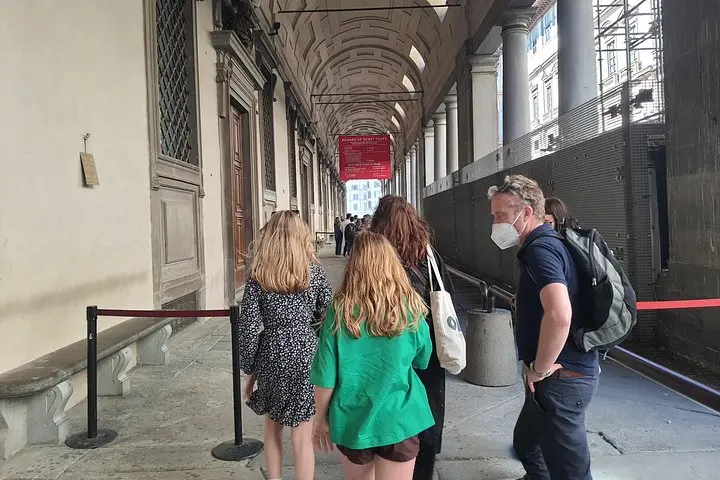
Practically: expect 2.5 hours of standing and walking on stone floors with tight galleries; stroller and wheelchair access is available but some rooms are compact. Bring a small backpack, water, and a charged phone for photos where allowed; flash and tripods are prohibited. The tour requires ID that matches booking names for entry and is best scheduled early morning or late afternoon to avoid peak crowds.
For families, the payoff is immediate—art becomes a series of questions and stories, and the city’s layered past becomes a playground for curiosity rather than a dry lecture.
The tour lists entrance fee as included; confirm at booking and have ID ready for ticketing.
The tour is suitable for children aged 6 and over, with activities tailored to that age group and older.
Yes—transportation and surfaces are listed as wheelchair-accessible; notify the operator of special needs in advance.
Yes—each traveler must present a valid passport or ID matching the booking name to enter the Uffizi.
Mamma Mia! Tours operates guided outdoor trips and adventures with an emphasis on safety, stewardship, and memorable experiences.
You step into Piazza della Signoria, the bronze Horse of Cosimo at your back and the wide loggia of Renaissance façades pushing the city's history into the open air.
You step into Piazza della Signoria, the bronze Horse of Cosimo at your back and the wide loggia of Renaissance façades pushing the city's history into the open air.
Inside the Uffizi, rooms curve around light-filled galleries where Botticelli's figures hold court and carved marble eyes follow you from centuries past. A kid-focused guide keeps the pace brisk: short games, scorecards and questions that turn masterpieces into puzzles rather than lectures.
The Uffizi began as offices for Cosimo I de' Medici in the mid-16th century, designed by Giorgio Vasari to face the Arno and link civic power with artistic patronage. The collection charted here maps Florence's central role in the Renaissance—Botticelli, Leonardo, Raphael, Caravaggio—and shows the city's shift from merchant hub to artistic engine. Geology is minimal inside, but step outside to the Arno terraces and you’ll see the river's shaping of Florence’s street plan and bridge-building history.
Practically: expect 2.5 hours of standing and walking on stone floors with tight galleries; stroller and wheelchair access is available but some rooms are compact. Bring a small backpack, water, and a charged phone for photos where allowed; flash and tripods are prohibited. The tour requires ID that matches booking names for entry and is best scheduled early morning or late afternoon to avoid peak crowds.
For families, the payoff is immediate—art becomes a series of questions and stories, and the city’s layered past becomes a playground for curiosity rather than a dry lecture.