THE ADVENTURE COLLECTIVE® · Independent discovery and booking for outdoor travel

Explore Vaduz on a private two-hour walking tour that pairs Gothic cathedral details with modern government architecture and commanding views of Vaduz Castle. A local guide explains history, civic life, and practical tips for getting the most from the town’s compact layout.
Explore Vaduz on a private two-hour walking tour that pairs Gothic cathedral details with modern government architecture and commanding views of Vaduz Castle. A local guide explains history, civic life, and practical tips for getting the most from the town’s compact layout.
You step onto a narrow street where granite facades meet sharp alpine light, and Vaduz unfolds like a compact map of power and place. The guide leads you past low-traffic lanes, the National Library’s restrained façade, and the steepled silhouette of St. Florin’s Cathedral, all under the watch of the hill where Vaduz Castle looms—visible but private, its stone body keeping a quiet presence above the town.
Verified experiences and guided adventures in the surrounding area.
Operated by Opatrip.com Liechtenstein · Vaduz, Vaduz
You step onto a narrow street where granite facades meet sharp alpine light, and Vaduz unfolds like a compact map of power and place. The guide leads you past low-traffic lanes, the National Library’s restrained façade, and the steepled silhouette of St. Florin’s Cathedral, all under the watch of the hill where Vaduz Castle looms—visible but private, its stone body keeping a quiet presence above the town.
Vaduz’s streets reflect a long arc: medieval market town roots, the principality’s elevation to sovereignty in 1719, and 20th-century civic projects that introduced modernist government buildings. Geologically, the town sits at the northern edge of the Alps where glacially carved valleys meet the Rhine plain; you’ll notice the folded hills and local stone in older buildings. Culturally, Liechtenstein balances ceremonial statecraft with everyday mountain rhythms—parliamentary life occurs within plain, functional structures that contrast with the Gothic lines of the cathedral.
Expect a paced two-hour walk that alternates exterior architectural stops, civic squares, and vantage points for photos of the castle and valley. The guide will point out construction dates, stylistic cues, and a few civic anecdotes about the monarchy and governance.
Practical notes: wear stable shoes for cobbles and short uphill pitches, carry a light rain layer (weather shifts fast near the Alps), and bring CHF or a card—small cafés accept cards but coins are handy. Respect signs at government buildings and the private nature of the castle; public viewpoints are excellent and accessible.
Meeting location is typically in central Vaduz near the main square; exact meeting instructions are provided at booking.
This walking tour focuses on exterior visits and commentary; museum entries or castle access are not included.
Yes — the route is easy-paced with short distances between stops, but check for mobility needs due to cobbles and mild slopes.
No passport is required to tour Vaduz itself, but carry ID if you plan to cross nearby borders into Switzerland or Austria afterward.
Opatrip.com Liechtenstein operates guided outdoor trips and adventures with an emphasis on safety, stewardship, and memorable experiences.

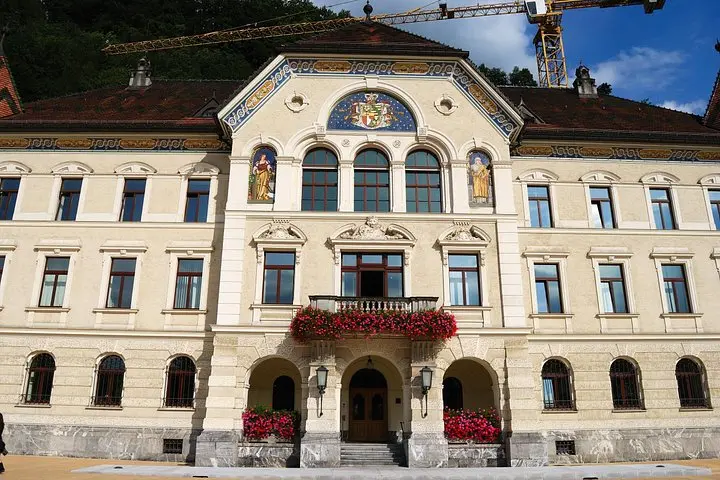

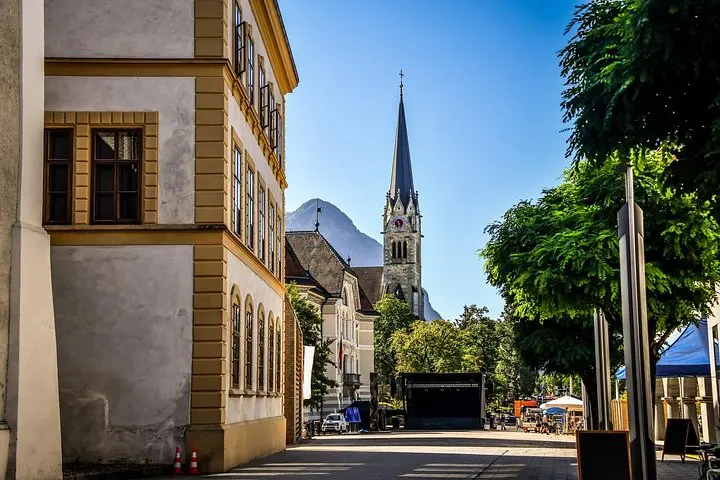
You step onto a narrow street where granite facades meet sharp alpine light, and Vaduz unfolds like a compact map of power and place. The guide leads you past low-traffic lanes, the National Library’s restrained façade, and the steepled silhouette of St. Florin’s Cathedral, all under the watch of the hill where Vaduz Castle looms—visible but private, its stone body keeping a quiet presence above the town.
You step onto a narrow street where granite facades meet sharp alpine light, and Vaduz unfolds like a compact map of power and place. The guide leads you past low-traffic lanes, the National Library’s restrained façade, and the steepled silhouette of St. Florin’s Cathedral, all under the watch of the hill where Vaduz Castle looms—visible but private, its stone body keeping a quiet presence above the town.
Vaduz’s streets reflect a long arc: medieval market town roots, the principality’s elevation to sovereignty in 1719, and 20th-century civic projects that introduced modernist government buildings. Geologically, the town sits at the northern edge of the Alps where glacially carved valleys meet the Rhine plain; you’ll notice the folded hills and local stone in older buildings. Culturally, Liechtenstein balances ceremonial statecraft with everyday mountain rhythms—parliamentary life occurs within plain, functional structures that contrast with the Gothic lines of the cathedral.
Expect a paced two-hour walk that alternates exterior architectural stops, civic squares, and vantage points for photos of the castle and valley. The guide will point out construction dates, stylistic cues, and a few civic anecdotes about the monarchy and governance.
Practical notes: wear stable shoes for cobbles and short uphill pitches, carry a light rain layer (weather shifts fast near the Alps), and bring CHF or a card—small cafés accept cards but coins are handy. Respect signs at government buildings and the private nature of the castle; public viewpoints are excellent and accessible.