THE ADVENTURE COLLECTIVE® · Independent discovery and booking for outdoor travel

Drive out of Las Vegas into a desert of blistering red rock and layered sandstone on a private six‑hour tour of Valley of Fire. Visit Fire Wave, White Domes, Elephant Rock and ancient petroglyph panels while your guide handles logistics, history and the best photo angles.
Drive out of Las Vegas into a desert of blistering red rock and layered sandstone on a private six‑hour tour of Valley of Fire. Visit Fire Wave, White Domes, Elephant Rock and ancient petroglyph panels while your guide handles logistics, history and the best photo angles.
You leave the Strip before sunrise, the neon retreating as desert light takes hold. The van hums north on Interstate 15, and the landscape changes from urban glare to a wide, sunbaked horizon. By the time the first red fins of sandstone appear, the air smells of dust and warmed salt; the rocks themselves seem to lean forward, daring you to get closer.
Verified experiences and guided adventures in the surrounding area.
Operated by Another Side Of Las Vegas Tours · Overton, Nevada
You leave the Strip before sunrise, the neon retreating as desert light takes hold. The van hums north on Interstate 15, and the landscape changes from urban glare to a wide, sunbaked horizon. By the time the first red fins of sandstone appear, the air smells of dust and warmed salt; the rocks themselves seem to lean forward, daring you to get closer.
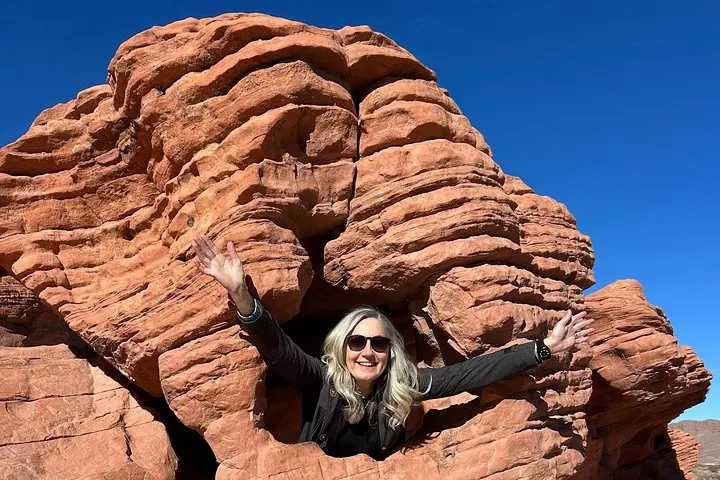
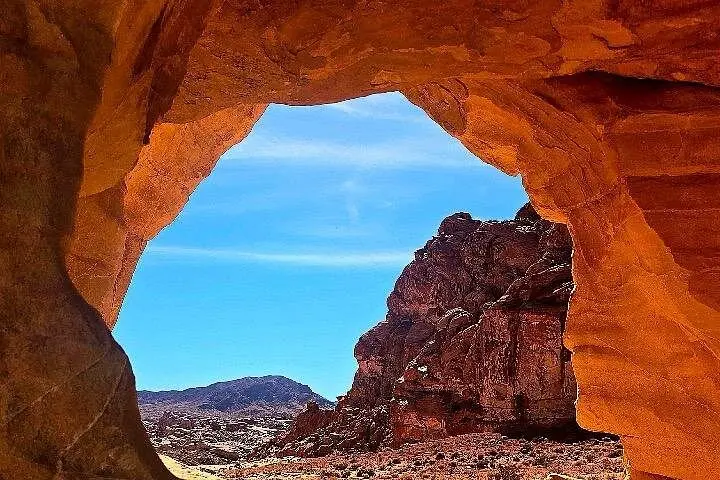
Valley of Fire State Park, about 50 miles northeast of Las Vegas, is a geological classroom and open-air gallery. These 40,000 acres of Aztec sandstone—old dune fields turned to stone—stand in bands of red, white and rose. Wind and rare, violent rains have carved swales, beehive textures and wave-like ridges; cross-bedding here records a shifting desert from more than 150 million years ago.
Human history sits alongside the geology. Southern Paiute people passed through and left petroglyphs that dot panels like Atlatl Rock and Mouse’s Tank, some images stretching back millennia. More recently, Hollywood leaned on the park’s dramatic shapes—White Domes and other canyons have been camera-ready backdrops since the 1960s.
On a six-hour private tour you’ll hop from overlooks to short hikes: the Fire Wave is a roughly 1.5-mile round-trip on slickrock that rewards with a rippling bowl of red and white sandstone; White Domes is a 1.25-mile loop through a narrow slot and layered cliffs; Mouse’s Tank is an easy 0.75-mile walk to a natural basin and more petroglyphs. Elevation is gentle—the park sits near 2,000 feet—so the trips are less about climbing and more about negotiating slickrock, sand and loose gravel.
Practicalities are straightforward. Pickup from Las Vegas is included, and the private transportation means more time at photo stops and less time navigating roads. The tour includes bottled water, light snacks and the park admission fee. Expect strong sun, reflected heat from the rocks, and quick temperature swings in shoulder seasons, so timing matters: early morning or late afternoon light is best for both comfort and photography.
Bring sturdy hiking shoes with good traction, 2–3 liters of water, sun protection and a camera with a wide-angle lens. Move slowly on slick surfaces, respect petroglyph sites, and stay on established trails to protect fragile cryptobiotic soil. With a private guide you get history, geology and shortcuts to the best compositions—this is a compact, high-value way to experience one of Nevada’s most photogenic landscapes without the guesswork.
The park is about 50 miles northeast of Las Vegas; expect roughly a 50–60 minute drive depending on traffic and pickup location.
Yes—the tour notes Valley of Fire State Park admission is included in the package.
No—most hikes are short (0.5–1.5 miles) with minimal elevation gain, but terrain can be uneven and exposed to sun.
Yes—the tour is family-friendly, but supervise kids on slickrock and near drop-offs; bring extra water and sun protection.
Service animals are permitted; typical pets may be restricted—check with the operator before booking.
Yes—Valley of Fire can be busy in cooler months and on weekends, so book tours and plan early pickups to avoid crowds.
Another Side Of Las Vegas Tours operates guided outdoor trips and adventures with an emphasis on safety, stewardship, and memorable experiences.
You leave the Strip before sunrise, the neon retreating as desert light takes hold. The van hums north on Interstate 15, and the landscape changes from urban glare to a wide, sunbaked horizon. By the time the first red fins of sandstone appear, the air smells of dust and warmed salt; the rocks themselves seem to lean forward, daring you to get closer.
You leave the Strip before sunrise, the neon retreating as desert light takes hold. The van hums north on Interstate 15, and the landscape changes from urban glare to a wide, sunbaked horizon. By the time the first red fins of sandstone appear, the air smells of dust and warmed salt; the rocks themselves seem to lean forward, daring you to get closer.
Valley of Fire State Park, about 50 miles northeast of Las Vegas, is a geological classroom and open-air gallery. These 40,000 acres of Aztec sandstone—old dune fields turned to stone—stand in bands of red, white and rose. Wind and rare, violent rains have carved swales, beehive textures and wave-like ridges; cross-bedding here records a shifting desert from more than 150 million years ago.
Human history sits alongside the geology. Southern Paiute people passed through and left petroglyphs that dot panels like Atlatl Rock and Mouse’s Tank, some images stretching back millennia. More recently, Hollywood leaned on the park’s dramatic shapes—White Domes and other canyons have been camera-ready backdrops since the 1960s.
On a six-hour private tour you’ll hop from overlooks to short hikes: the Fire Wave is a roughly 1.5-mile round-trip on slickrock that rewards with a rippling bowl of red and white sandstone; White Domes is a 1.25-mile loop through a narrow slot and layered cliffs; Mouse’s Tank is an easy 0.75-mile walk to a natural basin and more petroglyphs. Elevation is gentle—the park sits near 2,000 feet—so the trips are less about climbing and more about negotiating slickrock, sand and loose gravel.
Practicalities are straightforward. Pickup from Las Vegas is included, and the private transportation means more time at photo stops and less time navigating roads. The tour includes bottled water, light snacks and the park admission fee. Expect strong sun, reflected heat from the rocks, and quick temperature swings in shoulder seasons, so timing matters: early morning or late afternoon light is best for both comfort and photography.
Bring sturdy hiking shoes with good traction, 2–3 liters of water, sun protection and a camera with a wide-angle lens. Move slowly on slick surfaces, respect petroglyph sites, and stay on established trails to protect fragile cryptobiotic soil. With a private guide you get history, geology and shortcuts to the best compositions—this is a compact, high-value way to experience one of Nevada’s most photogenic landscapes without the guesswork.