THE ADVENTURE COLLECTIVE® · Independent discovery and booking for outdoor travel

Head into Hawaii Volcanoes National Park in a private F‑150 Tremor for a custom 5–6 hour exploration that visits viewpoints and short hikes away from the big buses. Expect volcanic panoramas, cooler summit air, and flexible stops tailored to your interests.
Head into Hawaii Volcanoes National Park in a private F‑150 Tremor for a custom 5–6 hour exploration that visits viewpoints and short hikes away from the big buses. Expect volcanic panoramas, cooler summit air, and flexible stops tailored to your interests.
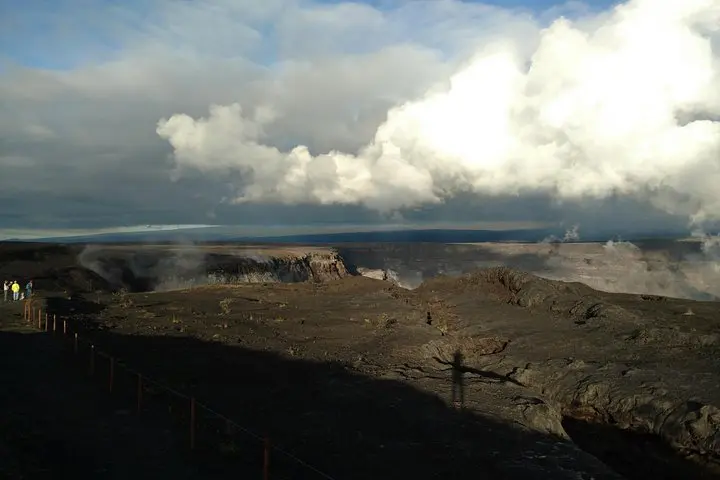
You step out of a silver F‑150 Tremor into a landscape that still feels recent — black crust giving way to ferned shoulders, steam vents punctuating the air. The truck sits higher than most vehicles; the driver tightens a map and points toward a road that threads between Mauna Loa’s bulk and Kīlauea’s smoldering caldera.
Verified experiences and guided adventures in the surrounding area.
Operated by Apau Hawaii Tours, LLC · Volcano, Hawaii
You step out of a silver F‑150 Tremor into a landscape that still feels recent — black crust giving way to ferned shoulders, steam vents punctuating the air. The truck sits higher than most vehicles; the driver tightens a map and points toward a road that threads between Mauna Loa’s bulk and Kīlauea’s smoldering caldera.
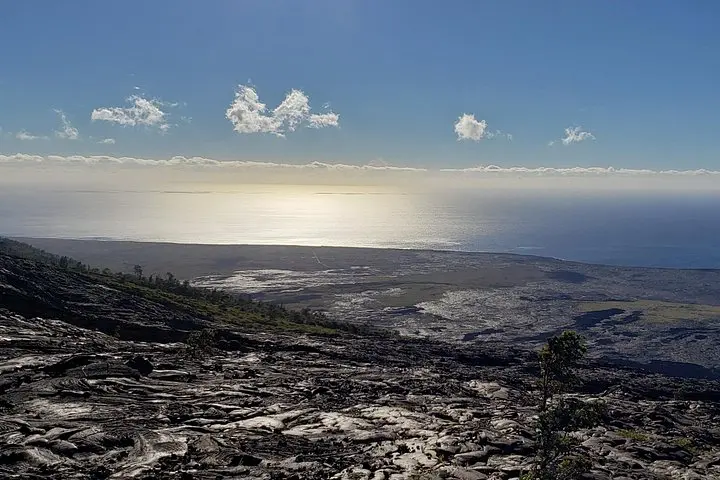
Volcanoes National Park protects active volcanoes, lava flowfields and native ʻōhiʻa forest; the park was established in 1916 to safeguard these dynamic landscapes. Geologically, you’re walking on layers of flows from Mauna Loa and Kīlauea, where new rock forms and the ground remembers eruptions in rippled pahoehoe and jagged ʻaʻā.
Local culture is present in roadside signs, native place names, and the quiet respect paid to Pele, the Hawaiian goddess associated with the fires. You may hear brief stories about early ranching, ranch roads turned viewing lanes, and the park’s role in island ecology.
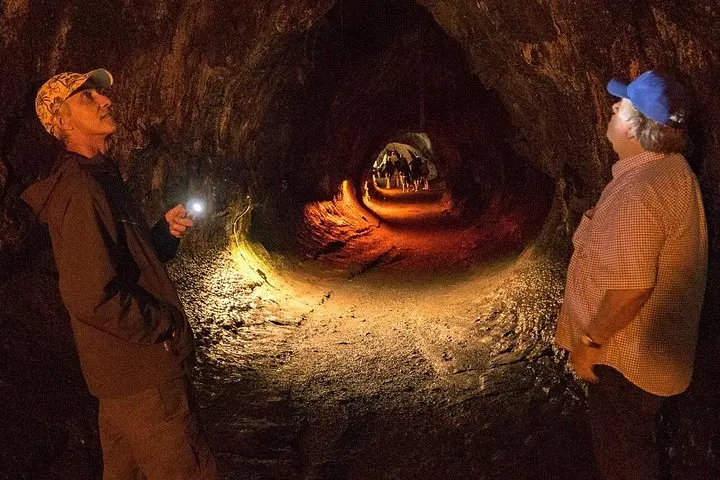
Practically: expect paved drives with several short hikes — many stops are 10–20 minutes; one main park exploration may last around two hours with light to moderate walking on uneven volcanic rock. Elevation at the summit area is roughly 4,000 ft, so temperatures are cooler than Hilo. Bring layers, sturdy closed-toe shoes, water, and a headlamp if you plan to explore tubes or twilight viewpoints.
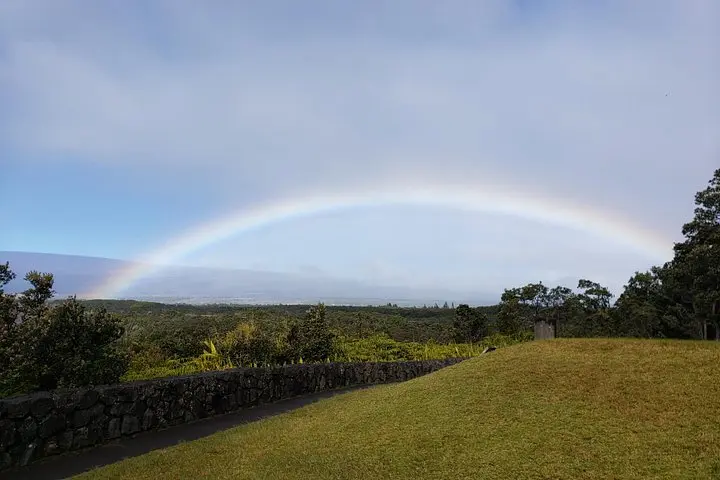
This private tour is flexible: it avoids big buses, hits viewpoints like the crater rim, may include Rainbow Falls and a black sand beach stop, and is best scheduled for early morning or late afternoon light when steam and shadows sharpen the landscape. Watch for road or overlook closures tied to volcanic activity — the land changes on its own timetable.
The private tour runs about 5–6 hours and includes National Park fees as listed in the itinerary.
Yes — cruise passengers must provide ship name, docking and disembarkation times at booking so logistics can be arranged.
Children must be 13 or older; the truck is lifted so participants must be able to get in and out unassisted and handle short uneven walks.
The guide monitors park advisories; avoid areas closed for gas or activity, and inform the operator of any respiratory conditions ahead of time.
Apau Hawaii Tours, LLC operates guided outdoor trips and adventures with an emphasis on safety, stewardship, and memorable experiences.
You step out of a silver F‑150 Tremor into a landscape that still feels recent — black crust giving way to ferned shoulders, steam vents punctuating the air. The truck sits higher than most vehicles; the driver tightens a map and points toward a road that threads between Mauna Loa’s bulk and Kīlauea’s smoldering caldera.
You step out of a silver F‑150 Tremor into a landscape that still feels recent — black crust giving way to ferned shoulders, steam vents punctuating the air. The truck sits higher than most vehicles; the driver tightens a map and points toward a road that threads between Mauna Loa’s bulk and Kīlauea’s smoldering caldera.
Volcanoes National Park protects active volcanoes, lava flowfields and native ʻōhiʻa forest; the park was established in 1916 to safeguard these dynamic landscapes. Geologically, you’re walking on layers of flows from Mauna Loa and Kīlauea, where new rock forms and the ground remembers eruptions in rippled pahoehoe and jagged ʻaʻā.
Local culture is present in roadside signs, native place names, and the quiet respect paid to Pele, the Hawaiian goddess associated with the fires. You may hear brief stories about early ranching, ranch roads turned viewing lanes, and the park’s role in island ecology.
Practically: expect paved drives with several short hikes — many stops are 10–20 minutes; one main park exploration may last around two hours with light to moderate walking on uneven volcanic rock. Elevation at the summit area is roughly 4,000 ft, so temperatures are cooler than Hilo. Bring layers, sturdy closed-toe shoes, water, and a headlamp if you plan to explore tubes or twilight viewpoints.
This private tour is flexible: it avoids big buses, hits viewpoints like the crater rim, may include Rainbow Falls and a black sand beach stop, and is best scheduled for early morning or late afternoon light when steam and shadows sharpen the landscape. Watch for road or overlook closures tied to volcanic activity — the land changes on its own timetable.