THE ADVENTURE COLLECTIVE® · Independent discovery and booking for outdoor travel

Swim into Wadi Shab’s hidden waterfall cave, scramble through palm-lined terraces, and pause at the turquoise Bimmah Sinkhole—all on a full-day private outing with a local Omani guide. This is Oman’s coast at its cleanest: limestone canyons, clear pools, and practical pacing that keeps the adventure smooth.
Swim into Wadi Shab’s hidden waterfall cave, scramble through palm-lined terraces, and pause at the turquoise Bimmah Sinkhole—all on a full-day private outing with a local Omani guide. This is Oman’s coast at its cleanest: limestone canyons, clear pools, and practical pacing that keeps the adventure smooth.
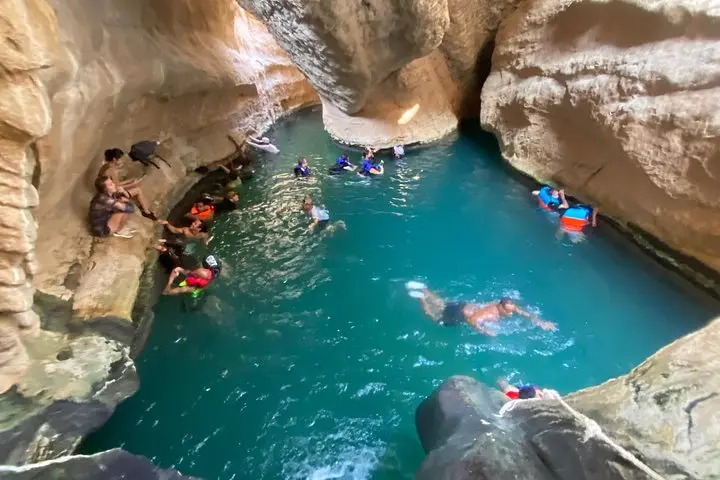
The highway unspools along the Arabian Sea as the Hajar Mountains rise in broken walls of limestone. By the time your private guide pulls into Hawiyat Najm—Bimmah Sinkhole—the day feels set to move between stone and water. A 20-meter plunge of blue-green lies at your feet, sunlight rippling over karst ledges. It’s a preview of the palette ahead: pale cliffs, palm green, and the clear, mineral blue that makes Oman’s wadis famous.
Verified experiences and guided adventures in the surrounding area.
Operated by Oman Compass Tours · Tiwi, Ash Sharqiyah South
The highway unspools along the Arabian Sea as the Hajar Mountains rise in broken walls of limestone. By the time your private guide pulls into Hawiyat Najm—Bimmah Sinkhole—the day feels set to move between stone and water. A 20-meter plunge of blue-green lies at your feet, sunlight rippling over karst ledges. It’s a preview of the palette ahead: pale cliffs, palm green, and the clear, mineral blue that makes Oman’s wadis famous.
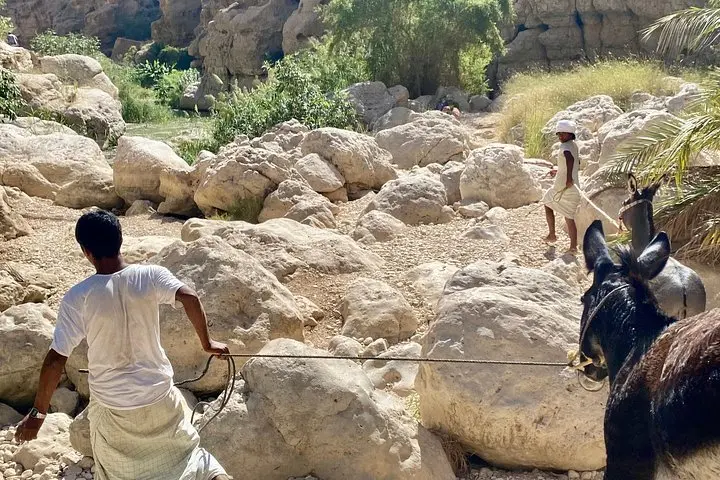
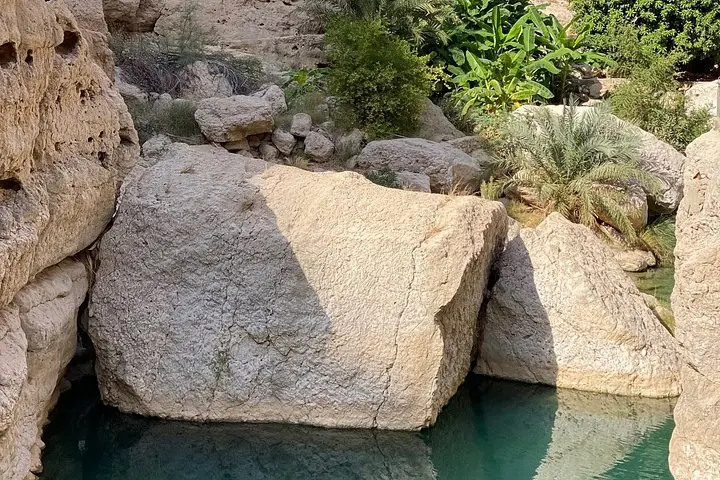
After a quick stop on Bimmah White Beach—chalky sand, cobalt water, and the long push of the Indian Ocean—you swing southeast toward Tiwi and Wadi Shab. A short boat hop ferries you across the wadi mouth, where date farms cling to narrow terraces fed by falaj channels, an ingenious irrigation system that has shaped life in Oman for centuries. The path threads through palms and past small plots of bananas and papayas, then climbs onto sunlit slabs. Expect 3 km each way, roughly 45–60 minutes on uneven ground with sections of easy scrambling.
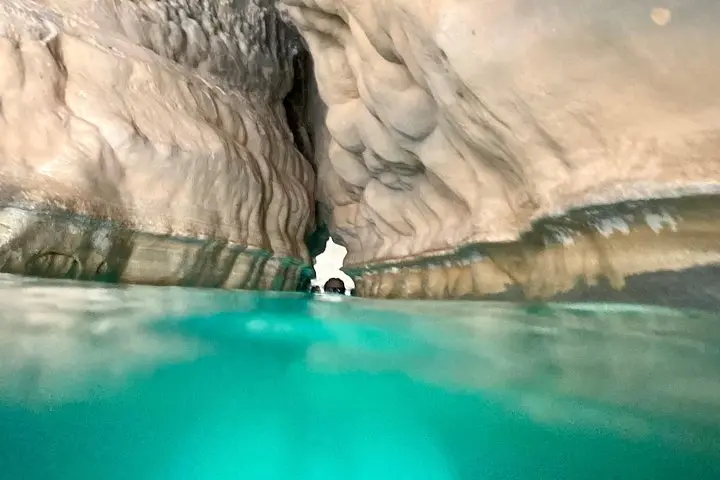
The wadi tightens into a hallway of pale rock, and the water begins to lead. Packs get stashed above the first pool and the canyon invites you in—cool, glassy, and urging you upstream. Swim 10–15 minutes through linked basins, sliding between boulders polished by flash floods, until a slit opens into a hidden chamber. Inside, a waterfall hammers into a jade pool, echoing off the stone. It’s playful and powerful at once, the current nudging you forward, the cave light shifting as clouds pass overhead.
Geology tells the larger story: these wadis cut through Eocene limestone, sculpted by rare but intense rains. Bimmah’s sinkhole formed when a cave roof collapsed, revealing that same aquamarine limestone lens. The farms survive because aflaj still carry water with quiet precision—a living tradition recognized by UNESCO. Respect is part of the route: ask before photographing people, tread lightly around crops, and watch weather; these canyons breathe hard during storms.
Practicalities keep the magic intact. Start early to dodge midday heat and to secure ample time for swimming. Closed-toe water shoes make the slick rock a non-issue, and a small dry bag protects phones and a compact towel. Bring at least 2 liters of water per person; the wadi tempts you to linger. Post-swim, your guide steers you to a local spot where fish and rice refuel the day before the coast road carries you back toward Muscat, salted air on the breeze and limestone walls fading to dusk.
It’s about 3 km each way (45–60 minutes) on uneven terrain with short scrambles before the swimming section begins.
You should be comfortable swimming 10–15 minutes in calm water. Life vests are sometimes available from local vendors, but bring your own if unsure.
October–April offers cooler hiking conditions. Summer is possible with an early start and plenty of water.
The small ferry fee at the wadi entrance is paid on site unless your guide covers it—bring a few OMR in cash and confirm with your operator.
Quick‑dry clothing over swimwear, a hat, and closed‑toe water shoes work best. Respect local norms by keeping shoulders and legs covered until you reach the pools.
Active children who can hike independently and are confident swimmers (or wearing buoyancy aids) can enjoy the route; younger kids may stop before the swim section.
Oman Compass Tours operates guided outdoor trips and adventures with an emphasis on safety, stewardship, and memorable experiences.
The highway unspools along the Arabian Sea as the Hajar Mountains rise in broken walls of limestone. By the time your private guide pulls into Hawiyat Najm—Bimmah Sinkhole—the day feels set to move between stone and water. A 20-meter plunge of blue-green lies at your feet, sunlight rippling over karst ledges. It’s a preview of the palette ahead: pale cliffs, palm green, and the clear, mineral blue that makes Oman’s wadis famous.
The highway unspools along the Arabian Sea as the Hajar Mountains rise in broken walls of limestone. By the time your private guide pulls into Hawiyat Najm—Bimmah Sinkhole—the day feels set to move between stone and water. A 20-meter plunge of blue-green lies at your feet, sunlight rippling over karst ledges. It’s a preview of the palette ahead: pale cliffs, palm green, and the clear, mineral blue that makes Oman’s wadis famous.
After a quick stop on Bimmah White Beach—chalky sand, cobalt water, and the long push of the Indian Ocean—you swing southeast toward Tiwi and Wadi Shab. A short boat hop ferries you across the wadi mouth, where date farms cling to narrow terraces fed by falaj channels, an ingenious irrigation system that has shaped life in Oman for centuries. The path threads through palms and past small plots of bananas and papayas, then climbs onto sunlit slabs. Expect 3 km each way, roughly 45–60 minutes on uneven ground with sections of easy scrambling.
The wadi tightens into a hallway of pale rock, and the water begins to lead. Packs get stashed above the first pool and the canyon invites you in—cool, glassy, and urging you upstream. Swim 10–15 minutes through linked basins, sliding between boulders polished by flash floods, until a slit opens into a hidden chamber. Inside, a waterfall hammers into a jade pool, echoing off the stone. It’s playful and powerful at once, the current nudging you forward, the cave light shifting as clouds pass overhead.
Geology tells the larger story: these wadis cut through Eocene limestone, sculpted by rare but intense rains. Bimmah’s sinkhole formed when a cave roof collapsed, revealing that same aquamarine limestone lens. The farms survive because aflaj still carry water with quiet precision—a living tradition recognized by UNESCO. Respect is part of the route: ask before photographing people, tread lightly around crops, and watch weather; these canyons breathe hard during storms.
Practicalities keep the magic intact. Start early to dodge midday heat and to secure ample time for swimming. Closed-toe water shoes make the slick rock a non-issue, and a small dry bag protects phones and a compact towel. Bring at least 2 liters of water per person; the wadi tempts you to linger. Post-swim, your guide steers you to a local spot where fish and rice refuel the day before the coast road carries you back toward Muscat, salted air on the breeze and limestone walls fading to dusk.