THE ADVENTURE COLLECTIVE® · Independent discovery and booking for outdoor travel

Two hours of guided exploration through Charleston’s Historic District — from City Market to the Battery — with a licensed local guide who adapts the pace and focus to your group. Perfect for first-time visitors and history buffs alike.
Two hours of guided exploration through Charleston’s Historic District — from City Market to the Battery — with a licensed local guide who adapts the pace and focus to your group. Perfect for first-time visitors and history buffs alike.
You start under the chandelier in the Charleston Place lobby, the murmured hush of a downtown morning folding into the clack of your guide’s steps as you move onto King Street. Live oaks lean over cobbled alleys and the harbor watches from a distance, tides shaping the city’s rhythm as much as its commerce once did.
Verified experiences and guided adventures in the surrounding area.
Operated by 1670 Tours · Charleston, South Carolina
You start under the chandelier in the Charleston Place lobby, the murmured hush of a downtown morning folding into the clack of your guide’s steps as you move onto King Street. Live oaks lean over cobbled alleys and the harbor watches from a distance, tides shaping the city’s rhythm as much as its commerce once did.
The two-hour route threads through Charleston’s colonial grid: the City Market, Rainbow Row’s painted façades, the Battery’s seawall and White Point Garden. Geologically this is the Atlantic Coastal Plain — low, flat, salt-marsh edges that made Charleston a strategic port and a crucible of architectural adaptation; single houses and piazzas were born of climate and mercantile life.
Culturally, expect stories that connect colonial trade, antebellum life, and Gullah traditions to the streets and private gardens tucked behind ironwork. Guides often point out enduring details — grave markers, wrought-iron insignia, and subtle house numbers that map social history.
Practical guidance: the route is mostly paved and flat, roughly 1.5–2 miles at a leisurely pace with frequent stops. Bring a refillable water bottle, sun protection, and comfortable shoes. Mornings or late afternoons avoid both heat and tour congestion; winter afternoons can be crisp but pleasant.
Accessibility is good on main streets but some alleys and garden entrances have steps. Photography windows are plentiful; ask about private-home views before photographing. A private tour lets you tailor stops to interest — architecture, Civil War history, or culinary tips — and allows time for questions that turn facts into context.
Meet and finish under the chandelier in The Charleston Place Hotel lobby (205 Meeting St); guides will reconfirm the exact spot on booking.
Main streets and many stops are accessible, but some alleys and private garden entrances have steps — request an accessibility-focused route when booking.
Yes — private tours are designed around your interests (architecture, Civil War history, Gullah culture, culinary tips) if requested in advance.
Cancel at least 24 hours before departure for a full refund; check your booking confirmation for exact terms.
1670 Tours operates guided outdoor trips and adventures with an emphasis on safety, stewardship, and memorable experiences.

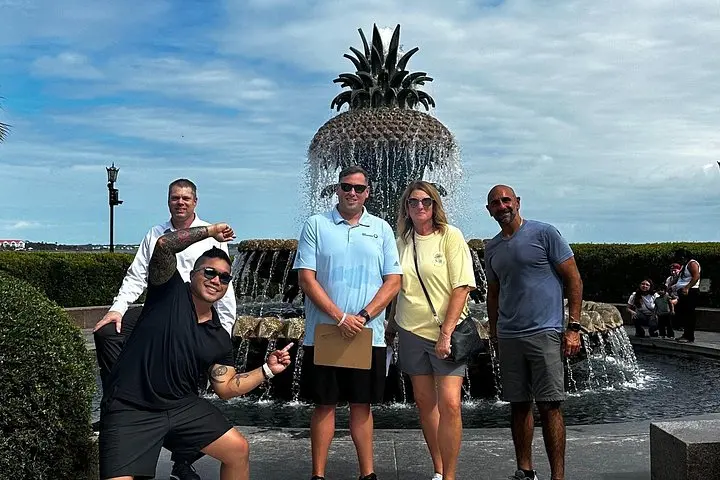


You start under the chandelier in the Charleston Place lobby, the murmured hush of a downtown morning folding into the clack of your guide’s steps as you move onto King Street. Live oaks lean over cobbled alleys and the harbor watches from a distance, tides shaping the city’s rhythm as much as its commerce once did.
You start under the chandelier in the Charleston Place lobby, the murmured hush of a downtown morning folding into the clack of your guide’s steps as you move onto King Street. Live oaks lean over cobbled alleys and the harbor watches from a distance, tides shaping the city’s rhythm as much as its commerce once did.
The two-hour route threads through Charleston’s colonial grid: the City Market, Rainbow Row’s painted façades, the Battery’s seawall and White Point Garden. Geologically this is the Atlantic Coastal Plain — low, flat, salt-marsh edges that made Charleston a strategic port and a crucible of architectural adaptation; single houses and piazzas were born of climate and mercantile life.
Culturally, expect stories that connect colonial trade, antebellum life, and Gullah traditions to the streets and private gardens tucked behind ironwork. Guides often point out enduring details — grave markers, wrought-iron insignia, and subtle house numbers that map social history.
Practical guidance: the route is mostly paved and flat, roughly 1.5–2 miles at a leisurely pace with frequent stops. Bring a refillable water bottle, sun protection, and comfortable shoes. Mornings or late afternoons avoid both heat and tour congestion; winter afternoons can be crisp but pleasant.
Accessibility is good on main streets but some alleys and garden entrances have steps. Photography windows are plentiful; ask about private-home views before photographing. A private tour lets you tailor stops to interest — architecture, Civil War history, or culinary tips — and allows time for questions that turn facts into context.