THE ADVENTURE COLLECTIVE® · Independent discovery and booking for outdoor travel

Set off from Tahiti Iti’s raw coastline for a private, ethics-driven whale watch. This four‑hour outing pairs close humpback observation with optional snorkeling and coastal highlights around Teahupo'o.
Set off from Tahiti Iti’s raw coastline for a private, ethics-driven whale watch. This four‑hour outing pairs close humpback observation with optional snorkeling and coastal highlights around Teahupo'o.
A low-slung boat slips off the jagged coast of Tahiti Iti, spray tasting of salt and volcanic rock. The peninsula’s cliffs and reef-armed shallows slide past—a raw, Jurassic edge—until the sea opens and breath breaks the surface: a humpback, exhaling steam into the tropical air.
Verified experiences and guided adventures in the surrounding area.
Operated by Natura - Captain Ju · Teahupo'o, Tahiti
A low-slung boat slips off the jagged coast of Tahiti Iti, spray tasting of salt and volcanic rock. The peninsula’s cliffs and reef-armed shallows slide past—a raw, Jurassic edge—until the sea opens and breath breaks the surface: a humpback, exhaling steam into the tropical air.
This private outing centers on responsible cetacean viewing along the Tahiti Peninsula, where local operators follow a one-boat-per-whale ethic designed to reduce disturbance. Geologically the coast is young lava flows cut by reef shelves that create both protected lagoons and the heavy Teahupo’o wave. Culturally, the southwest coast holds meaning for local fishing communities and surf culture; guides often share stories about voyaging, reef stewardship, and the surf’s place in Tahitian identity.
Expect 4-hour trips that combine slow cruises for observation with possible snorkeling launches when conditions, animal behavior, and swimmer ability align. Launches require confidence in the water and the ability to swim about 200 m with fins and a snorkel—face masks are not allowed for launches. Wildlife sightings focus on migrating humpback whales (July–October) and resident dolphin pods; reef encounters can include rays and reef fish.
Practical tips: arrive hydrated and sun-protected, bring reef-safe sunscreen and a compact waterproof camera, and plan logistics from Papeete or local pensions. Weather and animal behavior dictate timings and launches—be prepared for flexible itineraries. The trip balances intimate wildlife access with strict ethics: you’ll travel close enough to feel the whale’s presence while minimizing impact.
No — swimmers never approach whales directly; launches allow snorkeling near surface activity only when the animals’ behavior and distance permit and under guide supervision.
Infants can ride but must sit on laps; operators set limits per vessel—confirm during booking and bring flotation devices for young children.
Trips may be canceled or modified for safety or lack of sightings; operators often offer rescheduling or refunds if canceled at least 24 hours prior.
Yes—guides typically brief on safe approaches; use secure straps or waterproof housings and avoid actions that could disturb marine life.
Natura - Captain Ju operates guided outdoor trips and adventures with an emphasis on safety, stewardship, and memorable experiences.


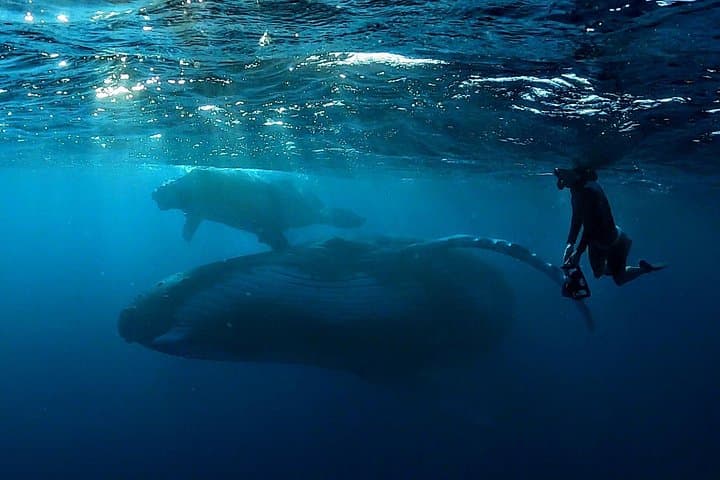

A low-slung boat slips off the jagged coast of Tahiti Iti, spray tasting of salt and volcanic rock. The peninsula’s cliffs and reef-armed shallows slide past—a raw, Jurassic edge—until the sea opens and breath breaks the surface: a humpback, exhaling steam into the tropical air.
A low-slung boat slips off the jagged coast of Tahiti Iti, spray tasting of salt and volcanic rock. The peninsula’s cliffs and reef-armed shallows slide past—a raw, Jurassic edge—until the sea opens and breath breaks the surface: a humpback, exhaling steam into the tropical air.
This private outing centers on responsible cetacean viewing along the Tahiti Peninsula, where local operators follow a one-boat-per-whale ethic designed to reduce disturbance. Geologically the coast is young lava flows cut by reef shelves that create both protected lagoons and the heavy Teahupo’o wave. Culturally, the southwest coast holds meaning for local fishing communities and surf culture; guides often share stories about voyaging, reef stewardship, and the surf’s place in Tahitian identity.
Expect 4-hour trips that combine slow cruises for observation with possible snorkeling launches when conditions, animal behavior, and swimmer ability align. Launches require confidence in the water and the ability to swim about 200 m with fins and a snorkel—face masks are not allowed for launches. Wildlife sightings focus on migrating humpback whales (July–October) and resident dolphin pods; reef encounters can include rays and reef fish.
Practical tips: arrive hydrated and sun-protected, bring reef-safe sunscreen and a compact waterproof camera, and plan logistics from Papeete or local pensions. Weather and animal behavior dictate timings and launches—be prepared for flexible itineraries. The trip balances intimate wildlife access with strict ethics: you’ll travel close enough to feel the whale’s presence while minimizing impact.