THE ADVENTURE COLLECTIVE® · Independent discovery and booking for outdoor travel

Board a private six‑hour charter off Mo'orea to search for humpback whales in their breeding lagoons. This trip blends patient searching and guided snorkel opportunities, with strict practices to protect the animals.
Board a private six‑hour charter off Mo'orea to search for humpback whales in their breeding lagoons. This trip blends patient searching and guided snorkel opportunities, with strict practices to protect the animals.
You step off the dock into a salt-scented wind and the boat slips away from the reef, the jagged volcanic ridges of Mo'orea shrinking into green silhouettes. The guide scans the horizon; spouts puncture the surface like punctuation marks, and the ocean seems to hold its breath as a humpback arches and dives.
Verified experiences and guided adventures in the surrounding area.
Operated by Aimeho Private Escapes · Mo'orea, Society Islands
You step off the dock into a salt-scented wind and the boat slips away from the reef, the jagged volcanic ridges of Mo'orea shrinking into green silhouettes. The guide scans the horizon; spouts puncture the surface like punctuation marks, and the ocean seems to hold its breath as a humpback arches and dives.
Humpback whales migrate from Antarctic feeding grounds to the warm lagoons of French Polynesia to breed and calve. Mo'orea’s shallow channels and calm bays have long been a stopping place for these giants, and local captains combine traditional knowledge of currents with modern marine guidelines to minimize disturbance.
Geology here is young and volcanic: steep basalt ridges fall rapidly into turquoise lagoon, creating protected channels where whales often linger. The culture of the islands emphasizes respect for the sea — guides brief visitors on behavior and legal buffers before any in-water approach.
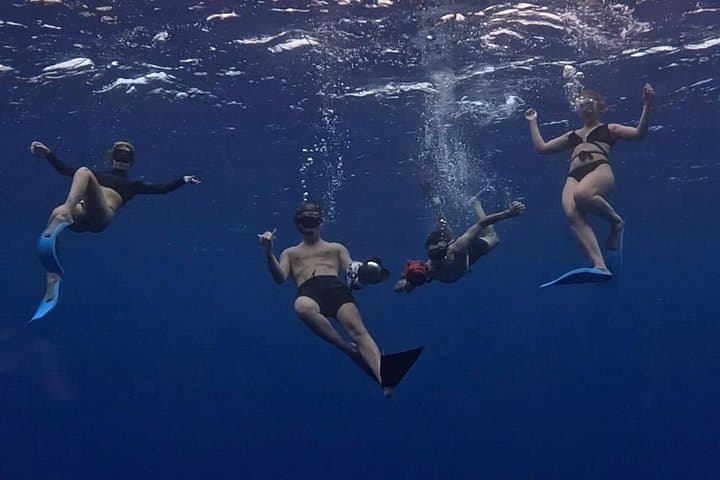
Practically, this is a half-day private charter (about six hours) that can include both boat observation and snorkel attempts when conditions and whale behavior allow. Expect periods of searching, brief high-adrenaline encounters, and enforced distance when animals appear stressed. Moderate fitness and comfort in open water are required for anyone planning to swim; the operator provides snorkel gear and bottled water.
Plan for sun protection, a stable pair of water shoes, and motion-sickness remedies. Timing is everything — whale season peaks in the Southern Hemisphere winter (roughly June–October) — and patient watchers are usually rewarded with the sculptural power of a breach or the intimacy of a calf beside its mother.
Peak season is typically June through October, when whales come to breed and calve in the warmer lagoons.
Swimming is permitted only when the whales’ behavior and regulatory guidelines allow it; guides prioritize animal welfare and swimmer safety.
Yes—participants should be comfortable snorkeling and swimming in open water; guides may restrict in-water access for safety reasons.
Operators generally cancel in poor weather; their policy often allows a full refund if canceled 24 hours before departure or by the operator due to conditions.
Aimeho Private Escapes operates guided outdoor trips and adventures with an emphasis on safety, stewardship, and memorable experiences.



You step off the dock into a salt-scented wind and the boat slips away from the reef, the jagged volcanic ridges of Mo'orea shrinking into green silhouettes. The guide scans the horizon; spouts puncture the surface like punctuation marks, and the ocean seems to hold its breath as a humpback arches and dives.
You step off the dock into a salt-scented wind and the boat slips away from the reef, the jagged volcanic ridges of Mo'orea shrinking into green silhouettes. The guide scans the horizon; spouts puncture the surface like punctuation marks, and the ocean seems to hold its breath as a humpback arches and dives.
Humpback whales migrate from Antarctic feeding grounds to the warm lagoons of French Polynesia to breed and calve. Mo'orea’s shallow channels and calm bays have long been a stopping place for these giants, and local captains combine traditional knowledge of currents with modern marine guidelines to minimize disturbance.
Geology here is young and volcanic: steep basalt ridges fall rapidly into turquoise lagoon, creating protected channels where whales often linger. The culture of the islands emphasizes respect for the sea — guides brief visitors on behavior and legal buffers before any in-water approach.
Practically, this is a half-day private charter (about six hours) that can include both boat observation and snorkel attempts when conditions and whale behavior allow. Expect periods of searching, brief high-adrenaline encounters, and enforced distance when animals appear stressed. Moderate fitness and comfort in open water are required for anyone planning to swim; the operator provides snorkel gear and bottled water.
Plan for sun protection, a stable pair of water shoes, and motion-sickness remedies. Timing is everything — whale season peaks in the Southern Hemisphere winter (roughly June–October) — and patient watchers are usually rewarded with the sculptural power of a breach or the intimacy of a calf beside its mother.