THE ADVENTURE COLLECTIVE® · Independent discovery and booking for outdoor travel

Ride a soft-top jeep into Yala’s dawn or dusk and lean in as the park reveals leopards, elephants and dense birdlife. This private four-hour safari pairs local tracker knowledge with prime viewing windows for predator activity.
Ride a soft-top jeep into Yala’s dawn or dusk and lean in as the park reveals leopards, elephants and dense birdlife. This private four-hour safari pairs local tracker knowledge with prime viewing windows for predator activity.
The Jeep rolls through pre-dawn mist and the mangrove channels seem to hold their breath; the horizon lightens and the park’s low scrub begins to stir. With the soft top folded back, every sound — the distant trumpet of an elephant, the scuff of hooves on sand — arrives unfiltered, and the driver-tracker points the lens where the land suddenly wakes.
Verified experiences and guided adventures in the surrounding area.
Operated by Lakpura LLC · Tissamaharama, Southern Province
The Jeep rolls through pre-dawn mist and the mangrove channels seem to hold their breath; the horizon lightens and the park’s low scrub begins to stir. With the soft top folded back, every sound — the distant trumpet of an elephant, the scuff of hooves on sand — arrives unfiltered, and the driver-tracker points the lens where the land suddenly wakes.
Yala National Park, on Sri Lanka’s southeastern coast, is geologically framed by coastal plains, lagoons and pockets of dry monsoon forest that host unusually high predator densities. Block 1 is world-famous for having one of the highest leopard densities on the island; historically the park grew from colonial-era game reserves into a protected national park that now balances wildlife tourism with local livelihoods in towns like Tissamaharama.
Cultural touchstones—shrines, small fishing villages and reservoirs—sit just outside the park boundaries; within, peacocks display and sambars move like punctuation marks in the grass. The park’s wetlands and seashore also draw migratory and resident birds year-round.
Practical guidance: most private safaris run about four hours (morning or evening) in a soft-top jeep that fits up to six people; pickup is commonly arranged near Palatupana gate. Bring binoculars and a long lens, expect bumpy tracks and midday heat, and prioritize early or late slots for the best predator activity. Entrance fees may be included depending on your booking option, and basic bottled water is typically provided. Respect park rules, stay in the vehicle, and let the tracker call the shots—wildlife sightings are the result of patience and local knowledge, not luck alone.
No; leopards are wild and sightings depend on time of day, weather and animal movements—Block 1 has the highest recorded density, which improves odds.
Some bookings include entrance fees when the ‘Jeep With Tickets’ option is selected; confirm at booking to avoid paying separately at the gate.
Children are allowed but operators often restrict very young children (under 5); check age rules and safety provisions when booking.
Light, neutral-colored clothing, sun protection, water, binoculars and camera; avoid bright colors that may startle wildlife.
Lakpura LLC operates guided outdoor trips and adventures with an emphasis on safety, stewardship, and memorable experiences.
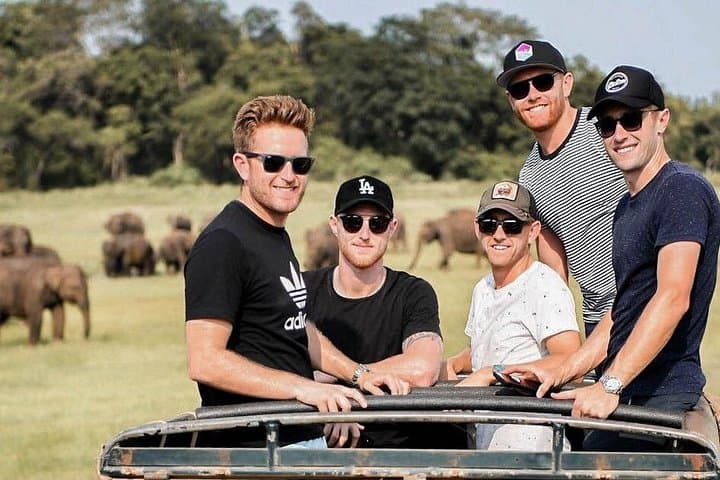


The Jeep rolls through pre-dawn mist and the mangrove channels seem to hold their breath; the horizon lightens and the park’s low scrub begins to stir. With the soft top folded back, every sound — the distant trumpet of an elephant, the scuff of hooves on sand — arrives unfiltered, and the driver-tracker points the lens where the land suddenly wakes.
The Jeep rolls through pre-dawn mist and the mangrove channels seem to hold their breath; the horizon lightens and the park’s low scrub begins to stir. With the soft top folded back, every sound — the distant trumpet of an elephant, the scuff of hooves on sand — arrives unfiltered, and the driver-tracker points the lens where the land suddenly wakes.
Yala National Park, on Sri Lanka’s southeastern coast, is geologically framed by coastal plains, lagoons and pockets of dry monsoon forest that host unusually high predator densities. Block 1 is world-famous for having one of the highest leopard densities on the island; historically the park grew from colonial-era game reserves into a protected national park that now balances wildlife tourism with local livelihoods in towns like Tissamaharama.
Cultural touchstones—shrines, small fishing villages and reservoirs—sit just outside the park boundaries; within, peacocks display and sambars move like punctuation marks in the grass. The park’s wetlands and seashore also draw migratory and resident birds year-round.
Practical guidance: most private safaris run about four hours (morning or evening) in a soft-top jeep that fits up to six people; pickup is commonly arranged near Palatupana gate. Bring binoculars and a long lens, expect bumpy tracks and midday heat, and prioritize early or late slots for the best predator activity. Entrance fees may be included depending on your booking option, and basic bottled water is typically provided. Respect park rules, stay in the vehicle, and let the tracker call the shots—wildlife sightings are the result of patience and local knowledge, not luck alone.