THE ADVENTURE COLLECTIVE® · Independent discovery and booking for outdoor travel

Early-morning steam, scopes trained on white ridgelines and the hush that falls when a wolf appears—this private winter safari from Gardiner focuses on wolf sightings and the geology that shapes Yellowstone’s dramatic winter terrain. Learn what to pack, when to go, and what to expect on a six-hour guided search.
Early-morning steam, scopes trained on white ridgelines and the hush that falls when a wolf appears—this private winter safari from Gardiner focuses on wolf sightings and the geology that shapes Yellowstone’s dramatic winter terrain. Learn what to pack, when to go, and what to expect on a six-hour guided search.
The day begins before the sun melts the overnight cold; steam rising from hot springs paints the valley in slow, pale strokes while the road ahead crunches underwheel. In a small convoy of heated vehicles, a guide scans the white slopes with a spotting scope, eyes catching movement where the naked eye sees only shadow. The group exhales—breath fogging—when a gray shape steps from a wind-scoured ridge: a wolf moving with economy and purpose, the apex predator that defines Yellowstone’s winter.
Verified experiences and guided adventures in the surrounding area.
Operated by Yellowstone’s Casanova Guided Tours · Gardiner, Montana
The day begins before the sun melts the overnight cold; steam rising from hot springs paints the valley in slow, pale strokes while the road ahead crunches underwheel. In a small convoy of heated vehicles, a guide scans the white slopes with a spotting scope, eyes catching movement where the naked eye sees only shadow. The group exhales—breath fogging—when a gray shape steps from a wind-scoured ridge: a wolf moving with economy and purpose, the apex predator that defines Yellowstone’s winter.
Yellowstone in winter is a landscape that thinks in extremes. Snow amplifies sound and strips the forest to bone; thermal features continue to vent warm breath, creating fogged windows and surreal, steam-wreathed meadows. The park’s history here reads like a rugged natural experiment: glaciers carved the basins, geothermal plumbing pushed steam through basalt, and human choices—most visibly the reintroduction of wolves in 1995—reshaped an ecosystem and the stories we tell about it.
Guides on this private safari layer natural history with practical fieldcraft. They point out wolf sign—tracks, kneaded snow, fur caught on sage—alongside geological notes about rhyolite flows and travertine terraces. Cultural context comes in small doses: ranching traditions that press against park boundaries, the seasonal migration of elk that draws wolves, and how nearby Gardiner developed as a gateway community to this winter world.
For travelers, the experience balances patience and preparedness. Tours typically run about six hours, with private transport from Gardiner, binoculars and high-powered scopes provided, and a breakfast and snacks to sustain the slow hours of searching. Wildlife viewing is respectful and distant; guides set limits and teach how to observe without altering animal behavior.
Practical tips: book early for morning departures—animals are most active in low light—and dress in layers for changing conditions between heated vehicles and open lookout points. Bring a camera with a telephoto lens or plan to use the provided scopes for sharp, close-up views. Expect short, brisk walks rather than long treks; the terrain is mostly park roads and pullouts, but surfaces can be icy.
This is not a guaranteed sighting, but a guided winter safari stacks the odds by combining local knowledge, timing, and optics. For anyone curious about the raw dynamics of predator and prey, and about a park where geology still writes the landscape every day, a private Yellowstone winter wildlife tour is an education and a rare kind of spectacle—quiet, exacting, and alive with the small, deliberate motions of survival.
Sightings are common on well-timed winter tours but not guaranteed; guides use tracker knowledge and patience to maximize chances.
Meet at the Ridgeline Hotel in Gardiner or use arranged hotel pickups within the provider’s service area; the tour returns to the meeting point.
Breakfast, snacks, and bottled water are included; bring any special dietary items you require.
Yes—tours are family-friendly, but children should be able to sit quietly for extended periods and dress warmly.
Yes—personal optics and cameras are recommended but high-powered scopes are provided for group use.
Tours may be canceled for severe conditions; full refund available if canceled 24 hours prior per the policy.
Yellowstone’s Casanova Guided Tours operates guided outdoor trips and adventures with an emphasis on safety, stewardship, and memorable experiences.

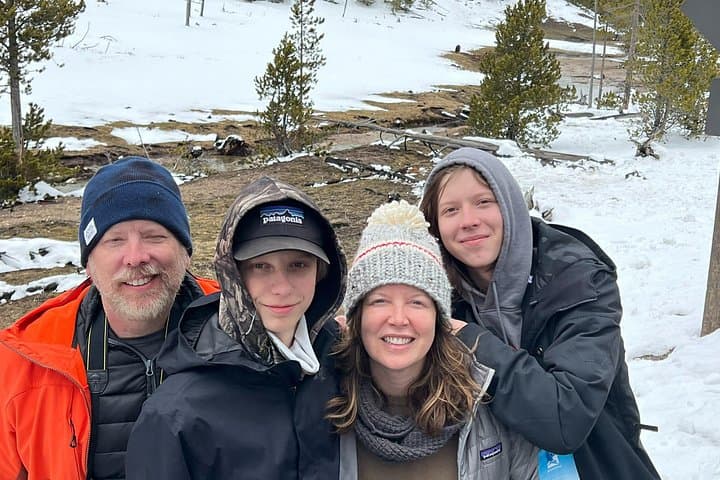


The day begins before the sun melts the overnight cold; steam rising from hot springs paints the valley in slow, pale strokes while the road ahead crunches underwheel. In a small convoy of heated vehicles, a guide scans the white slopes with a spotting scope, eyes catching movement where the naked eye sees only shadow. The group exhales—breath fogging—when a gray shape steps from a wind-scoured ridge: a wolf moving with economy and purpose, the apex predator that defines Yellowstone’s winter.
The day begins before the sun melts the overnight cold; steam rising from hot springs paints the valley in slow, pale strokes while the road ahead crunches underwheel. In a small convoy of heated vehicles, a guide scans the white slopes with a spotting scope, eyes catching movement where the naked eye sees only shadow. The group exhales—breath fogging—when a gray shape steps from a wind-scoured ridge: a wolf moving with economy and purpose, the apex predator that defines Yellowstone’s winter.
Yellowstone in winter is a landscape that thinks in extremes. Snow amplifies sound and strips the forest to bone; thermal features continue to vent warm breath, creating fogged windows and surreal, steam-wreathed meadows. The park’s history here reads like a rugged natural experiment: glaciers carved the basins, geothermal plumbing pushed steam through basalt, and human choices—most visibly the reintroduction of wolves in 1995—reshaped an ecosystem and the stories we tell about it.
Guides on this private safari layer natural history with practical fieldcraft. They point out wolf sign—tracks, kneaded snow, fur caught on sage—alongside geological notes about rhyolite flows and travertine terraces. Cultural context comes in small doses: ranching traditions that press against park boundaries, the seasonal migration of elk that draws wolves, and how nearby Gardiner developed as a gateway community to this winter world.
For travelers, the experience balances patience and preparedness. Tours typically run about six hours, with private transport from Gardiner, binoculars and high-powered scopes provided, and a breakfast and snacks to sustain the slow hours of searching. Wildlife viewing is respectful and distant; guides set limits and teach how to observe without altering animal behavior.
Practical tips: book early for morning departures—animals are most active in low light—and dress in layers for changing conditions between heated vehicles and open lookout points. Bring a camera with a telephoto lens or plan to use the provided scopes for sharp, close-up views. Expect short, brisk walks rather than long treks; the terrain is mostly park roads and pullouts, but surfaces can be icy.
This is not a guaranteed sighting, but a guided winter safari stacks the odds by combining local knowledge, timing, and optics. For anyone curious about the raw dynamics of predator and prey, and about a park where geology still writes the landscape every day, a private Yellowstone winter wildlife tour is an education and a rare kind of spectacle—quiet, exacting, and alive with the small, deliberate motions of survival.