THE ADVENTURE COLLECTIVE® · Independent discovery and booking for outdoor travel
Spend a morning learning to pick and taste Pu'er tea on a working plantation near Jinghong. This guided half-day tour combines hands-on picking, a behind-the-scenes look at tea processing, and a tasting with a local lunch.
Spend a morning learning to pick and taste Pu'er tea on a working plantation near Jinghong. This guided half-day tour combines hands-on picking, a behind-the-scenes look at tea processing, and a tasting with a local lunch.
Morning light slides across low hills of tea; a green grid of terraces and narrow dirt lanes opens as your vehicle eases out of Jinghong. The air smells faintly of wet earth and fresh cut leaf. A local guide leads the way into rows of Camellia sinensis, where hands move deliberately—teaching you how to pluck the youngest two leaves and a bud without harming the bush.
Verified experiences and guided adventures in the surrounding area.
Operated by GO BANNA · Jinghong, Yunnan
Morning light slides across low hills of tea; a green grid of terraces and narrow dirt lanes opens as your vehicle eases out of Jinghong. The air smells faintly of wet earth and fresh cut leaf. A local guide leads the way into rows of Camellia sinensis, where hands move deliberately—teaching you how to pluck the youngest two leaves and a bud without harming the bush.
Pu'er tea has deep roots in Yunnan: compressed, fermented leaves that were once packed for long trade routes into Tibet and Southeast Asia. The soil here is largely red laterite over older sedimentary layers, giving the tea a mineral backbone that ages distinctly. Farming is both cultural craft and household economy for Dai and Han communities; you’ll hear about family-processing methods and see artisans shaping leaves in bamboo trays and stone presses.
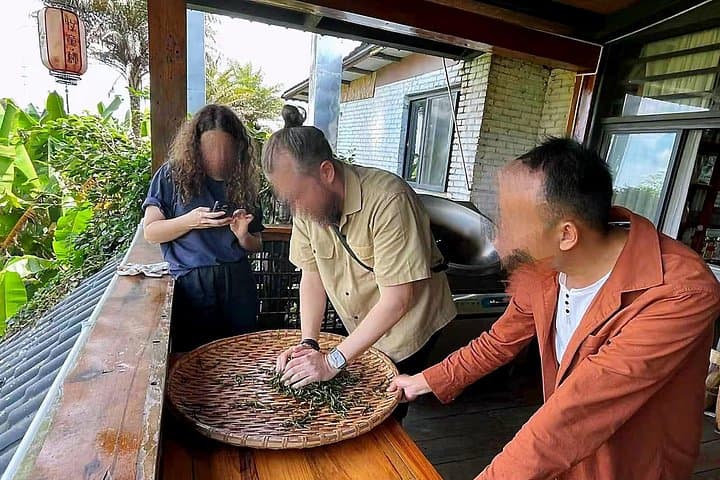
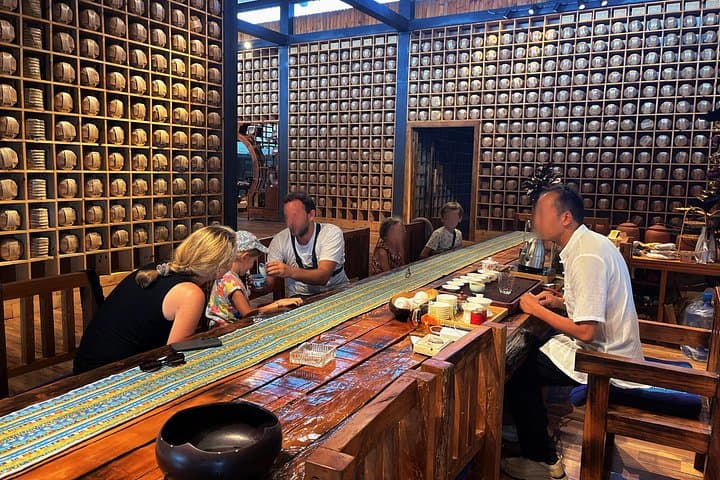
You’ll practice picking, then walk into the withering and rolling rooms to observe controlled oxidation and sun-drying. A guided tasting follows—young sheng versus fermented shu Pu'er—where brewing technique matters as much as origin.
Practical notes: expect light, sustained walking across uneven plantation tracks for 1–2 hours, moderate humidity, and intermittent sun. The operator provides hotel pickup in an air-conditioned vehicle and a local lunch of Dai specialties afterward. Bring sun protection, insect repellent, and a small camera. If you travel in the wet season, waterproof shoes and a quick-dry shirt make the visit easier. Respect harvest rules—ask before taking close-up photos of workers—and sample slowly: good Pu'er reveals itself over several infusions.
Yes—pick-up from Jinghong hotels is provided in an air-conditioned vehicle; confirm pickup point when booking.
The tour requires light walking on plantation tracks and brief standing during demonstrations; it’s suitable for most fitness levels.
Yes—freshly processed tea tasting is included, followed by a local Dai-style lunch as listed in the inclusions.
Infant seats are available; however, the operator notes the tour is not recommended for those with serious back, heart, or pregnancy-related issues.
GO BANNA operates guided outdoor trips and adventures with an emphasis on safety, stewardship, and memorable experiences.
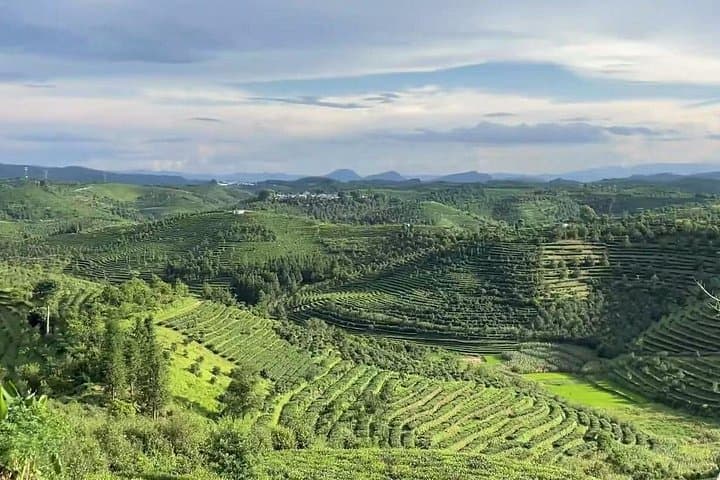
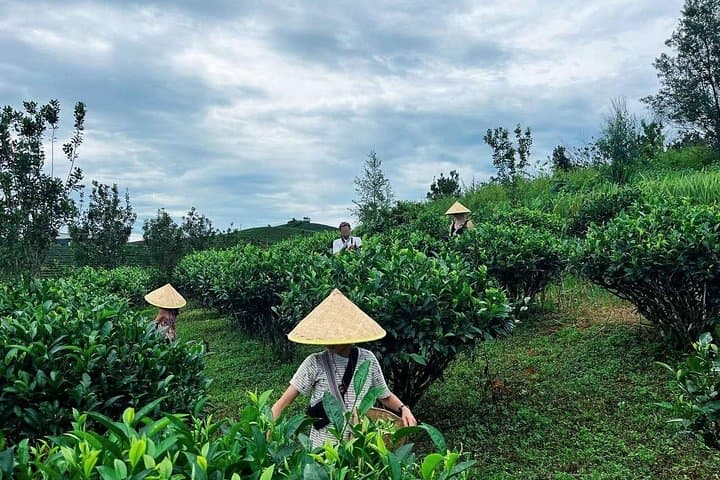
Morning light slides across low hills of tea; a green grid of terraces and narrow dirt lanes opens as your vehicle eases out of Jinghong. The air smells faintly of wet earth and fresh cut leaf. A local guide leads the way into rows of Camellia sinensis, where hands move deliberately—teaching you how to pluck the youngest two leaves and a bud without harming the bush.
Morning light slides across low hills of tea; a green grid of terraces and narrow dirt lanes opens as your vehicle eases out of Jinghong. The air smells faintly of wet earth and fresh cut leaf. A local guide leads the way into rows of Camellia sinensis, where hands move deliberately—teaching you how to pluck the youngest two leaves and a bud without harming the bush.
Pu'er tea has deep roots in Yunnan: compressed, fermented leaves that were once packed for long trade routes into Tibet and Southeast Asia. The soil here is largely red laterite over older sedimentary layers, giving the tea a mineral backbone that ages distinctly. Farming is both cultural craft and household economy for Dai and Han communities; you’ll hear about family-processing methods and see artisans shaping leaves in bamboo trays and stone presses.
You’ll practice picking, then walk into the withering and rolling rooms to observe controlled oxidation and sun-drying. A guided tasting follows—young sheng versus fermented shu Pu'er—where brewing technique matters as much as origin.
Practical notes: expect light, sustained walking across uneven plantation tracks for 1–2 hours, moderate humidity, and intermittent sun. The operator provides hotel pickup in an air-conditioned vehicle and a local lunch of Dai specialties afterward. Bring sun protection, insect repellent, and a small camera. If you travel in the wet season, waterproof shoes and a quick-dry shirt make the visit easier. Respect harvest rules—ask before taking close-up photos of workers—and sample slowly: good Pu'er reveals itself over several infusions.
