THE ADVENTURE COLLECTIVE® · Independent discovery and booking for outdoor travel

Head to Puerto Chalé for small-group panga trips where gray whales—often mothers with calves—approach within meters. This full-day excursion combines coastal scenery, local natural history, and low-impact wildlife viewing.
Head to Puerto Chalé for small-group panga trips where gray whales—often mothers with calves—approach within meters. This full-day excursion combines coastal scenery, local natural history, and low-impact wildlife viewing.
The morning light slices across a low Pacific swell as a small panga slips out of Puerto Chalé’s quiet bay. Salty air, the creak of oars and a guide’s low voice set the pace; then a dark back arcs and a spout punctuates the surface a few meters off the bow. These are not zoo encounters but deliberate, patient meetings with gray whales during their breeding season.
Verified experiences and guided adventures in the surrounding area.
Operated by San Miguel Tours · Puerto Chalé, Baja California Sur
The morning light slices across a low Pacific swell as a small panga slips out of Puerto Chalé’s quiet bay. Salty air, the creak of oars and a guide’s low voice set the pace; then a dark back arcs and a spout punctuates the surface a few meters off the bow. These are not zoo encounters but deliberate, patient meetings with gray whales during their breeding season.
This stretch of Baja California Sur is shaped by recent volcanic faults and shifting sandbars that form sheltered coves favored by migrating cetaceans. Gray whales travel from Arctic feeding grounds to the warm lagoons and bays off the peninsula to mate and nurse calves—an annual migration that has shaped local fishing culture and conservation efforts for generations. Guides in Puerto Chalé draw on local knowledge and long-standing community protocols that prioritize mother-calf safety.
Practically, expect a full-day outing: roughly two hours’ drive from La Paz, followed by 1–3 hours on the water and time for brief beachside stops. Boats are certified pangas running small groups for a low-impact approach; captains know where whales commonly rest and which behaviors indicate stress. Bring sun protection, stabilized camera gear and sea-sickness prevention; pack snacks and water provided on many tours, but keep movement slow on deck to avoid startling animals.
This is a photo-forward, educational encounter rather than a thrill ride—prepare to be patient, observant and respectful. Timing your trip between winter and early spring increases the chance of close encounters with mothers and calves while supporting community-led conservation practices.
Peak season runs from late December through April when mothers and calves occupy sheltered bays—January to March often offers the most frequent close approaches.
Expect about a two-hour drive each way from La Paz to Puerto Chalé, plus several hours on the water; the full experience is typically an 8-hour day.
Yes—pangas are small but crewed by experienced captains; infants usually sit on laps and tours are advertised as suitable for a wide range of ages, though mobility constraints should be discussed when booking.
Gray whales in this area are known to approach vessels naturally, but close encounters are never guaranteed and guides prioritize animal welfare over proximity.
San Miguel Tours operates guided outdoor trips and adventures with an emphasis on safety, stewardship, and memorable experiences.
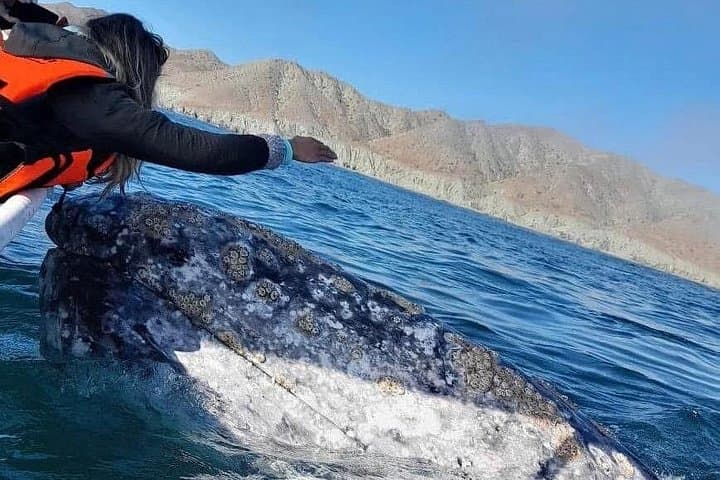
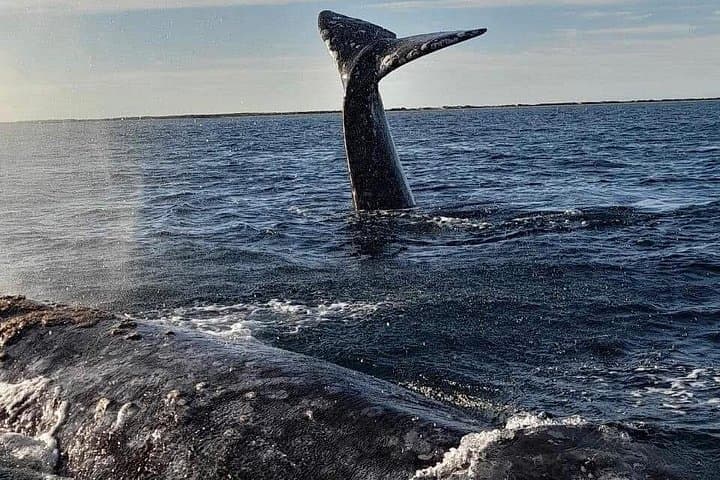


The morning light slices across a low Pacific swell as a small panga slips out of Puerto Chalé’s quiet bay. Salty air, the creak of oars and a guide’s low voice set the pace; then a dark back arcs and a spout punctuates the surface a few meters off the bow. These are not zoo encounters but deliberate, patient meetings with gray whales during their breeding season.
The morning light slices across a low Pacific swell as a small panga slips out of Puerto Chalé’s quiet bay. Salty air, the creak of oars and a guide’s low voice set the pace; then a dark back arcs and a spout punctuates the surface a few meters off the bow. These are not zoo encounters but deliberate, patient meetings with gray whales during their breeding season.
This stretch of Baja California Sur is shaped by recent volcanic faults and shifting sandbars that form sheltered coves favored by migrating cetaceans. Gray whales travel from Arctic feeding grounds to the warm lagoons and bays off the peninsula to mate and nurse calves—an annual migration that has shaped local fishing culture and conservation efforts for generations. Guides in Puerto Chalé draw on local knowledge and long-standing community protocols that prioritize mother-calf safety.
Practically, expect a full-day outing: roughly two hours’ drive from La Paz, followed by 1–3 hours on the water and time for brief beachside stops. Boats are certified pangas running small groups for a low-impact approach; captains know where whales commonly rest and which behaviors indicate stress. Bring sun protection, stabilized camera gear and sea-sickness prevention; pack snacks and water provided on many tours, but keep movement slow on deck to avoid startling animals.
This is a photo-forward, educational encounter rather than a thrill ride—prepare to be patient, observant and respectful. Timing your trip between winter and early spring increases the chance of close encounters with mothers and calves while supporting community-led conservation practices.