THE ADVENTURE COLLECTIVE® · Independent discovery and booking for outdoor travel

Set off from Puerto Escondido for a 3‑hour cruise that seeks dolphins, sea turtles, mobula rays and seasonal humpback whales. Morning departures and a cautious crew increase the chance to see and—when conditions allow—swim near playful pods.
Set off from Puerto Escondido for a 3‑hour cruise that seeks dolphins, sea turtles, mobula rays and seasonal humpback whales. Morning departures and a cautious crew increase the chance to see and—when conditions allow—swim near playful pods.
The bow cuts through blue Pacific water and spray drifts across your face as a pod of dolphins arcs toward the boat, riding the wake with an easy power that dares you to blink. In Puerto Escondido that rush of wildlife is the point: dolphins, flying fish, mobula rays and the occasional sea turtle appear against a backdrop of rugged Oaxaca coastline and open ocean.
Verified experiences and guided adventures in the surrounding area.
Operated by ECO ADVENTURES PUERTO ESCONDIDO · Puerto Escondido, Oaxaca
The bow cuts through blue Pacific water and spray drifts across your face as a pod of dolphins arcs toward the boat, riding the wake with an easy power that dares you to blink. In Puerto Escondido that rush of wildlife is the point: dolphins, flying fish, mobula rays and the occasional sea turtle appear against a backdrop of rugged Oaxaca coastline and open ocean.
The region sits on the edge of the Mexican Pacific where tectonic uplift and volcanic geology have carved steep, rocky promontories and deep nearshore channels that concentrate nutrients and attract marine life. Puerto Escondido’s fishing and coastal culture grew from those waters; local communities have long read the sea for livelihood and lore. Between November and March the offshore corridor also hosts migrating humpback whales, an added draw for winter tours.
Expect an interpretive outing rather than a guaranteed swim; captains assess currents and visibility and will advise whether swimming alongside dolphins is safe. Boats typically include shaded seating, life vests and bilingual guides. Bring a waterproof camera or case, and a willingness to move with the animals rather than force an encounter.
Practical tips: tours run about three hours and often include hotel pickup in Puerto Escondido. Morning departures increase the chance of calm seas and active wildlife. Apply reef‑safe sunscreen, stay hydrated, and wear a hat and non‑slip shoes for boarding. If swimming is allowed, follow the guide’s instructions, enter calmly, and avoid chasing animals—responsible viewing keeps both you and the marine life safe.
No—swimming is allowed only when the captain assesses safe sea conditions and animal behavior; guides prioritize welfare and safety.
Yes, life vests are provided on the boat and must be used according to the crew’s instructions.
Humpback whales are most commonly observed in this region between November and March during their migration.
Most tours include hotel pickup within Puerto Escondido—confirm pickup details at booking and expect a suggested arrival time for departure.
ECO ADVENTURES PUERTO ESCONDIDO operates guided outdoor trips and adventures with an emphasis on safety, stewardship, and memorable experiences.
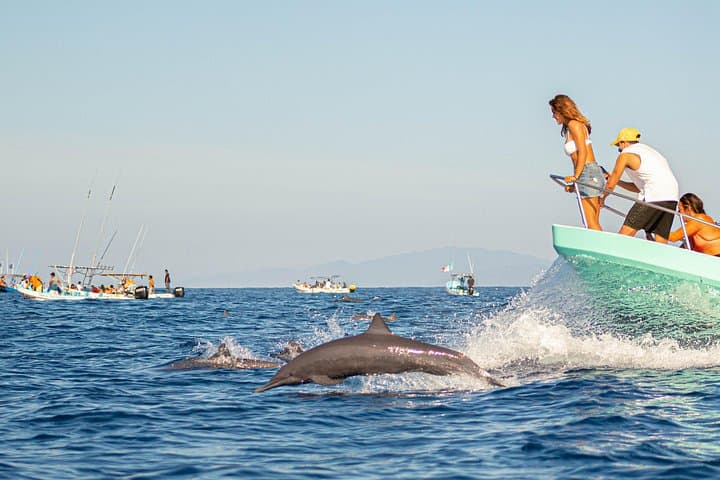


The bow cuts through blue Pacific water and spray drifts across your face as a pod of dolphins arcs toward the boat, riding the wake with an easy power that dares you to blink. In Puerto Escondido that rush of wildlife is the point: dolphins, flying fish, mobula rays and the occasional sea turtle appear against a backdrop of rugged Oaxaca coastline and open ocean.
The bow cuts through blue Pacific water and spray drifts across your face as a pod of dolphins arcs toward the boat, riding the wake with an easy power that dares you to blink. In Puerto Escondido that rush of wildlife is the point: dolphins, flying fish, mobula rays and the occasional sea turtle appear against a backdrop of rugged Oaxaca coastline and open ocean.
The region sits on the edge of the Mexican Pacific where tectonic uplift and volcanic geology have carved steep, rocky promontories and deep nearshore channels that concentrate nutrients and attract marine life. Puerto Escondido’s fishing and coastal culture grew from those waters; local communities have long read the sea for livelihood and lore. Between November and March the offshore corridor also hosts migrating humpback whales, an added draw for winter tours.
Expect an interpretive outing rather than a guaranteed swim; captains assess currents and visibility and will advise whether swimming alongside dolphins is safe. Boats typically include shaded seating, life vests and bilingual guides. Bring a waterproof camera or case, and a willingness to move with the animals rather than force an encounter.
Practical tips: tours run about three hours and often include hotel pickup in Puerto Escondido. Morning departures increase the chance of calm seas and active wildlife. Apply reef‑safe sunscreen, stay hydrated, and wear a hat and non‑slip shoes for boarding. If swimming is allowed, follow the guide’s instructions, enter calmly, and avoid chasing animals—responsible viewing keeps both you and the marine life safe.