THE ADVENTURE COLLECTIVE® · Independent discovery and booking for outdoor travel
Board a stable catamaran in Puerto Vallarta and head into Bahía de Banderas for four hours of guided humpback encounters, marine science commentary, and panoramic viewing. Ideal for families and first-time whale watchers.
Board a stable catamaran in Puerto Vallarta and head into Bahía de Banderas for four hours of guided humpback encounters, marine science commentary, and panoramic viewing. Ideal for families and first-time whale watchers.
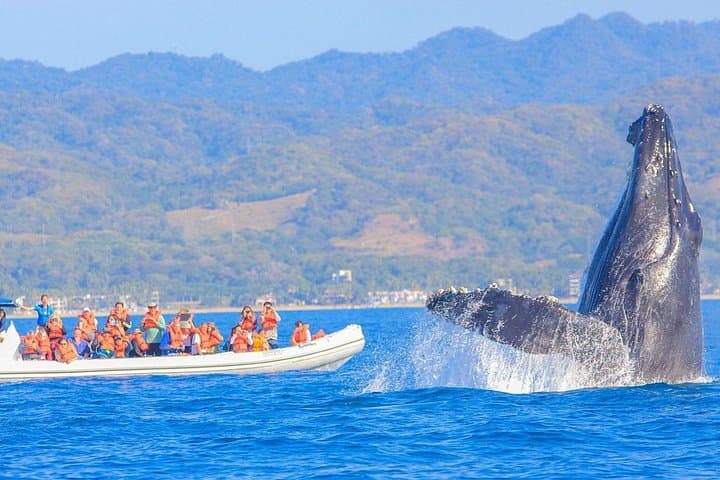
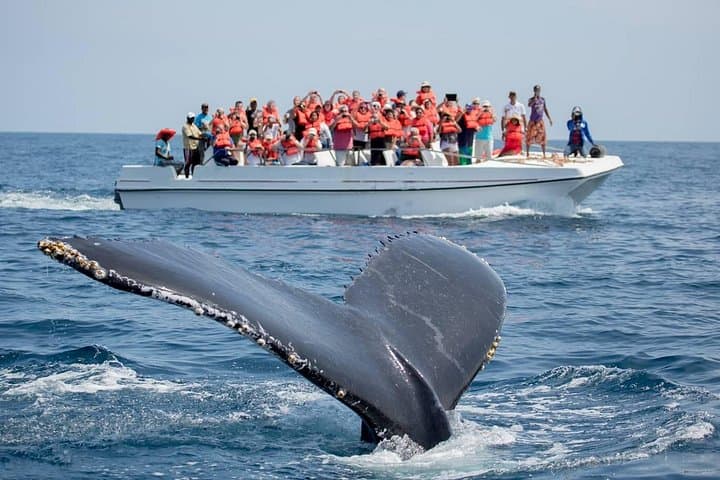
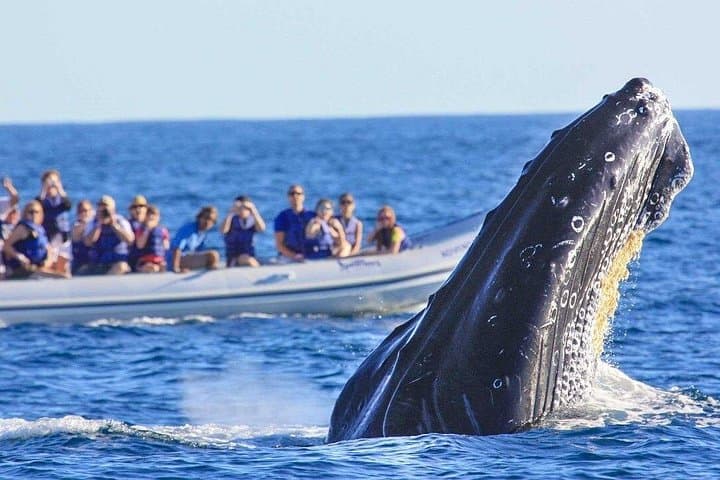
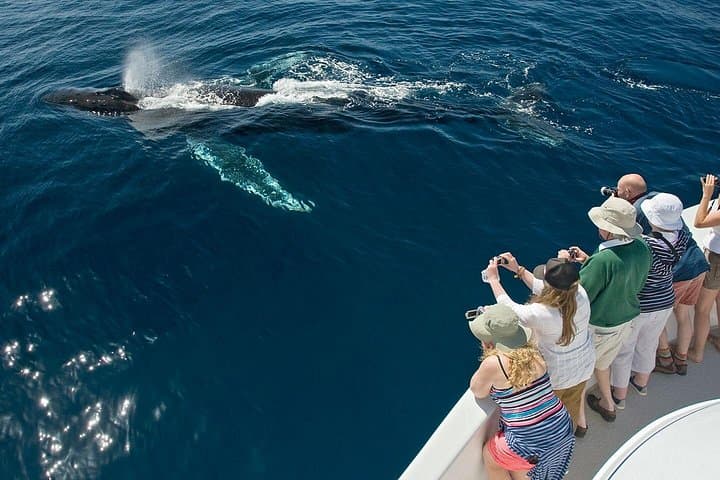
The catamaran slips out of Marina Vallarta into the wide mouth of Bahía de Banderas, salt spray bright on your lips and the city skyline shrinking behind you. Within an hour the skyline gives way to open water and the real theater begins: spouts, tail slaps and the sudden, impossible arc of a humpback clearing the ocean.
Verified experiences and guided adventures in the surrounding area.
Operated by ParaViajantes Tours · Puerto Vallarta, Jalisco
The catamaran slips out of Marina Vallarta into the wide mouth of Bahía de Banderas, salt spray bright on your lips and the city skyline shrinking behind you. Within an hour the skyline gives way to open water and the real theater begins: spouts, tail slaps and the sudden, impossible arc of a humpback clearing the ocean.
Humpback whales migrate to these warm Pacific waters primarily in winter—roughly December through March—to breed and calve. Geologically, Bahía de Banderas is a broad, deep embayment carved by tectonics and river systems; its depth and protected expanse attract marine life and creates predictable seasonal feeding and breeding grounds. Culturally, Puerto Vallarta grew from a small fishing town into an international destination after the 1960s; today local crews blend tourism with conservation, often including marine biologists on deck to explain whale song, social behavior and regional protection measures.
On a typical four-hour catamaran outing aboard the Vallarta Sol, expect a mix of steady cruising and stops when whales are sighted, commentary from a marine biologist, light snacks and beverages, and panoramic viewing decks for photography.
Practical guidance: arrive early to board and claim a stable viewing spot, use binoculars or a mid-telephoto lens, and follow crew directions for safe distancing. Bring sun protection, a wind layer for cooler mornings, and seasickness meds if you are prone. Responsible watchers keep noise low and avoid sudden movements—both for safety and to minimize disturbance to the animals.
Humpback season runs roughly December through March, with peak activity often between January and March when breeding and courtship displays are most common.
No—sightings are very likely during peak season but never guaranteed; operators follow strict distance and safety rules and will prioritize animal welfare over close encounters.
Yes—the catamaran is designed for families and most fitness levels, though boarding and time on deck require basic mobility; check operator guidance for specific needs.
Bring water (a refillable bottle), sunscreen, a hat, binoculars or a camera, motion-sickness remedies if needed, and a light layer for wind.
ParaViajantes Tours operates guided outdoor trips and adventures with an emphasis on safety, stewardship, and memorable experiences.
The catamaran slips out of Marina Vallarta into the wide mouth of Bahía de Banderas, salt spray bright on your lips and the city skyline shrinking behind you. Within an hour the skyline gives way to open water and the real theater begins: spouts, tail slaps and the sudden, impossible arc of a humpback clearing the ocean.
The catamaran slips out of Marina Vallarta into the wide mouth of Bahía de Banderas, salt spray bright on your lips and the city skyline shrinking behind you. Within an hour the skyline gives way to open water and the real theater begins: spouts, tail slaps and the sudden, impossible arc of a humpback clearing the ocean.
Humpback whales migrate to these warm Pacific waters primarily in winter—roughly December through March—to breed and calve. Geologically, Bahía de Banderas is a broad, deep embayment carved by tectonics and river systems; its depth and protected expanse attract marine life and creates predictable seasonal feeding and breeding grounds. Culturally, Puerto Vallarta grew from a small fishing town into an international destination after the 1960s; today local crews blend tourism with conservation, often including marine biologists on deck to explain whale song, social behavior and regional protection measures.
On a typical four-hour catamaran outing aboard the Vallarta Sol, expect a mix of steady cruising and stops when whales are sighted, commentary from a marine biologist, light snacks and beverages, and panoramic viewing decks for photography.
Practical guidance: arrive early to board and claim a stable viewing spot, use binoculars or a mid-telephoto lens, and follow crew directions for safe distancing. Bring sun protection, a wind layer for cooler mornings, and seasickness meds if you are prone. Responsible watchers keep noise low and avoid sudden movements—both for safety and to minimize disturbance to the animals.
