THE ADVENTURE COLLECTIVE® · Independent discovery and booking for outdoor travel

Meet Ebbi at the harbour and spend two brisk hours between sea cliffs and crater rims on Heimaey. This compact tour pairs up-close puffin viewing with a walk into Eldfell’s crater and a stop at a recreated Viking turf village—ideal for travelers wanting culture, birds, and volcanic drama in one outing.
Meet Ebbi at the harbour and spend two brisk hours between sea cliffs and crater rims on Heimaey. This compact tour pairs up-close puffin viewing with a walk into Eldfell’s crater and a stop at a recreated Viking turf village—ideal for travelers wanting culture, birds, and volcanic drama in one outing.
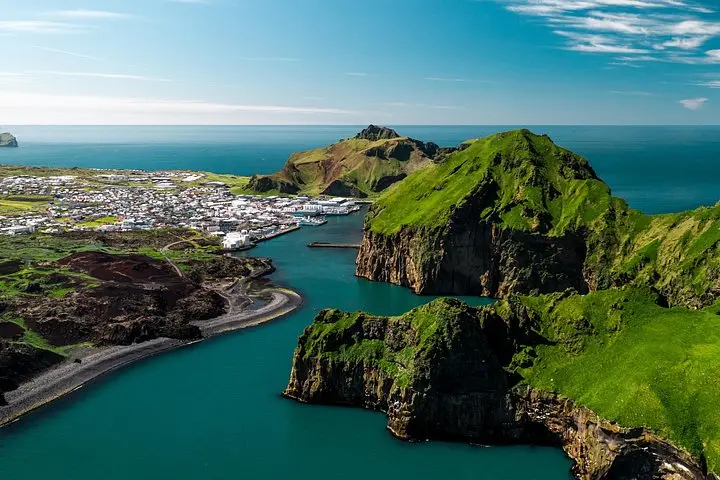
You step off the ferry and the salt-snap of North Atlantic wind greets you before the island does. A small black-and-blue house at the harbour, puffin signs above the door, is the meeting point where Ebbi—local, quick with a joke, and conversation—briefs the group. Within minutes the coach threads narrow streets, volcanic ridgelines rising like the ribs of some old sea creature, and the island begins to reveal itself: grassy slopes peppered with seabird burrows, black lava rock, and a crater rim you can walk into.
Verified experiences and guided adventures in the surrounding area.
Operated by Eyjatours · Vestmannaeyjar (Heimaey), Vestmannaeyjar
You step off the ferry and the salt-snap of North Atlantic wind greets you before the island does. A small black-and-blue house at the harbour, puffin signs above the door, is the meeting point where Ebbi—local, quick with a joke, and conversation—briefs the group. Within minutes the coach threads narrow streets, volcanic ridgelines rising like the ribs of some old sea creature, and the island begins to reveal itself: grassy slopes peppered with seabird burrows, black lava rock, and a crater rim you can walk into.
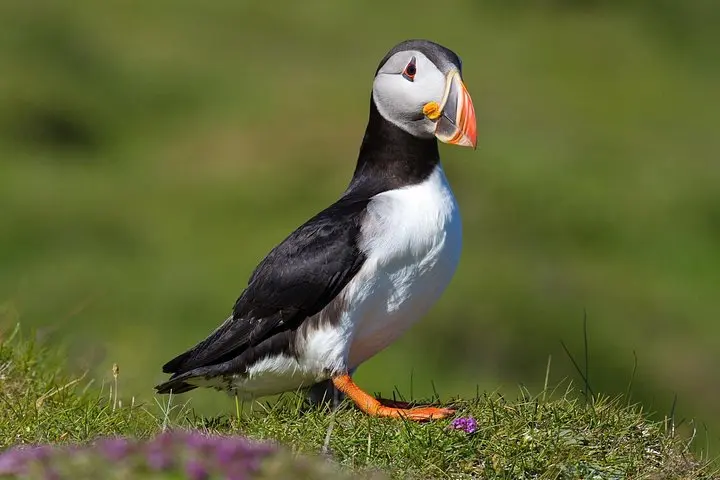
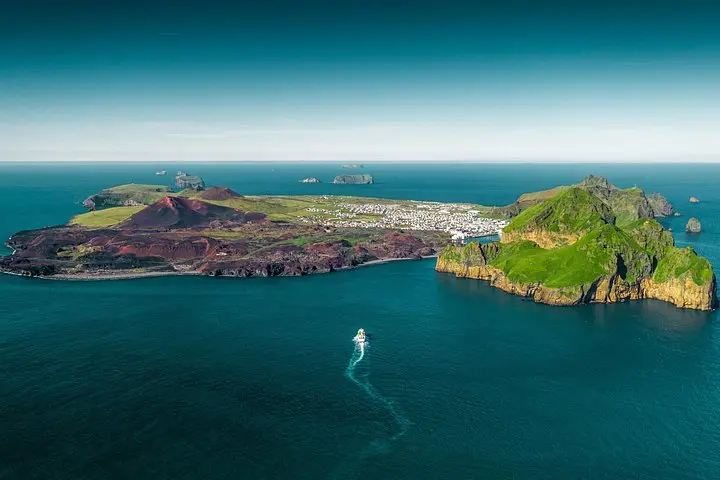
Heimaey is compact but storied. Geologically, it is the product of fire; Eldfell erupted in 1973, forcing the town’s dramatic evacuation and permanently reshaping the landscape. The tour walks you through that recent history—up close to the breach where molten rock pushed the island outward and formed new shorelines—and explains how lava and ash created the raw viewing platforms puffins now use. Stórhöfði, exposed and famously windy, is the island’s principal puffin colony and a place where waves and wind seem to argue for space.
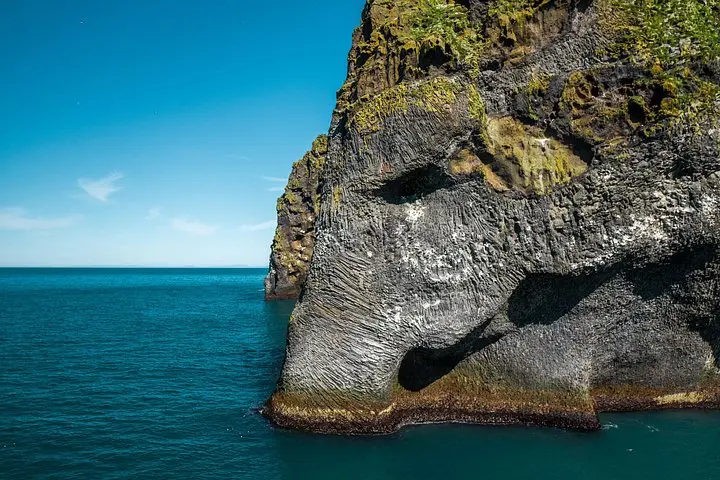
Culturally the island carries a living memory of its people: the Viking Town offers a short, tangible detour into turf houses and rural customs, and local flavors—smoked fish, skyr—give context to a landscape where livelihoods still answer to the sea. Ebbi points out the small details along the way: the local pastime of hauling on ropes at the harbour, the story behind Elephant Rock sculpted by sea and storm, and the cautious optimism of residents rebuilding after volcanic upheaval.
The itinerary is tight but rewarding: short walks to cliff edges and a guided entrance to the middle of Eldfell’s crater, multiple puffin-view stops including Kaplagjóta and Stórhöfði, a Viking Town visit, and a few photo-ready pullouts. Terrain is coastal and uneven—packed gravel, grassy tussocks, and rocky steps—so expect brief uphill 10–20 minute walks and exposed cliff edges.
Practical edge: the tour lasts roughly two hours and is suitable for most fitness levels, but it is weather-dependent—wind can be fierce and puffin sightings are never guaranteed. Check in 15 minutes early at the harbour house; dress in windproof layers and waterproof footwear; bring binoculars and a camera with a telephoto lens if you want close bird shots. The guide manages crowds and keeps a safe distance from nesting sites to protect birds and visitors alike.
For travelers, the reward is immediate: puffins bobbing like punctuation along cliff edges, a volcanic crater you can stand inside, and a compact island town that tells a modern story about resilience and the raw forces that shape the North Atlantic.
No—puffin sightings are common at Stórhöfði and Kaplagjóta during breeding season, but wildlife is never guaranteed and sightings depend on season and weather.
The tour is not suitable for children under 3 and involves uneven terrain that makes strollers impractical; older children who can walk short distances are fine.
Expect a 10–20 minute uphill walk from the bus to the crater rim with some rocky footing; the guide leads a brief walk into the crater’s center area.
Yes—the meeting point is within walking distance of the cruise port, but check ship timetables and allow time for disembarkation and the 15-minute check-in.
Tours are weather-dependent; if canceled you are eligible for a refund per the operator’s policy—full refund if canceled more than 24 hours in advance, partial refunds for late cancellations due to weather.
There are restroom facilities at the start point in town; stops at remote viewpoints may not have toilets, so plan accordingly.
Eyjatours operates guided outdoor trips and adventures with an emphasis on safety, stewardship, and memorable experiences.
You step off the ferry and the salt-snap of North Atlantic wind greets you before the island does. A small black-and-blue house at the harbour, puffin signs above the door, is the meeting point where Ebbi—local, quick with a joke, and conversation—briefs the group. Within minutes the coach threads narrow streets, volcanic ridgelines rising like the ribs of some old sea creature, and the island begins to reveal itself: grassy slopes peppered with seabird burrows, black lava rock, and a crater rim you can walk into.
You step off the ferry and the salt-snap of North Atlantic wind greets you before the island does. A small black-and-blue house at the harbour, puffin signs above the door, is the meeting point where Ebbi—local, quick with a joke, and conversation—briefs the group. Within minutes the coach threads narrow streets, volcanic ridgelines rising like the ribs of some old sea creature, and the island begins to reveal itself: grassy slopes peppered with seabird burrows, black lava rock, and a crater rim you can walk into.
Heimaey is compact but storied. Geologically, it is the product of fire; Eldfell erupted in 1973, forcing the town’s dramatic evacuation and permanently reshaping the landscape. The tour walks you through that recent history—up close to the breach where molten rock pushed the island outward and formed new shorelines—and explains how lava and ash created the raw viewing platforms puffins now use. Stórhöfði, exposed and famously windy, is the island’s principal puffin colony and a place where waves and wind seem to argue for space.
Culturally the island carries a living memory of its people: the Viking Town offers a short, tangible detour into turf houses and rural customs, and local flavors—smoked fish, skyr—give context to a landscape where livelihoods still answer to the sea. Ebbi points out the small details along the way: the local pastime of hauling on ropes at the harbour, the story behind Elephant Rock sculpted by sea and storm, and the cautious optimism of residents rebuilding after volcanic upheaval.
The itinerary is tight but rewarding: short walks to cliff edges and a guided entrance to the middle of Eldfell’s crater, multiple puffin-view stops including Kaplagjóta and Stórhöfði, a Viking Town visit, and a few photo-ready pullouts. Terrain is coastal and uneven—packed gravel, grassy tussocks, and rocky steps—so expect brief uphill 10–20 minute walks and exposed cliff edges.
Practical edge: the tour lasts roughly two hours and is suitable for most fitness levels, but it is weather-dependent—wind can be fierce and puffin sightings are never guaranteed. Check in 15 minutes early at the harbour house; dress in windproof layers and waterproof footwear; bring binoculars and a camera with a telephoto lens if you want close bird shots. The guide manages crowds and keeps a safe distance from nesting sites to protect birds and visitors alike.
For travelers, the reward is immediate: puffins bobbing like punctuation along cliff edges, a volcanic crater you can stand inside, and a compact island town that tells a modern story about resilience and the raw forces that shape the North Atlantic.