THE ADVENTURE COLLECTIVE® · Independent discovery and booking for outdoor travel

Cycle from Pula’s Roman Arena to pine-lined headlands on a three-hour guided ride that blends amphitheatre views, Venetian and Austro-Hungarian forts, and seaside stops along the Lungo Mare. Ideal for easy riders who want history, coastal scenery, and a beach-bar pause.
Cycle from Pula’s Roman Arena to pine-lined headlands on a three-hour guided ride that blends amphitheatre views, Venetian and Austro-Hungarian forts, and seaside stops along the Lungo Mare. Ideal for easy riders who want history, coastal scenery, and a beach-bar pause.
Wheels click on sun-warmed cobbles as the guide leads a small group away from Pula’s Roman Amphitheatre toward the sea. Salt air pushes at your face; the Adriatic keeps time to the pedals. The ride threads between imperial ruins, a compact harbor, and low pine-scented headlands where the shore dares you to slow down.
Verified experiences and guided adventures in the surrounding area.
Operated by Bike tours · Pula, Istria
Wheels click on sun-warmed cobbles as the guide leads a small group away from Pula’s Roman Amphitheatre toward the sea. Salt air pushes at your face; the Adriatic keeps time to the pedals. The ride threads between imperial ruins, a compact harbor, and low pine-scented headlands where the shore dares you to slow down.
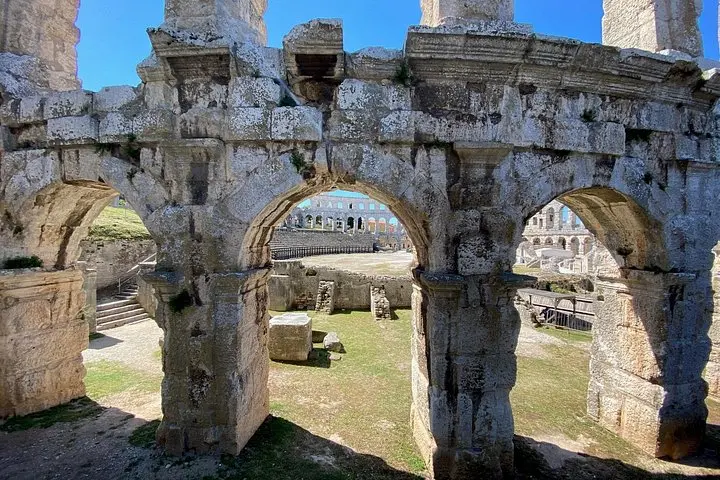
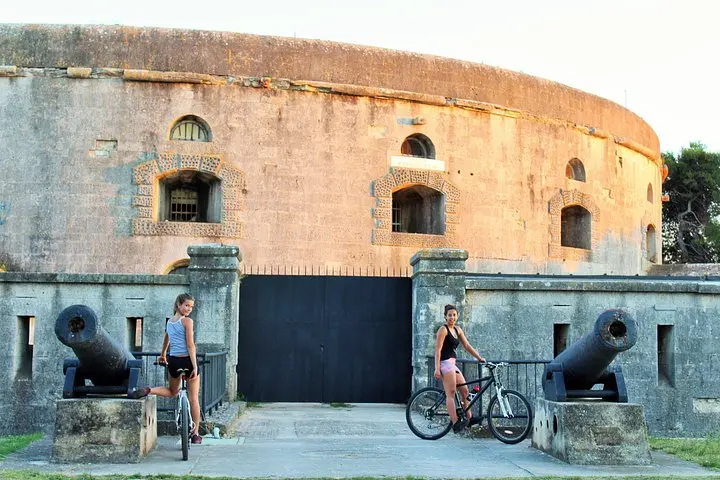
This three-hour loop stitches together Pula’s long human story: a 1st-century Roman amphitheatre and Forum, Venetian-era hill fortifications built in the 1600s, and the heavier Austro-Hungarian forts of the 19th century—each structure a response to changing maritime threats. Geologically the route rides on Istria’s karst limestone, worn into small cliffs and pebble coves that reflect the pale Adriatic light.
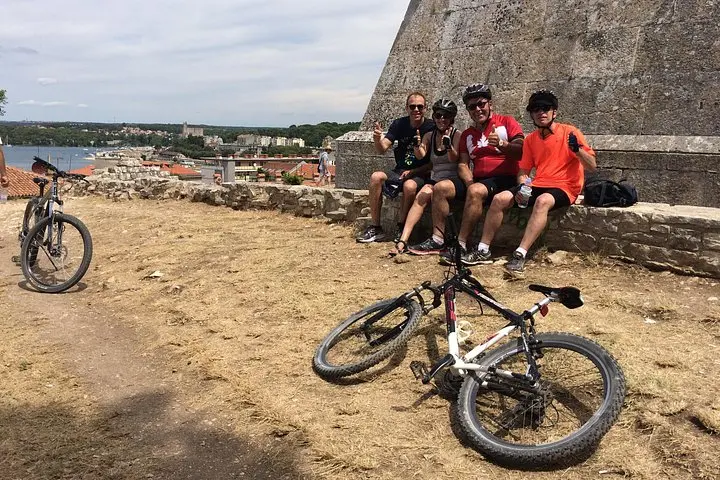
Culturally the city wears its layers plainly: Roman blocks repurposed in medieval walls, Austro-Hungarian streetside cafes, and beach bars on the Lungo Mare where locals linger. Guides point out hidden portals and quieter viewpoints above Verudela, giving context to forts and coastal defenses while leaving room for a coffee or quick swim.
Practical guidance: expect mostly paved streets, a few short cobbled climbs (the Kaštel approach), and seaside paths that can be sandy in places. Total distance is roughly 10–13 km with modest cumulative elevation (<150 m). Bikes, helmets, and bottled water are provided; wear closed-toe shoes, sunscreen, and a lightweight wind or rain layer. The pace is easy and suitable for riders aged 12+, but bring a charged phone and basic balance—traffic and tight turns in the old town demand attention.
Yes—mountain bikes and helmets are provided by the operator; infant seats are available on request.
Yes—the tour is rated easy and intended for riders aged 12 and up, though basic bike handling and comfort with city traffic are required.
The tour operates in most conditions; dress appropriately. For a full refund you must cancel at least 24 hours before departure per the operator’s policy.
Yes—there’s a planned seaside stretch along Lungo Mare and guides can stop at a beach bar or a quick swim if time allows.
Bike tours operates guided outdoor trips and adventures with an emphasis on safety, stewardship, and memorable experiences.
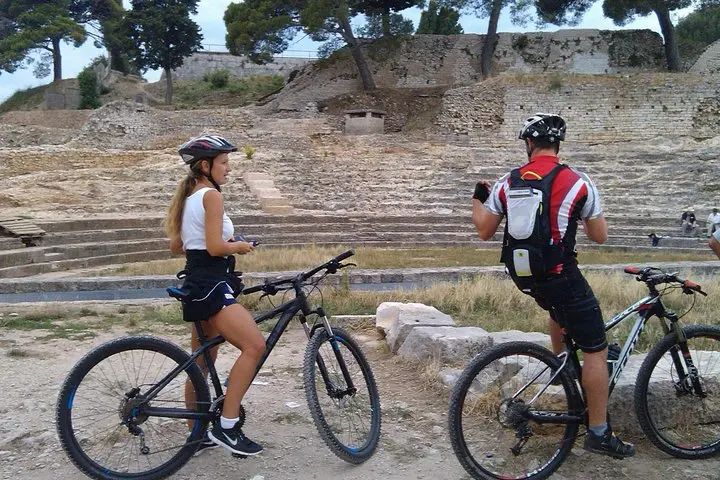
Wheels click on sun-warmed cobbles as the guide leads a small group away from Pula’s Roman Amphitheatre toward the sea. Salt air pushes at your face; the Adriatic keeps time to the pedals. The ride threads between imperial ruins, a compact harbor, and low pine-scented headlands where the shore dares you to slow down.
Wheels click on sun-warmed cobbles as the guide leads a small group away from Pula’s Roman Amphitheatre toward the sea. Salt air pushes at your face; the Adriatic keeps time to the pedals. The ride threads between imperial ruins, a compact harbor, and low pine-scented headlands where the shore dares you to slow down.
This three-hour loop stitches together Pula’s long human story: a 1st-century Roman amphitheatre and Forum, Venetian-era hill fortifications built in the 1600s, and the heavier Austro-Hungarian forts of the 19th century—each structure a response to changing maritime threats. Geologically the route rides on Istria’s karst limestone, worn into small cliffs and pebble coves that reflect the pale Adriatic light.
Culturally the city wears its layers plainly: Roman blocks repurposed in medieval walls, Austro-Hungarian streetside cafes, and beach bars on the Lungo Mare where locals linger. Guides point out hidden portals and quieter viewpoints above Verudela, giving context to forts and coastal defenses while leaving room for a coffee or quick swim.
Practical guidance: expect mostly paved streets, a few short cobbled climbs (the Kaštel approach), and seaside paths that can be sandy in places. Total distance is roughly 10–13 km with modest cumulative elevation (<150 m). Bikes, helmets, and bottled water are provided; wear closed-toe shoes, sunscreen, and a lightweight wind or rain layer. The pace is easy and suitable for riders aged 12+, but bring a charged phone and basic balance—traffic and tight turns in the old town demand attention.