THE ADVENTURE COLLECTIVE® · Independent discovery and booking for outdoor travel

A compact day-hike from Pokhara’s Lakeside takes you up to the World Peace Pagoda and higher to Pumdikot viewpoint for expansive Annapurna faces. Expect mixed terrain, village encounters, and 5–6 hours of walking with big mountain rewards.
A compact day-hike from Pokhara’s Lakeside takes you up to the World Peace Pagoda and higher to Pumdikot viewpoint for expansive Annapurna faces. Expect mixed terrain, village encounters, and 5–6 hours of walking with big mountain rewards.
You step away from Lakeside’s bustle onto a narrow lane, cool air washing off Phewa Lake as the trail pulls you toward the white dome of the World Peace Pagoda. Terraced fields and village houses watch you pass; birds and the distant churn of motorboats frame the climb. By the time the stupa comes into view, the lake below has shrunk into a glittering patch and the Annapurna range rises like a row of steely teeth across the north.
Verified experiences and guided adventures in the surrounding area.
Operated by Swami Narayan Travels Pvt Ltd · Pokhara, Gandaki Province
You step away from Lakeside’s bustle onto a narrow lane, cool air washing off Phewa Lake as the trail pulls you toward the white dome of the World Peace Pagoda. Terraced fields and village houses watch you pass; birds and the distant churn of motorboats frame the climb. By the time the stupa comes into view, the lake below has shrunk into a glittering patch and the Annapurna range rises like a row of steely teeth across the north.
The route follows old mule tracks and recently maintained switchbacks that locals use to move between villages. The stupa itself is a post-1990 landmark built by Japanese Buddhists; from its rim you can read Pokhara’s history—trade, lakeside settlement, and decades of growing trekking tourism—written against the mountain horizon. Geologically, you’re on the Lesser Himalaya’s foothills: folded sedimentary rock under thin soils and fast-draining paths. Culture is present in roadside shrines, apple sellers and the friendly curiosity of hill communities.
Expect mixed terrain—stone steps, packed earth, occasional muddy patches in wet months—and a total outing time of about 5–6 hours including transfers. The hike gains several hundred meters; good footwear, layered clothing, and steady hydration make it straightforward for most hikers. Plan to leave early for the best light on Annapurna and quieter trails. Respect private terraces, ask before photographing people, and pack out any trash: these hills are lived-in, and their views depend on local stewardship.
The full outing from Lakeside including transfers typically takes 5–6 hours with roughly 400–700 m of cumulative ascent depending on your exact start and route.
No—paths are well used and signposted, but a local guide adds cultural context and ease of navigation if you prefer.
Basic teahouses and pit toilets exist near villages and the stupa, but carry snacks and toilet paper for comfort.
Monsoon season brings slippery trails and limited views; clear post-monsoon and autumn days offer the best mountain visibility.
Swami Narayan Travels Pvt Ltd operates guided outdoor trips and adventures with an emphasis on safety, stewardship, and memorable experiences.

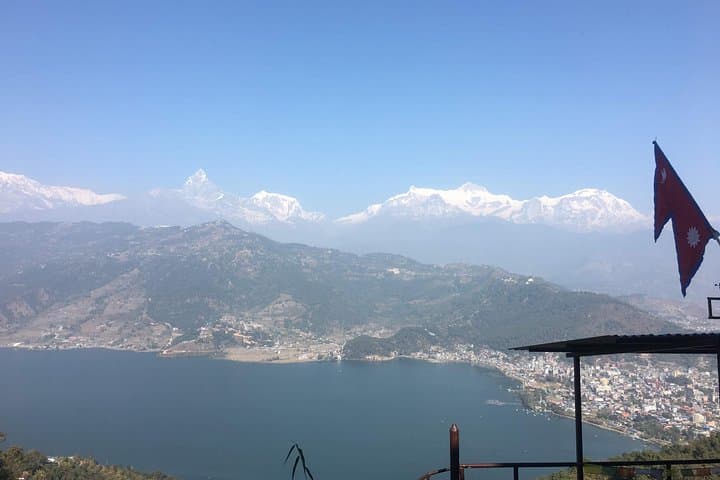


You step away from Lakeside’s bustle onto a narrow lane, cool air washing off Phewa Lake as the trail pulls you toward the white dome of the World Peace Pagoda. Terraced fields and village houses watch you pass; birds and the distant churn of motorboats frame the climb. By the time the stupa comes into view, the lake below has shrunk into a glittering patch and the Annapurna range rises like a row of steely teeth across the north.
You step away from Lakeside’s bustle onto a narrow lane, cool air washing off Phewa Lake as the trail pulls you toward the white dome of the World Peace Pagoda. Terraced fields and village houses watch you pass; birds and the distant churn of motorboats frame the climb. By the time the stupa comes into view, the lake below has shrunk into a glittering patch and the Annapurna range rises like a row of steely teeth across the north.
The route follows old mule tracks and recently maintained switchbacks that locals use to move between villages. The stupa itself is a post-1990 landmark built by Japanese Buddhists; from its rim you can read Pokhara’s history—trade, lakeside settlement, and decades of growing trekking tourism—written against the mountain horizon. Geologically, you’re on the Lesser Himalaya’s foothills: folded sedimentary rock under thin soils and fast-draining paths. Culture is present in roadside shrines, apple sellers and the friendly curiosity of hill communities.
Expect mixed terrain—stone steps, packed earth, occasional muddy patches in wet months—and a total outing time of about 5–6 hours including transfers. The hike gains several hundred meters; good footwear, layered clothing, and steady hydration make it straightforward for most hikers. Plan to leave early for the best light on Annapurna and quieter trails. Respect private terraces, ask before photographing people, and pack out any trash: these hills are lived-in, and their views depend on local stewardship.