THE ADVENTURE COLLECTIVE® · Independent discovery and booking for outdoor travel

Boat across Fewa Lake, climb through rice terraces and village lanes, and reach Pumdikot for a clean vista of the Annapurna range and Pokhara below. This easy-to-moderate day hike pairs cultural stops with wide mountain views.
Boat across Fewa Lake, climb through rice terraces and village lanes, and reach Pumdikot for a clean vista of the Annapurna range and Pokhara below. This easy-to-moderate day hike pairs cultural stops with wide mountain views.
A thin morning mist lifts off Fewa Lake as your boat nudges the shore and the trail heads up toward the World Peace Stupa. The path climbs through rice terraces and small hamlets where dogs announce your arrival and women carry firewood; every switchback opens a wider frame of the Annapurna range, with Machapuchare’s sharp profile cutting the sky.
Verified experiences and guided adventures in the surrounding area.
Operated by Couch Adventure Nepal (CAN) · Pokhara, Gandaki Province
A thin morning mist lifts off Fewa Lake as your boat nudges the shore and the trail heads up toward the World Peace Stupa. The path climbs through rice terraces and small hamlets where dogs announce your arrival and women carry firewood; every switchback opens a wider frame of the Annapurna range, with Machapuchare’s sharp profile cutting the sky.
Pumdikot sits on a low ridge east of Pokhara. Geologically the area is young Himalayan foothill — folded siltstones and shale producing steep, fertile terraces. Culturally the route threads through typical Nepali village life; houses are compact, prayer flags ripple at shrines, and local teashops offer simple dal and flatbread. The hilltop is recent in pilgrimage terms: local communities developed viewpoints and a stupa to draw both worship and walkers.
Expect 4–6 hours out and back when including the boat crossing. Terrain is mixed: paved village lanes, compact dirt tracks, and short rocky sections; elevation gain is modest but steady. Weather changes fast — clouds can hide peaks within an hour and reveal them again by afternoon. Water supplies are limited beyond the village shops, and phone signal can be patchy.
Practical plan: start early for crisp mountain light, hire a guide if you want cultural context, carry 1–2 liters of water, and bring sun protection for exposed ridge walking. The hike pairs easily with a morning on Fewa Lake and an afternoon exploring Lakeside Pokhara — compact, scenic, and culturally revealing without high alpine commitment.
It’s generally easy to moderate: mostly well-defined village tracks with steady uphill sections; no technical climbing required.
Not strictly—many walk independently—but a local guide adds cultural insight and handles permits and logistics.
Most itineraries include hotel pickup in Pokhara and a short boat crossing on Fewa Lake to reach the lakeshore trailhead.
Clear mountain views are most reliable in spring (March–May) and fall (September–November); mornings are best for crisp visibility.
Couch Adventure Nepal (CAN) operates guided outdoor trips and adventures with an emphasis on safety, stewardship, and memorable experiences.
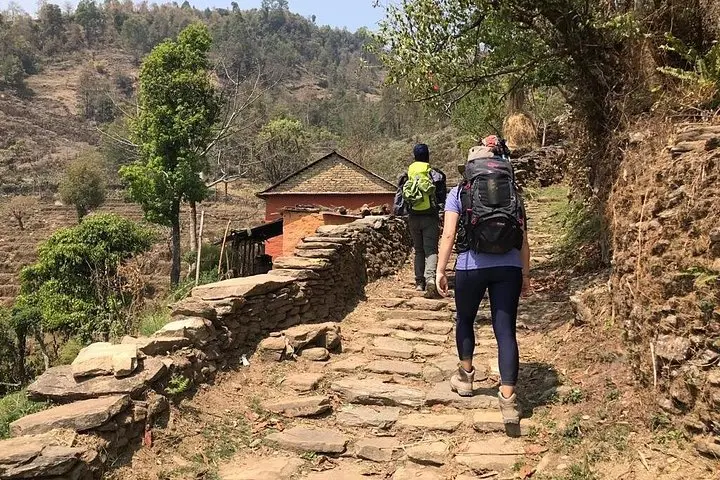
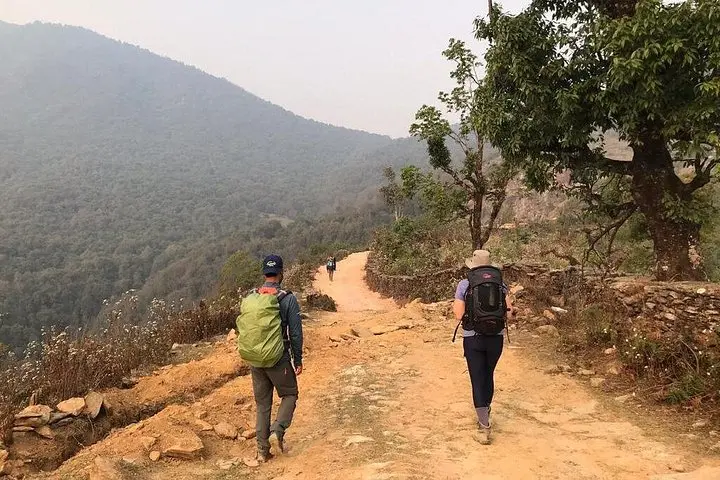
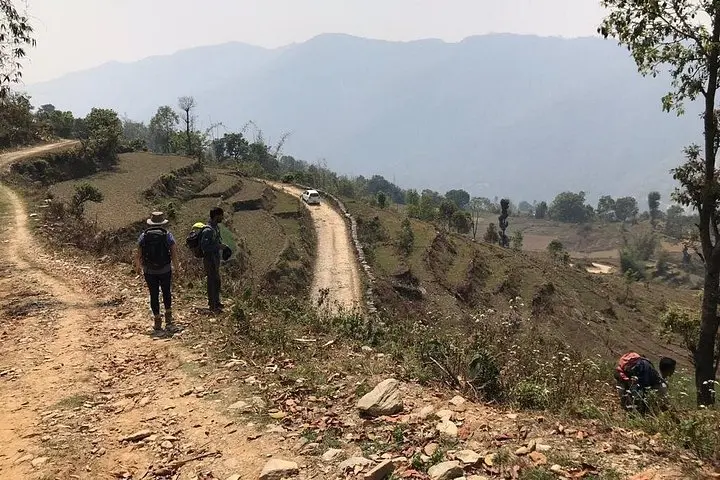
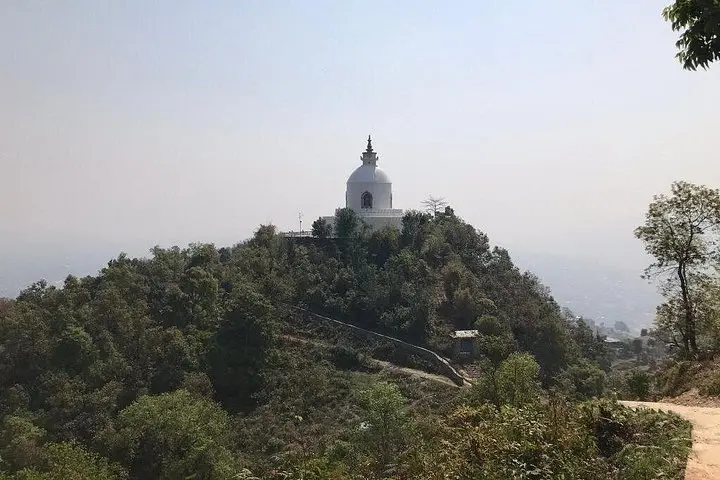
A thin morning mist lifts off Fewa Lake as your boat nudges the shore and the trail heads up toward the World Peace Stupa. The path climbs through rice terraces and small hamlets where dogs announce your arrival and women carry firewood; every switchback opens a wider frame of the Annapurna range, with Machapuchare’s sharp profile cutting the sky.
A thin morning mist lifts off Fewa Lake as your boat nudges the shore and the trail heads up toward the World Peace Stupa. The path climbs through rice terraces and small hamlets where dogs announce your arrival and women carry firewood; every switchback opens a wider frame of the Annapurna range, with Machapuchare’s sharp profile cutting the sky.
Pumdikot sits on a low ridge east of Pokhara. Geologically the area is young Himalayan foothill — folded siltstones and shale producing steep, fertile terraces. Culturally the route threads through typical Nepali village life; houses are compact, prayer flags ripple at shrines, and local teashops offer simple dal and flatbread. The hilltop is recent in pilgrimage terms: local communities developed viewpoints and a stupa to draw both worship and walkers.
Expect 4–6 hours out and back when including the boat crossing. Terrain is mixed: paved village lanes, compact dirt tracks, and short rocky sections; elevation gain is modest but steady. Weather changes fast — clouds can hide peaks within an hour and reveal them again by afternoon. Water supplies are limited beyond the village shops, and phone signal can be patchy.
Practical plan: start early for crisp mountain light, hire a guide if you want cultural context, carry 1–2 liters of water, and bring sun protection for exposed ridge walking. The hike pairs easily with a morning on Fewa Lake and an afternoon exploring Lakeside Pokhara — compact, scenic, and culturally revealing without high alpine commitment.