THE ADVENTURE COLLECTIVE® · Independent discovery and booking for outdoor travel

A compact, high-reward day hike from Pokhara that climbs to Pumdikot’s Peace Pagoda for sweeping Annapurna and Fishtail views, then returns via a lakeside boat ride. Ideal for travelers who want mountain panoramas without multi-day trekking.
A compact, high-reward day hike from Pokhara that climbs to Pumdikot’s Peace Pagoda for sweeping Annapurna and Fishtail views, then returns via a lakeside boat ride. Ideal for travelers who want mountain panoramas without multi-day trekking.
You step out of Lakeside Pokhara into cool mountain air and drive thirty minutes across patchwork rice terraces. The bus lets you off near a ridgeline; the trail climbs through scrub and occasional rhododendron, the hill seeming to lean toward the Annapurna massif. By the time the white dome of the Peace Pagoda comes into view, the Himalaya strip of serrated peaks—including Machapuchare (Fishtail)—pins the horizon.
Verified experiences and guided adventures in the surrounding area.
Operated by Swissa Adventure Travel & Treks · Pokhara, Gandaki Province
You step out of Lakeside Pokhara into cool mountain air and drive thirty minutes across patchwork rice terraces. The bus lets you off near a ridgeline; the trail climbs through scrub and occasional rhododendron, the hill seeming to lean toward the Annapurna massif. By the time the white dome of the Peace Pagoda comes into view, the Himalaya strip of serrated peaks—including Machapuchare (Fishtail)—pins the horizon.
The stupa is part of a chain of World Peace Pagodas established by Japanese Buddhist monks in the late 20th century; here it reads like a modern shrine and a survey point. Geologically you’re on young Himalayan uplift—steep, folded rock beyond the valley and alluvial benches below that cradle Phewa Lake. Locally, the route threads Gurung villages, teahouses, and a mix of Buddhist and Hindu devotional sites. Nearby cultural stops often include Davis Fall, the Gupteshwor cave, and a Tibetan refugee settlement, each showing different layers of Pokhara’s human geography.
Practical guidance: plan roughly five hours for the round trip including lunch at the stupa and a short boat crossing of Phewa Lake back to Lakeside. The uphill segment is about an hour on uneven stone and dirt; descent to the lake is steeper and requires careful footing. Carry water, layered clothing, sun protection, and small change for the boat. Morning light favors mountain views; late afternoon brings dramatic sunsets over the lake but shorter visibility for distant peaks. Respect temple etiquette at the stupa, follow your guide’s route, and leave no trace on fragile trails—this is a short, high-reward hike for most travelers.
The full activity from Lakeside, including drive, ascent, lunch, boat crossing and return, is about 4–6 hours (approximately 5 hours advertised).
Yes—an English-speaking licensed guide and private transportation are included in the standard itinerary.
The itinerary typically includes a short boat ride across Phewa Lake to return to Lakeside, but confirm with the operator when booking.
Yes; the walk is described as suitable for most fitness levels, but the ascent and descent are uneven—children and those with mobility issues should take care.
Swissa Adventure Travel & Treks operates guided outdoor trips and adventures with an emphasis on safety, stewardship, and memorable experiences.
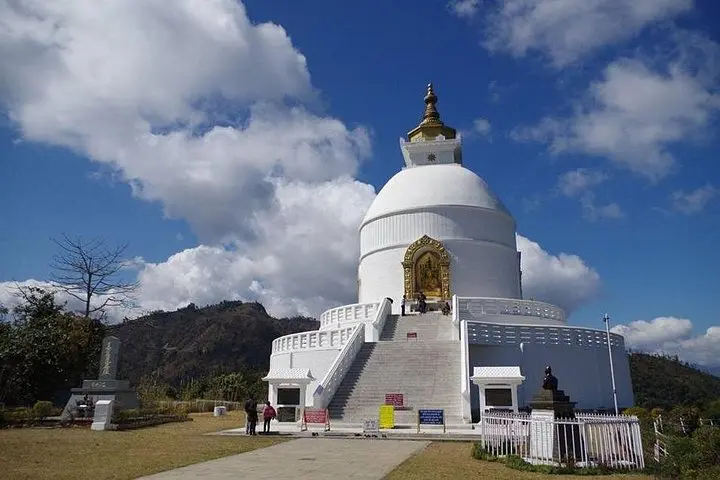
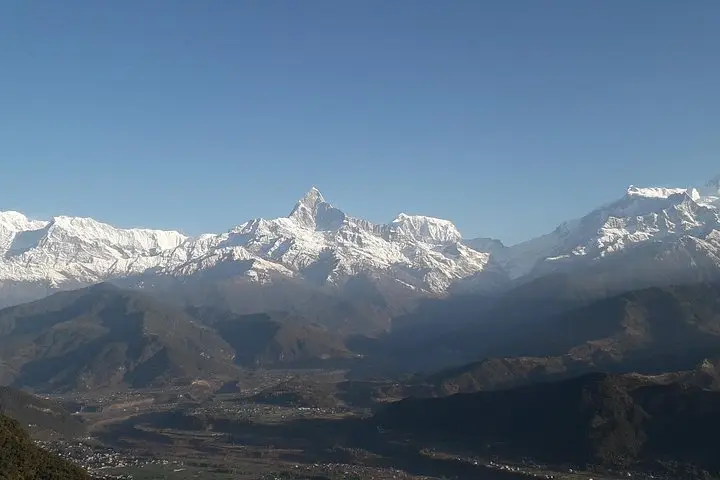
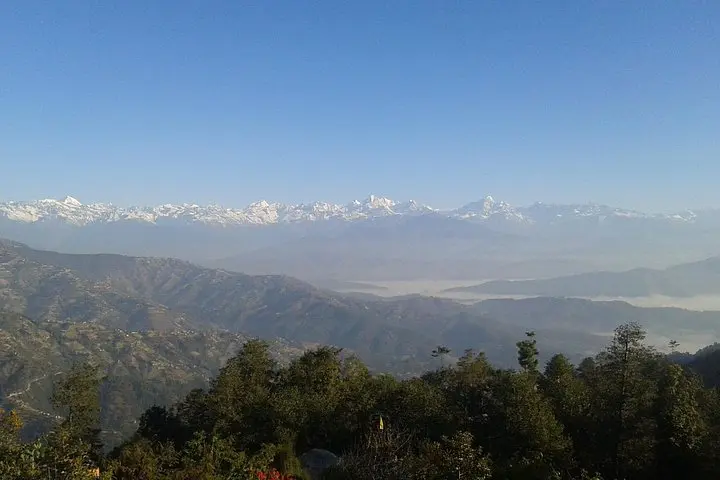
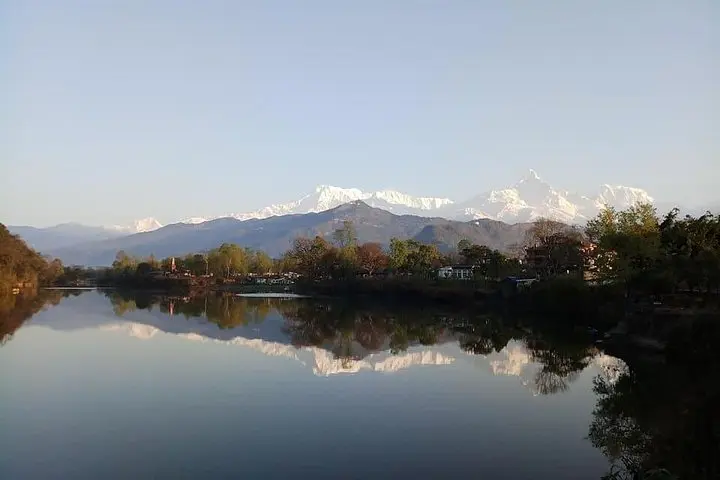
You step out of Lakeside Pokhara into cool mountain air and drive thirty minutes across patchwork rice terraces. The bus lets you off near a ridgeline; the trail climbs through scrub and occasional rhododendron, the hill seeming to lean toward the Annapurna massif. By the time the white dome of the Peace Pagoda comes into view, the Himalaya strip of serrated peaks—including Machapuchare (Fishtail)—pins the horizon.
You step out of Lakeside Pokhara into cool mountain air and drive thirty minutes across patchwork rice terraces. The bus lets you off near a ridgeline; the trail climbs through scrub and occasional rhododendron, the hill seeming to lean toward the Annapurna massif. By the time the white dome of the Peace Pagoda comes into view, the Himalaya strip of serrated peaks—including Machapuchare (Fishtail)—pins the horizon.
The stupa is part of a chain of World Peace Pagodas established by Japanese Buddhist monks in the late 20th century; here it reads like a modern shrine and a survey point. Geologically you’re on young Himalayan uplift—steep, folded rock beyond the valley and alluvial benches below that cradle Phewa Lake. Locally, the route threads Gurung villages, teahouses, and a mix of Buddhist and Hindu devotional sites. Nearby cultural stops often include Davis Fall, the Gupteshwor cave, and a Tibetan refugee settlement, each showing different layers of Pokhara’s human geography.
Practical guidance: plan roughly five hours for the round trip including lunch at the stupa and a short boat crossing of Phewa Lake back to Lakeside. The uphill segment is about an hour on uneven stone and dirt; descent to the lake is steeper and requires careful footing. Carry water, layered clothing, sun protection, and small change for the boat. Morning light favors mountain views; late afternoon brings dramatic sunsets over the lake but shorter visibility for distant peaks. Respect temple etiquette at the stupa, follow your guide’s route, and leave no trace on fragile trails—this is a short, high-reward hike for most travelers.