THE ADVENTURE COLLECTIVE® · Independent discovery and booking for outdoor travel

Launch from a treetop platform and fly across seven parallel cables — some of the Caribbean’s longest — for competitive, guided ziplines through Punta Cana’s tropical forest. This four-hour experience pairs adrenaline with on-the-ground insights about local ecology and safety.
Launch from a treetop platform and fly across seven parallel cables — some of the Caribbean’s longest — for competitive, guided ziplines through Punta Cana’s tropical forest. This four-hour experience pairs adrenaline with on-the-ground insights about local ecology and safety.
You clip in on a wooden platform, the air suddenly cooler under the canopy, and Punta Cana’s green expanse opens like a living map. The first cable stretches ahead — long, taut, and humming softly with the confidence of engineered steel — while birds flit through shafts of sun. Below, the forest breathes: palms lift fronds, vines tug at branches, and a distant river seems to dare you to move faster.
Verified experiences and guided adventures in the surrounding area.
Operated by Transfers Xpress Punta Cana · Punta Cana, La Altagracia
You clip in on a wooden platform, the air suddenly cooler under the canopy, and Punta Cana’s green expanse opens like a living map. The first cable stretches ahead — long, taut, and humming softly with the confidence of engineered steel — while birds flit through shafts of sun. Below, the forest breathes: palms lift fronds, vines tug at branches, and a distant river seems to dare you to move faster.
This tour runs on a system of seven parallel cables, some of the longest in the Caribbean, designed for single runs and head-to-head races. Guides run the safety checks with measured calm, fitting harnesses and explaining braking techniques until the only thing left is the run.
The eastern tip of Hispaniola that hosts Punta Cana is a patchwork of low limestone plains, mangrove fringe, and pockets of tropical forest where runoff created deeper soils. Indigenous Taíno people once traveled these corridors, and later the island’s landscape was reshaped by colonial agriculture and early tourism. Today the canopy tours offer a very different vantage: a modern route that threads through native flora and gives travelers a fresh perspective on the island’s natural systems.
Guides point out the small details — the sticky flowers of bromeliads, darting hummingbirds, the bright flash of an anole — and fold in local context about reforestation efforts and community-based tourism. The zipline itself is equal parts engineering and ecology; platforms are sited to minimize footpaths and preserve the forest floor.
Practicalities matter. The activity lasts roughly four hours with hotel pickup and private transport included, so you’ll be in and out of Punta Cana resorts without fuss. Wear closed-toe shoes and light layers; expect short walks between platforms and a few stair sections. Bring sunscreen, insect repellent, and a secure strap for any camera or phone — loose items are not allowed on the lines.
Safety briefings are thorough: harness checks, clipped backups, and an introduction to manual braking if needed. The tour is advertised as suitable for a wide range of fitness levels, but it’s not for pregnant travelers or those with serious spinal or heart conditions.
Best times to ride are early morning when temperatures are low and wildlife is active, or late afternoon when the light slants through the crowns. If you want to race a friend, request parallel lines at booking.
If you go, treat the forest with restraint: keep noise down near nesting birds, avoid touching plants, and follow your guide’s direction. The zipline gives you speed and perspective — you’ll land with your heart quickened and a clearer sense of how the Caribbean’s living landscape holds together.
Yes — private hotel pickup and drop-off are included; the operator will call to confirm your pickup location.
The activity is not recommended for pregnant guests or travelers with spinal, heart, or serious mobility problems; disclose conditions during booking.
Closed-toe shoes, light breathable clothing, and sun protection; avoid skirts and loose clothing that could catch on harnesses.
The total tour runs about four hours, including transport, briefing, and the sequence of ziplines.
Age and weight limits vary by operator — many tours accept children around 6–8 years old with adult supervision; confirm the specifics when booking.
For a full refund cancel at least 24 hours before the scheduled departure time; later cancellations are generally non-refundable.
Transfers Xpress Punta Cana operates guided outdoor trips and adventures with an emphasis on safety, stewardship, and memorable experiences.


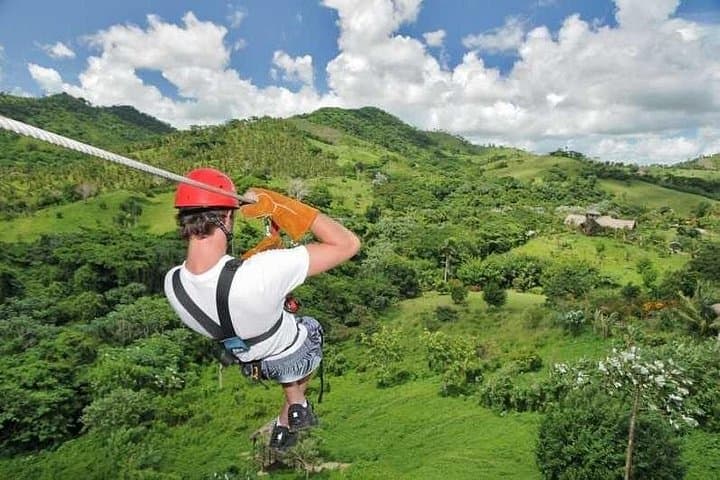

You clip in on a wooden platform, the air suddenly cooler under the canopy, and Punta Cana’s green expanse opens like a living map. The first cable stretches ahead — long, taut, and humming softly with the confidence of engineered steel — while birds flit through shafts of sun. Below, the forest breathes: palms lift fronds, vines tug at branches, and a distant river seems to dare you to move faster.
You clip in on a wooden platform, the air suddenly cooler under the canopy, and Punta Cana’s green expanse opens like a living map. The first cable stretches ahead — long, taut, and humming softly with the confidence of engineered steel — while birds flit through shafts of sun. Below, the forest breathes: palms lift fronds, vines tug at branches, and a distant river seems to dare you to move faster.
This tour runs on a system of seven parallel cables, some of the longest in the Caribbean, designed for single runs and head-to-head races. Guides run the safety checks with measured calm, fitting harnesses and explaining braking techniques until the only thing left is the run.
The eastern tip of Hispaniola that hosts Punta Cana is a patchwork of low limestone plains, mangrove fringe, and pockets of tropical forest where runoff created deeper soils. Indigenous Taíno people once traveled these corridors, and later the island’s landscape was reshaped by colonial agriculture and early tourism. Today the canopy tours offer a very different vantage: a modern route that threads through native flora and gives travelers a fresh perspective on the island’s natural systems.
Guides point out the small details — the sticky flowers of bromeliads, darting hummingbirds, the bright flash of an anole — and fold in local context about reforestation efforts and community-based tourism. The zipline itself is equal parts engineering and ecology; platforms are sited to minimize footpaths and preserve the forest floor.
Practicalities matter. The activity lasts roughly four hours with hotel pickup and private transport included, so you’ll be in and out of Punta Cana resorts without fuss. Wear closed-toe shoes and light layers; expect short walks between platforms and a few stair sections. Bring sunscreen, insect repellent, and a secure strap for any camera or phone — loose items are not allowed on the lines.
Safety briefings are thorough: harness checks, clipped backups, and an introduction to manual braking if needed. The tour is advertised as suitable for a wide range of fitness levels, but it’s not for pregnant travelers or those with serious spinal or heart conditions.
Best times to ride are early morning when temperatures are low and wildlife is active, or late afternoon when the light slants through the crowns. If you want to race a friend, request parallel lines at booking.
If you go, treat the forest with restraint: keep noise down near nesting birds, avoid touching plants, and follow your guide’s direction. The zipline gives you speed and perspective — you’ll land with your heart quickened and a clearer sense of how the Caribbean’s living landscape holds together.