THE ADVENTURE COLLECTIVE® · Independent discovery and booking for outdoor travel
Spend a day among the largest Magellanic penguin colony on continental South America. This accessible, cruise-friendly tour covers a 400 km round trip and delivers close wildlife viewing with raised boardwalks and expert guides.
Spend a day among the largest Magellanic penguin colony on continental South America. This accessible, cruise-friendly tour covers a 400 km round trip and delivers close wildlife viewing with raised boardwalks and expert guides.
The morning light on the Atlantic cuts across low scrub and wind-creased grass as the coach eases toward a scatter of black-and-white shapes on a rock-strewn beach. At Punta Tombo the ground seems to move — thousands of Magellanic penguins waddling between burrows, bobbing on the surf, and pausing on the weathered boardwalk that keeps visitors two meters from their nests.
Verified experiences and guided adventures in the surrounding area.
Operated by Dos Océanos Viajes · Punta Tombo, Chubut
The morning light on the Atlantic cuts across low scrub and wind-creased grass as the coach eases toward a scatter of black-and-white shapes on a rock-strewn beach. At Punta Tombo the ground seems to move — thousands of Magellanic penguins waddling between burrows, bobbing on the surf, and pausing on the weathered boardwalk that keeps visitors two meters from their nests.
This peninsula holds the largest continental colony of Magellanic penguins; visitors follow raised paths to protect nesting sites while guides explain breeding cycles and local behavior. Geologically the promontory is a flat, marine terrace carved by Pleistocene sea levels, its pebble beaches and shale outcrops shaping cove microhabitats for seabirds. Culturally, the reserve sits within Chubut’s sheep and fishing country — estancias and small settlements speak to a gaucho history and a modern economy increasingly shaped by wildlife tourism.
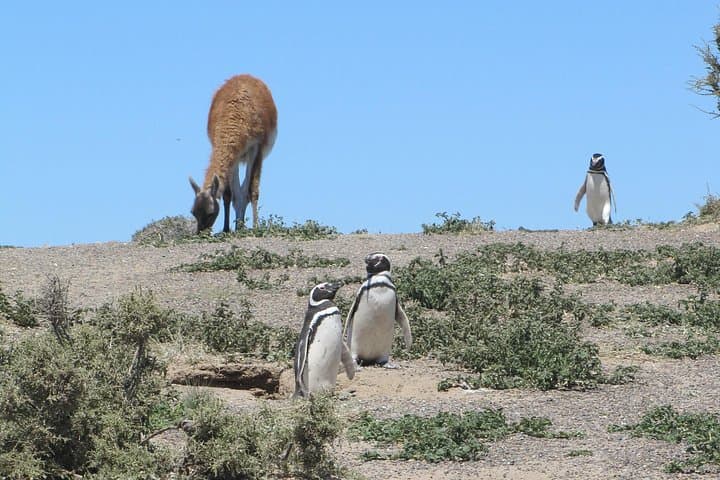
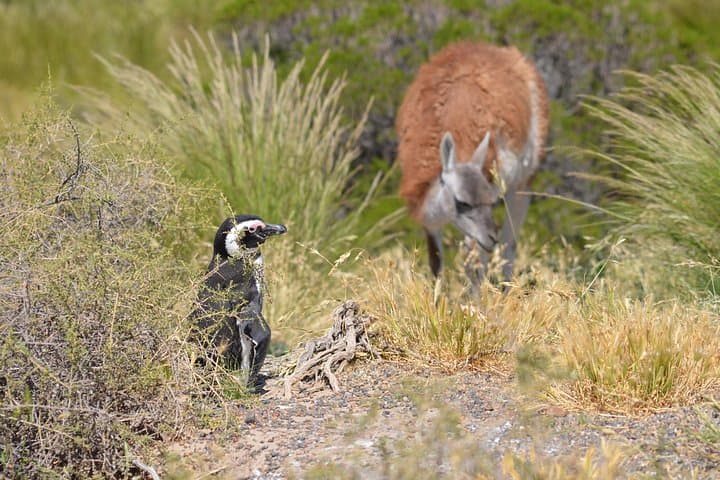
Expect a full-day rhythm: a 400 km round trip from Puerto Madryn, roughly 6–7 hours door-to-door, with interpretive stops en route. The reserve enforces boardwalks and viewing protocols to minimize disturbance; bottled water and entrance fee are typically included. Practicalities matter — dress in windproof layers, wear sturdy shoes for uneven paths, and carry binoculars for distant shorebirds and guanacos on the steppe beyond. Facilities are basic but the site is largely accessible by adapted vehicles and ramps. For cruise-timed travelers this is a manageable, high-reward outing: close wildlife encounters, clear interpretive signage, and a compact itinerary that returns you to port the same day.
Boardwalks are positioned roughly 2 meters from nesting areas to protect birds; you can watch penguins at close range but must remain on marked paths.
Yes—many operators and the reserve provide wheelchair-accessible transportation and boardwalks, but notify the operator in advance to arrange adapted vehicles.
Most day tours include park admission and bottled water; confirm with your operator if any meals or additional transfers are provided.
Yes—this tour is designed to fit cruise port timetables, but allow for local traffic and follow the operator’s recommended return time to the ship.
Dos Océanos Viajes operates guided outdoor trips and adventures with an emphasis on safety, stewardship, and memorable experiences.
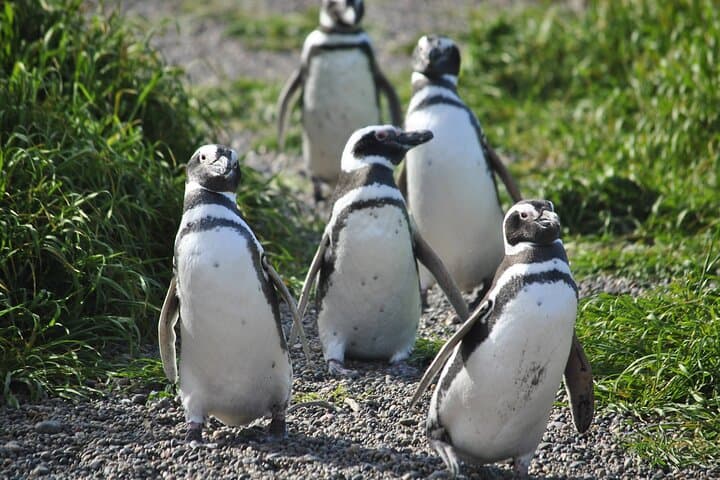
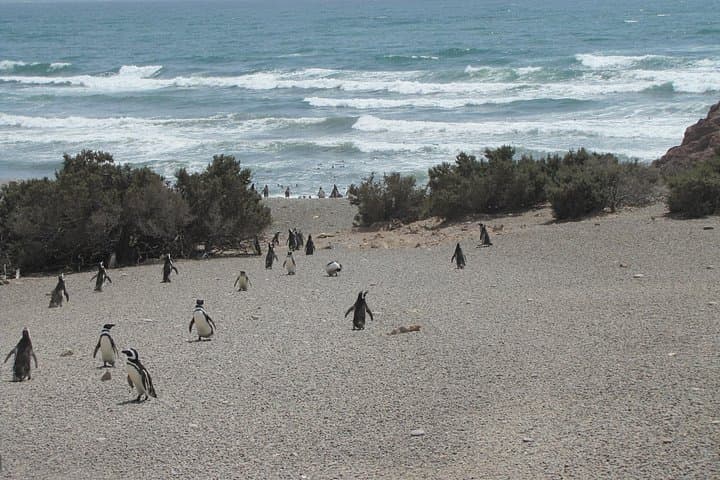
The morning light on the Atlantic cuts across low scrub and wind-creased grass as the coach eases toward a scatter of black-and-white shapes on a rock-strewn beach. At Punta Tombo the ground seems to move — thousands of Magellanic penguins waddling between burrows, bobbing on the surf, and pausing on the weathered boardwalk that keeps visitors two meters from their nests.
The morning light on the Atlantic cuts across low scrub and wind-creased grass as the coach eases toward a scatter of black-and-white shapes on a rock-strewn beach. At Punta Tombo the ground seems to move — thousands of Magellanic penguins waddling between burrows, bobbing on the surf, and pausing on the weathered boardwalk that keeps visitors two meters from their nests.
This peninsula holds the largest continental colony of Magellanic penguins; visitors follow raised paths to protect nesting sites while guides explain breeding cycles and local behavior. Geologically the promontory is a flat, marine terrace carved by Pleistocene sea levels, its pebble beaches and shale outcrops shaping cove microhabitats for seabirds. Culturally, the reserve sits within Chubut’s sheep and fishing country — estancias and small settlements speak to a gaucho history and a modern economy increasingly shaped by wildlife tourism.
Expect a full-day rhythm: a 400 km round trip from Puerto Madryn, roughly 6–7 hours door-to-door, with interpretive stops en route. The reserve enforces boardwalks and viewing protocols to minimize disturbance; bottled water and entrance fee are typically included. Practicalities matter — dress in windproof layers, wear sturdy shoes for uneven paths, and carry binoculars for distant shorebirds and guanacos on the steppe beyond. Facilities are basic but the site is largely accessible by adapted vehicles and ramps. For cruise-timed travelers this is a manageable, high-reward outing: close wildlife encounters, clear interpretive signage, and a compact itinerary that returns you to port the same day.
