THE ADVENTURE COLLECTIVE® · Independent discovery and booking for outdoor travel

Paddle through Al Thakhira’s mangrove channels on a guided 4‑hour tour to Purple Island. Expect calm tidal currents, abundant shorebirds, and an eco‑camp finish with traditional karak tea.
Paddle through Al Thakhira’s mangrove channels on a guided 4‑hour tour to Purple Island. Expect calm tidal currents, abundant shorebirds, and an eco‑camp finish with traditional karak tea.
The morning light strips the desert of its glare and the mangroves of Al Thakhira breathe life into the coastline. You push off from a small, sandy inlet and the kayaks answer with a soft slap; the channel narrows, roots thread the water, and the tide pulls you like a slow current of history and salt.
Verified experiences and guided adventures in the surrounding area.
Operated by Desert Rose Tourism · Al Thakhira, Al Khor Municipality
The morning light strips the desert of its glare and the mangroves of Al Thakhira breathe life into the coastline. You push off from a small, sandy inlet and the kayaks answer with a soft slap; the channel narrows, roots thread the water, and the tide pulls you like a slow current of history and salt.
This is Jazirat Bin Ghanim — Purple Island — a brackish lagoon carved by tidal action and sustained by a tangle of Avicennia and Rhizophora species. The shoreline holds evidence of centuries of human activity: coastal fishing settlements, shell middens and Islamic-period ruins that speak to Qatar’s maritime past. Geologically, the area is recent Holocene sedimentation where sand, silt and mangrove peat collect behind protective reefs.
Culture here is coastal and practical: morning tea on shore, boats hauled at low tide, and birdwatchers binoculars raised more often than phones. Guides emphasize the reserve’s role as a stopover for migratory species and the fragile balance between tides and life.
Practical guidance: expect tidal paddling across calm, shallow channels; distances vary by route but plan for 6–10 km of paddling inside a 4‑hour window. Wear sun-protective clothing, bring ample water and a dry bag for valuables. Tides dictate access—low tide opens mudflats and high tide reveals deeper channels and quieter bird activity. Follow the guide’s route, respect nesting areas, and leave the mangroves as you found them. At trip’s end, a shaded eco-camp awaits with karak tea and a chance to thaw salt from your gear.
The trip is rated easy — guides tailor distance and effort to group ability; basic paddling technique and a moderate level of fitness are helpful.
Yes — tide level changes channel depth and exposed mudflats; operators schedule around tides to ensure safe launch and optimal wildlife viewing.
Expect shorebirds like flamingos and herons, plus crabs and small fish; sightings depend on season and time of day.
Yes — the standard program includes private air‑conditioned transport, bottled water, tea/coffee and an eco‑camp refreshment stop.
Desert Rose Tourism operates guided outdoor trips and adventures with an emphasis on safety, stewardship, and memorable experiences.
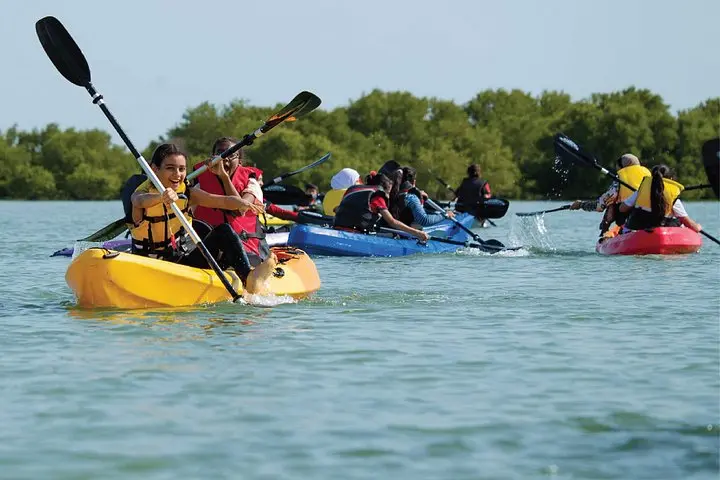
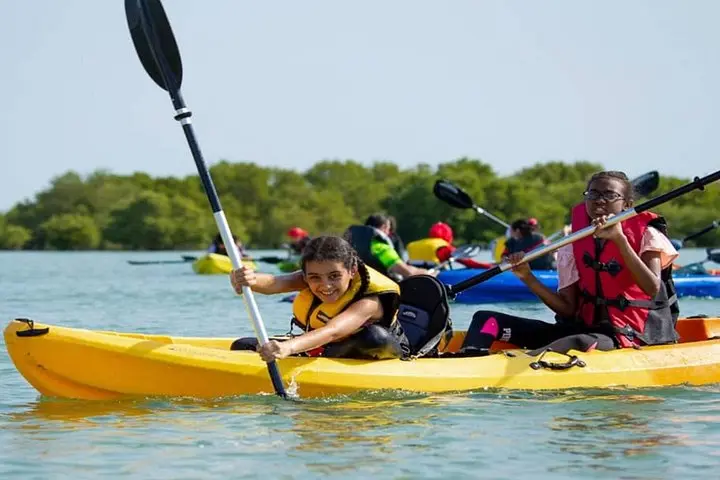
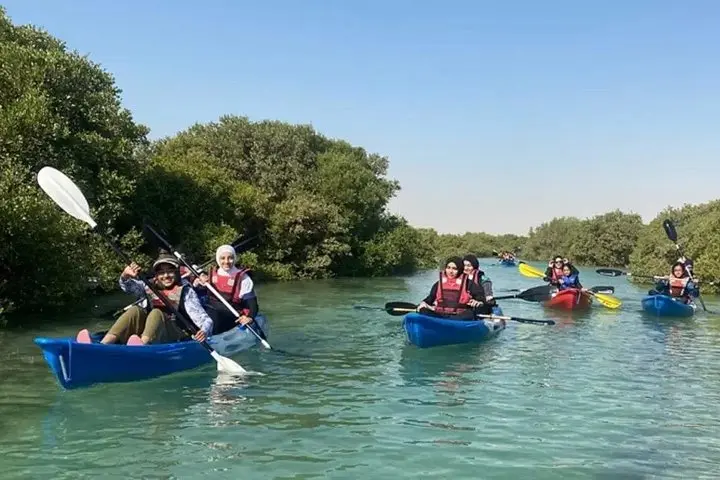
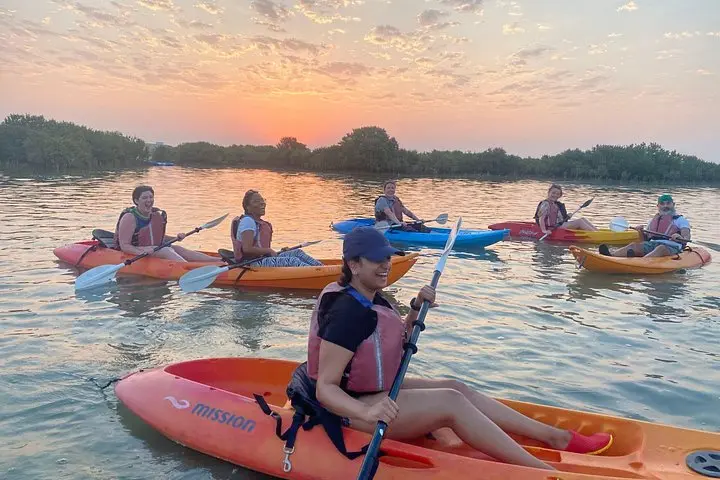
The morning light strips the desert of its glare and the mangroves of Al Thakhira breathe life into the coastline. You push off from a small, sandy inlet and the kayaks answer with a soft slap; the channel narrows, roots thread the water, and the tide pulls you like a slow current of history and salt.
The morning light strips the desert of its glare and the mangroves of Al Thakhira breathe life into the coastline. You push off from a small, sandy inlet and the kayaks answer with a soft slap; the channel narrows, roots thread the water, and the tide pulls you like a slow current of history and salt.
This is Jazirat Bin Ghanim — Purple Island — a brackish lagoon carved by tidal action and sustained by a tangle of Avicennia and Rhizophora species. The shoreline holds evidence of centuries of human activity: coastal fishing settlements, shell middens and Islamic-period ruins that speak to Qatar’s maritime past. Geologically, the area is recent Holocene sedimentation where sand, silt and mangrove peat collect behind protective reefs.
Culture here is coastal and practical: morning tea on shore, boats hauled at low tide, and birdwatchers binoculars raised more often than phones. Guides emphasize the reserve’s role as a stopover for migratory species and the fragile balance between tides and life.
Practical guidance: expect tidal paddling across calm, shallow channels; distances vary by route but plan for 6–10 km of paddling inside a 4‑hour window. Wear sun-protective clothing, bring ample water and a dry bag for valuables. Tides dictate access—low tide opens mudflats and high tide reveals deeper channels and quieter bird activity. Follow the guide’s route, respect nesting areas, and leave the mangroves as you found them. At trip’s end, a shaded eco-camp awaits with karak tea and a chance to thaw salt from your gear.