THE ADVENTURE COLLECTIVE® · Independent discovery and booking for outdoor travel

Drive west from Doha into wind-swept flats to stand beneath Richard Serra’s monumental steel plates and inspect Mushroom Rock’s wind-carved base. This half-day tour combines modern art, desert geology, and short walks across striking coastal terrain.
Drive west from Doha into wind-swept flats to stand beneath Richard Serra’s monumental steel plates and inspect Mushroom Rock’s wind-carved base. This half-day tour combines modern art, desert geology, and short walks across striking coastal terrain.
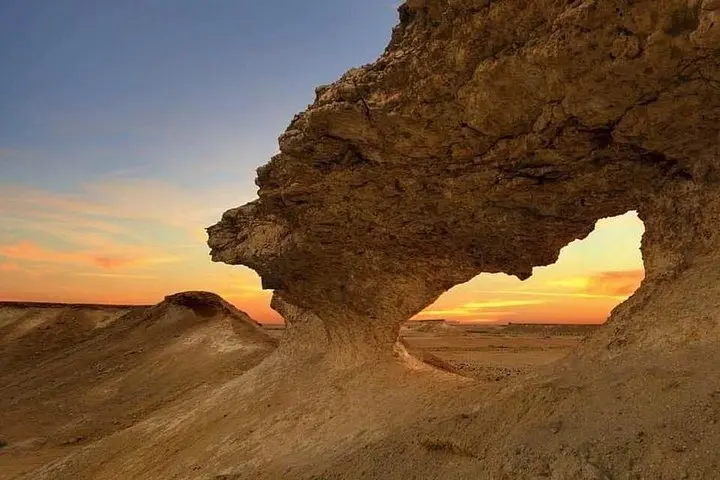
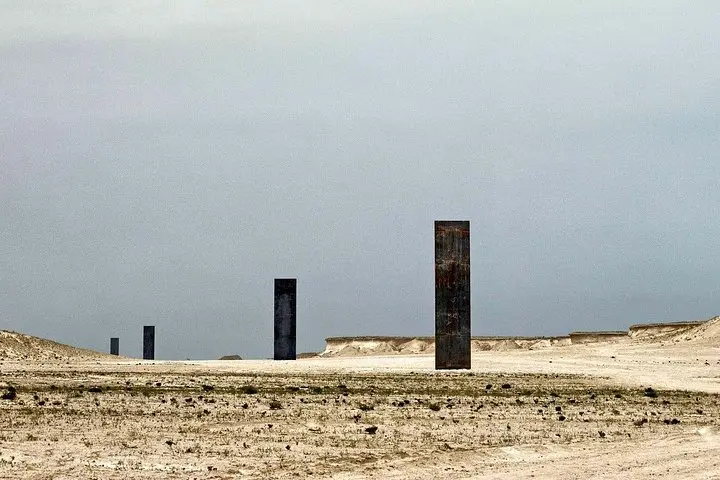
You step out of the air-conditioned vehicle into a silence that seems to push back—wind working the sand into ripples, the horizon a flat, shifting line. The four towering steel plates of Richard Serra’s East–West/West–East cut the sky, their rusted faces changing tone as the sun moves. Nearby, Mushroom Rock perches like a weathered guardian, its pedestal shaped by millennia of wind and grit.
Verified experiences and guided adventures in the surrounding area.
Operated by Doha Tourism · Zekreet, Al Rayyan
You step out of the air-conditioned vehicle into a silence that seems to push back—wind working the sand into ripples, the horizon a flat, shifting line. The four towering steel plates of Richard Serra’s East–West/West–East cut the sky, their rusted faces changing tone as the sun moves. Nearby, Mushroom Rock perches like a weathered guardian, its pedestal shaped by millennia of wind and grit.
This stretch of Qatar’s west coast sits where limestone bedrock meets aeolian sand. Zekreet and the Brouq reserve carry human traces—small forts and pastoral sites—alongside fossilized shells and strata that tell of a time when the sea lay closer. Serra’s intervention deliberately engages that topography: heavy steel aligned against open desert, a modern marker set into an ancient geological rhythm.
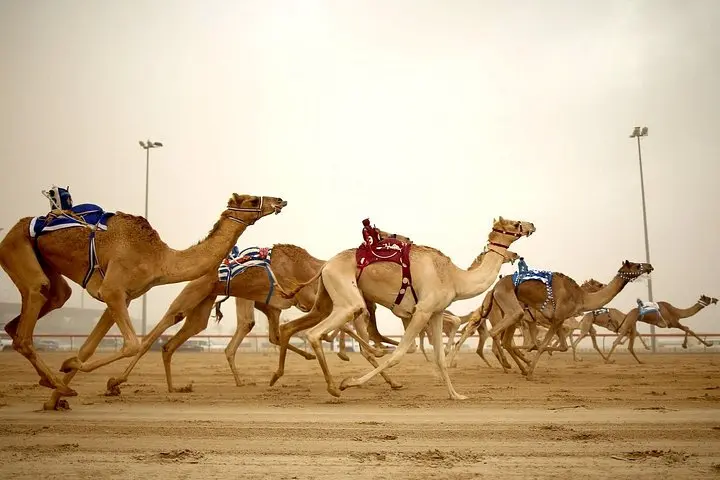
Culturally, the area is quietly important; locals use these flats for camel training and weekend excursions, preserving a direct relationship with land and animals. Practicalities matter here: expect loose sand, sudden gusts, and few services. Walks to viewpoints are short but uneven; shade is minimal.
Plan for early morning or late afternoon light for best photos and cooler temperatures. Carry at least 1–2 liters of water, sun protection, and shoes you don’t mind getting sandy. Respect signage—this is a protected landscape—and give wildlife space. The rewards are simple and vivid: colossal steel, wind-carved stone, and the long, fierce quiet of Qatar’s western shore.
The tour typically lasts 4–5 hours including pickup from Doha and stops at the camel track, Zekreet Fort, the Serra sculpture, and Mushroom Rock.
Shade and facilities are minimal; expect basic viewing areas but no permanent restrooms—plan accordingly.
Drone rules vary—check with your operator and the tour provider beforehand; avoid flying over wildlife or the sculpture without explicit permission.
Short walks are involved; children and seniors can participate but should be able to manage sandy, uneven ground and limited amenities.
Doha Tourism operates guided outdoor trips and adventures with an emphasis on safety, stewardship, and memorable experiences.
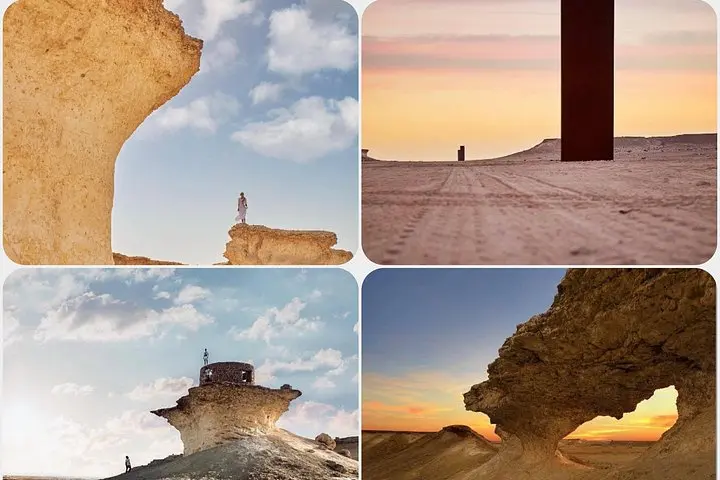
You step out of the air-conditioned vehicle into a silence that seems to push back—wind working the sand into ripples, the horizon a flat, shifting line. The four towering steel plates of Richard Serra’s East–West/West–East cut the sky, their rusted faces changing tone as the sun moves. Nearby, Mushroom Rock perches like a weathered guardian, its pedestal shaped by millennia of wind and grit.
You step out of the air-conditioned vehicle into a silence that seems to push back—wind working the sand into ripples, the horizon a flat, shifting line. The four towering steel plates of Richard Serra’s East–West/West–East cut the sky, their rusted faces changing tone as the sun moves. Nearby, Mushroom Rock perches like a weathered guardian, its pedestal shaped by millennia of wind and grit.
This stretch of Qatar’s west coast sits where limestone bedrock meets aeolian sand. Zekreet and the Brouq reserve carry human traces—small forts and pastoral sites—alongside fossilized shells and strata that tell of a time when the sea lay closer. Serra’s intervention deliberately engages that topography: heavy steel aligned against open desert, a modern marker set into an ancient geological rhythm.
Culturally, the area is quietly important; locals use these flats for camel training and weekend excursions, preserving a direct relationship with land and animals. Practicalities matter here: expect loose sand, sudden gusts, and few services. Walks to viewpoints are short but uneven; shade is minimal.
Plan for early morning or late afternoon light for best photos and cooler temperatures. Carry at least 1–2 liters of water, sun protection, and shoes you don’t mind getting sandy. Respect signage—this is a protected landscape—and give wildlife space. The rewards are simple and vivid: colossal steel, wind-carved stone, and the long, fierce quiet of Qatar’s western shore.