THE ADVENTURE COLLECTIVE® · Independent discovery and booking for outdoor travel

Spend a day from Cusco to Q'eswachaka, the last functional Inca rope bridge, with a private guide, meals, and visits to lagoons and archaeological sites. Cross 28 metres of woven ichu if you dare, and witness an annual community tradition that keeps an ancient technique alive.
Spend a day from Cusco to Q'eswachaka, the last functional Inca rope bridge, with a private guide, meals, and visits to lagoons and archaeological sites. Cross 28 metres of woven ichu if you dare, and witness an annual community tradition that keeps an ancient technique alive.
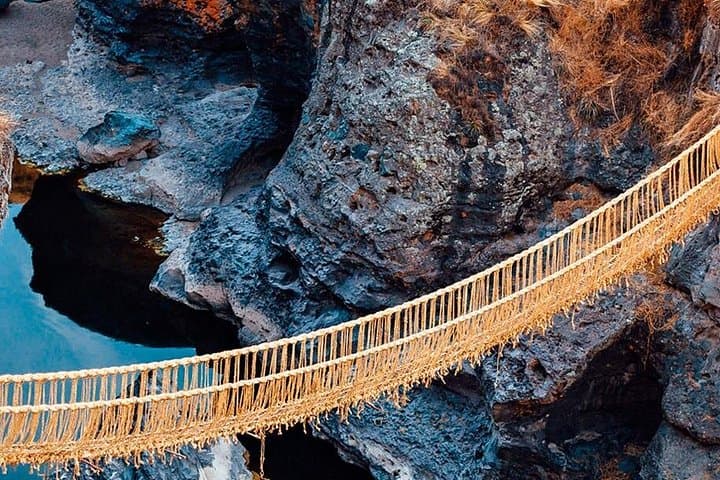
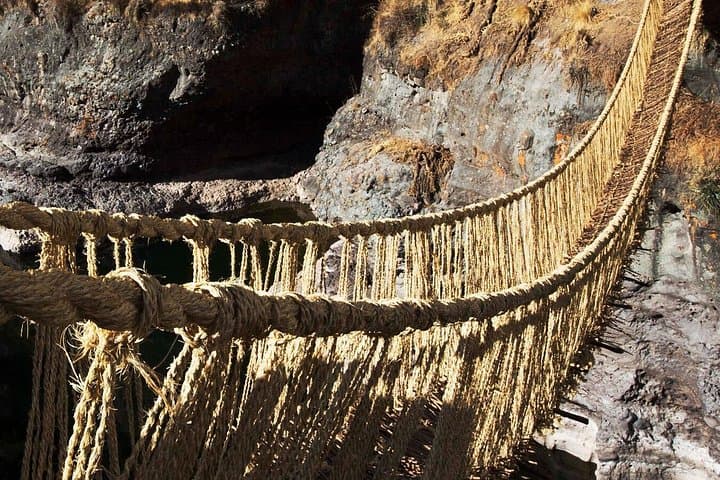
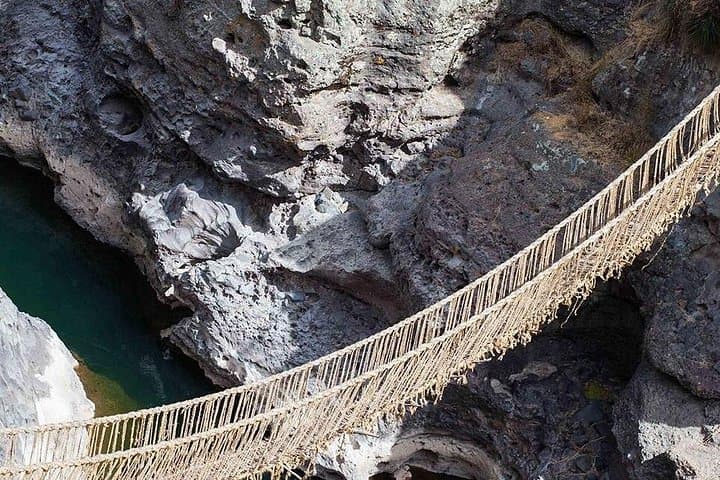
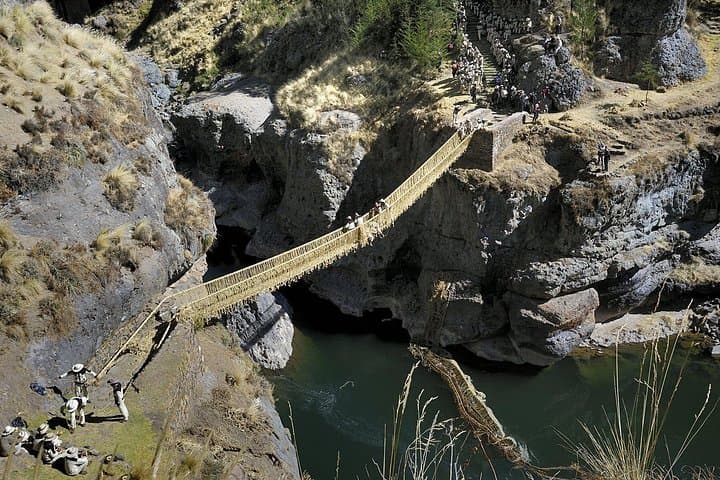
Morning light slices across Andean pasture as the minivan climbs out of Cusco and the air sharpens with puna grass and distant rock. By midmorning the landscape opens to a string of highland lagoons—mirror flats rimmed with reeds—before the road drops toward the Apurímac gorge where Q'eswachaka hangs, 28 metres of braided ichu fiber spanning a gorge that still asks for courage.
Verified experiences and guided adventures in the surrounding area.
Operated by Minka Peru Expeditions · Quehue, Cusco
Morning light slices across Andean pasture as the minivan climbs out of Cusco and the air sharpens with puna grass and distant rock. By midmorning the landscape opens to a string of highland lagoons—mirror flats rimmed with reeds—before the road drops toward the Apurímac gorge where Q'eswachaka hangs, 28 metres of braided ichu fiber spanning a gorge that still asks for courage.
The bridge is not a museum piece but a living ritual. Its origins stretch to the Inca road network; every year local communities take part in a communal rebuilding that folds ancestral weaving technique, offerings to Pachamama, and a social contract into the span itself. Geologically the canyon is carved by the Apurímac River, a deep, fast channel with steep stone walls that shaped both pre-Columbian routes and modern viewpoints.
Cultural context arrives in small details: the rhythmic clack of rebozos, the felt hats of Quechua-speaking women, and stone structures at nearby Rumicolqa that nod to Tiwanaku–Huari and later Inca reworking.
Practical side: the full-day private outing runs roughly 11 hours from hotel pickup in Cusco and includes guides, transport, and meals. Expect high-elevation sun, short walks, and a momentary adrenaline spike while crossing the woven bridge. Wear ankle-supporting footwear, bring layers for wind and sun, and allow for slow walking at altitude. Photographs are plentiful—plan battery power and a small dry bag for ash or river spray. Return to Cusco in the late afternoon with an appreciation for living heritage and a neat, physical reminder that some bridges keep traditions tethered to place.
The private day trip runs about 10–11 hours door-to-door, with early morning pickup and return in the late afternoon.
Most people can, but the bridge sways and requires steady balance; the guide will advise and crossings are voluntary.
Families and older travelers join frequently; discuss mobility limits with the operator—there are short uneven walks and altitude to consider.
Yes—breakfast, lunch, bilingual professional guide, and transport are included in the tour price.
Minka Peru Expeditions operates guided outdoor trips and adventures with an emphasis on safety, stewardship, and memorable experiences.
Morning light slices across Andean pasture as the minivan climbs out of Cusco and the air sharpens with puna grass and distant rock. By midmorning the landscape opens to a string of highland lagoons—mirror flats rimmed with reeds—before the road drops toward the Apurímac gorge where Q'eswachaka hangs, 28 metres of braided ichu fiber spanning a gorge that still asks for courage.
Morning light slices across Andean pasture as the minivan climbs out of Cusco and the air sharpens with puna grass and distant rock. By midmorning the landscape opens to a string of highland lagoons—mirror flats rimmed with reeds—before the road drops toward the Apurímac gorge where Q'eswachaka hangs, 28 metres of braided ichu fiber spanning a gorge that still asks for courage.
The bridge is not a museum piece but a living ritual. Its origins stretch to the Inca road network; every year local communities take part in a communal rebuilding that folds ancestral weaving technique, offerings to Pachamama, and a social contract into the span itself. Geologically the canyon is carved by the Apurímac River, a deep, fast channel with steep stone walls that shaped both pre-Columbian routes and modern viewpoints.
Cultural context arrives in small details: the rhythmic clack of rebozos, the felt hats of Quechua-speaking women, and stone structures at nearby Rumicolqa that nod to Tiwanaku–Huari and later Inca reworking.
Practical side: the full-day private outing runs roughly 11 hours from hotel pickup in Cusco and includes guides, transport, and meals. Expect high-elevation sun, short walks, and a momentary adrenaline spike while crossing the woven bridge. Wear ankle-supporting footwear, bring layers for wind and sun, and allow for slow walking at altitude. Photographs are plentiful—plan battery power and a small dry bag for ash or river spray. Return to Cusco in the late afternoon with an appreciation for living heritage and a neat, physical reminder that some bridges keep traditions tethered to place.