THE ADVENTURE COLLECTIVE® · Independent discovery and booking for outdoor travel

Spend a full day from Cusco to cross Q'eswachaka, the last living Inca rope bridge. This cultural outing pairs a scenic highland drive with an up-close look at traditional Quechua engineering.
Spend a full day from Cusco to cross Q'eswachaka, the last living Inca rope bridge. This cultural outing pairs a scenic highland drive with an up-close look at traditional Quechua engineering.
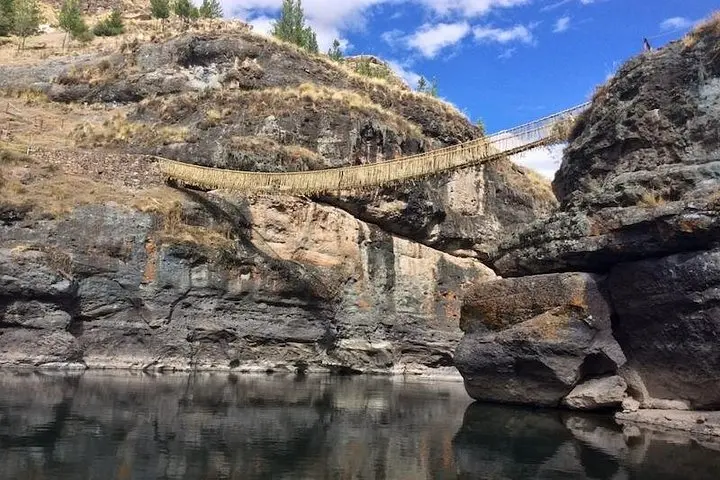
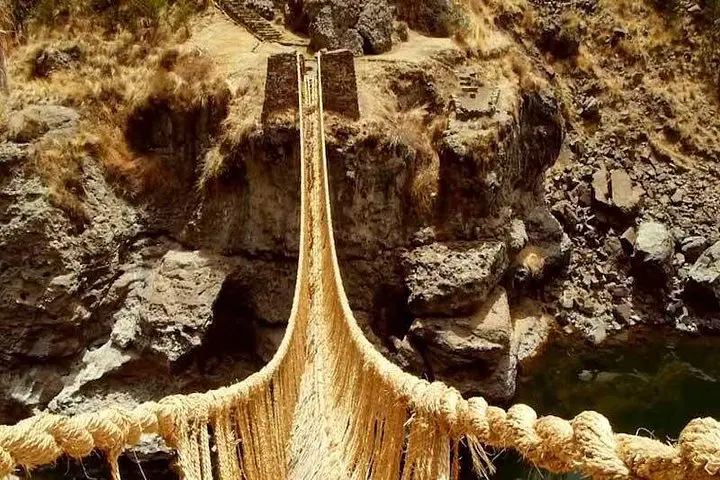
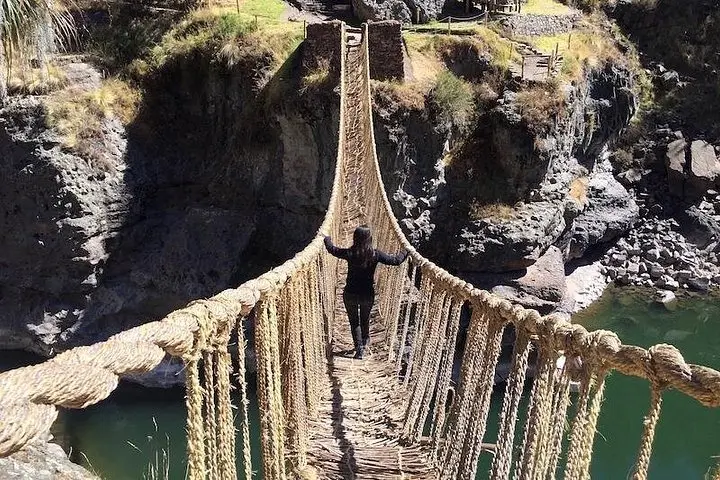
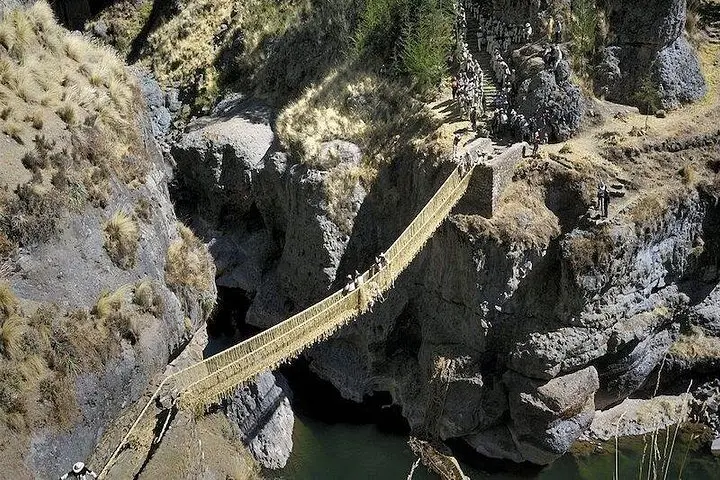
A highland breeze meets the sound of woven ichu as the road drops into the Canas valley and Q'eswachaka appears: a taut span of puna grass stretching 28 meters between rocky banks. On a clear morning the Andes lay in layers behind the bridge; the river below dares you to look down as the bridge sways with each careful step.
Verified experiences and guided adventures in the surrounding area.
Operated by Machu Picchu Peru Cusco · Yanaoca, Cusco Region
A highland breeze meets the sound of woven ichu as the road drops into the Canas valley and Q'eswachaka appears: a taut span of puna grass stretching 28 meters between rocky banks. On a clear morning the Andes lay in layers behind the bridge; the river below dares you to look down as the bridge sways with each careful step.
Built and rebuilt by local communities for centuries, Q'eswachaka is the last functioning Inca-style suspension bridge. Its construction—bundles of ichu grass twisted and braided into ropes—reflects Andean engineering adapted to steep terrain, seasonal floods and communal responsibility. The surrounding landscape shows folded volcanic and sedimentary rock uplifted by the Andes, and small agricultural terraces trace patterns of pre-Columbian land use.
Visitors typically arrive after a three-hour drive from Cusco, passing lagoons and small Quechua towns where people still speak the ancestral language and maintain weaving and agricultural traditions. A bilingual guide explains the bridge’s ritual rebuilding cycle, a living cultural practice that binds neighboring communities.
Practical side: expect a full day—pickups around 06:00 and return near 19:00—so prepare for high-altitude sun, wind, and a short, unpaved walk to the bridge. The crossing is manageable but moves; those with fear of heights or cardiovascular concerns should evaluate before booking. Bring waterproof layers, sun protection, and cash for community donations or snacks. Photography is excellent in morning light, and the bridge is best visited during dry months for firmer trails. With respect and basic preparation, the Q'eswachaka day trip combines tangible history with a genuine hands-on cultural encounter.
The round-trip drive is about three hours each way depending on traffic and road conditions—expect a 10–11 hour day including stops.
Most travelers can cross, but those with severe fear of heights or cardiovascular issues should not; the bridge moves and sits at high altitude.
Yes—this tour typically includes lunch with local dishes provided during the visit to the community near the bridge.
Communities traditionally rebuild sections on a ritual cycle every few years; your guide can explain the current schedule and community role.
Machu Picchu Peru Cusco operates guided outdoor trips and adventures with an emphasis on safety, stewardship, and memorable experiences.
A highland breeze meets the sound of woven ichu as the road drops into the Canas valley and Q'eswachaka appears: a taut span of puna grass stretching 28 meters between rocky banks. On a clear morning the Andes lay in layers behind the bridge; the river below dares you to look down as the bridge sways with each careful step.
A highland breeze meets the sound of woven ichu as the road drops into the Canas valley and Q'eswachaka appears: a taut span of puna grass stretching 28 meters between rocky banks. On a clear morning the Andes lay in layers behind the bridge; the river below dares you to look down as the bridge sways with each careful step.
Built and rebuilt by local communities for centuries, Q'eswachaka is the last functioning Inca-style suspension bridge. Its construction—bundles of ichu grass twisted and braided into ropes—reflects Andean engineering adapted to steep terrain, seasonal floods and communal responsibility. The surrounding landscape shows folded volcanic and sedimentary rock uplifted by the Andes, and small agricultural terraces trace patterns of pre-Columbian land use.
Visitors typically arrive after a three-hour drive from Cusco, passing lagoons and small Quechua towns where people still speak the ancestral language and maintain weaving and agricultural traditions. A bilingual guide explains the bridge’s ritual rebuilding cycle, a living cultural practice that binds neighboring communities.
Practical side: expect a full day—pickups around 06:00 and return near 19:00—so prepare for high-altitude sun, wind, and a short, unpaved walk to the bridge. The crossing is manageable but moves; those with fear of heights or cardiovascular concerns should evaluate before booking. Bring waterproof layers, sun protection, and cash for community donations or snacks. Photography is excellent in morning light, and the bridge is best visited during dry months for firmer trails. With respect and basic preparation, the Q'eswachaka day trip combines tangible history with a genuine hands-on cultural encounter.