THE ADVENTURE COLLECTIVE® · Independent discovery and booking for outdoor travel

Experience a living piece of Inca engineering on a full-day private tour from Cusco. Visit the annually rebuilt Q’eswachaka rope bridge, take in panoramic views of four high Andean lagoons, and meet local communities who keep this tradition alive.
Experience a living piece of Inca engineering on a full-day private tour from Cusco. Visit the annually rebuilt Q’eswachaka rope bridge, take in panoramic views of four high Andean lagoons, and meet local communities who keep this tradition alive.
Morning light strips across puna grass as the minibús climbs out of Cusco, and the Andes open in layers—rock, scrub, and the thin blue of high-altitude lakes. By midmorning the road threads through small Quechua communities; the guide points out stone corrals and fields cut into the slope, while the Apurímac River, far below, dares you to imagine crossing it on woven fiber.
Verified experiences and guided adventures in the surrounding area.
Operated by Machupicchu Holiday · Cusco, Cusco
Morning light strips across puna grass as the minibús climbs out of Cusco, and the Andes open in layers—rock, scrub, and the thin blue of high-altitude lakes. By midmorning the road threads through small Quechua communities; the guide points out stone corrals and fields cut into the slope, while the Apurímac River, far below, dares you to imagine crossing it on woven fiber.
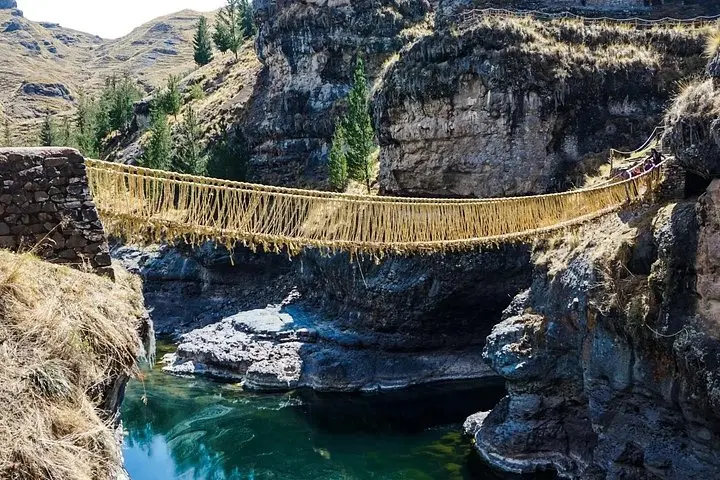
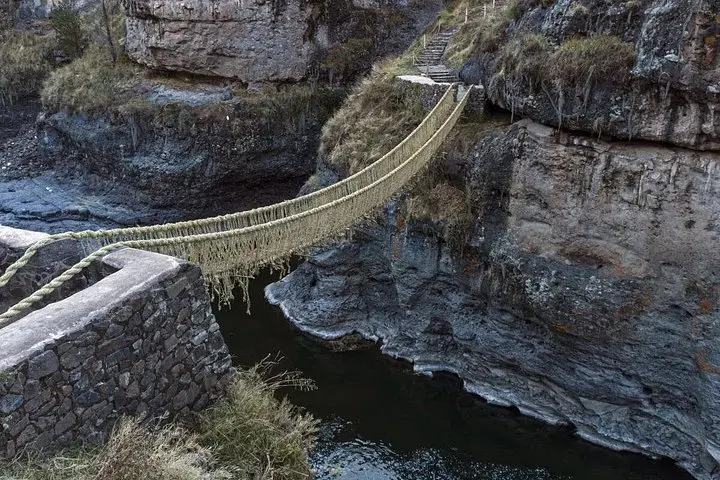
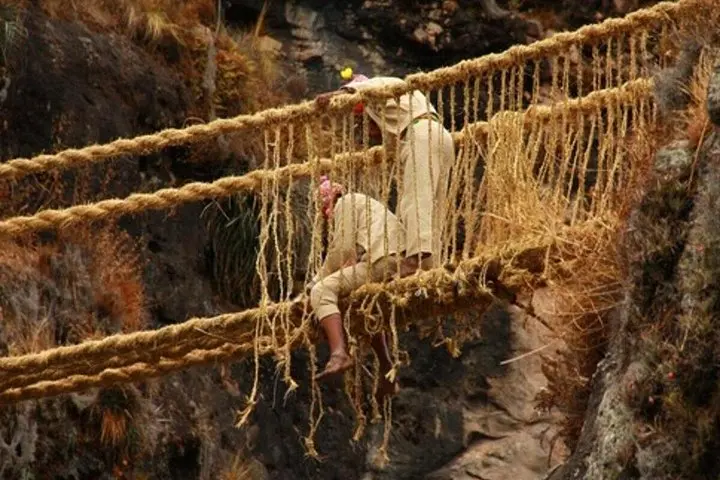
Q’eswachaka is one of the last living examples of Inca suspension engineering. Every year local communities reweave the bridge from ichu grass using techniques passed down for centuries; UNESCO recognizes this rebuilding as Intangible Cultural Heritage. Geologically, the site sits where steep volcanic-and-sedimentary ridges feed narrow canyon walls, and the four nearby lagoons—Pomacanchi, Acopia, Asnaqocha, and Pampamarca—collect meltwater in basins rimmed by peat and puna grass.
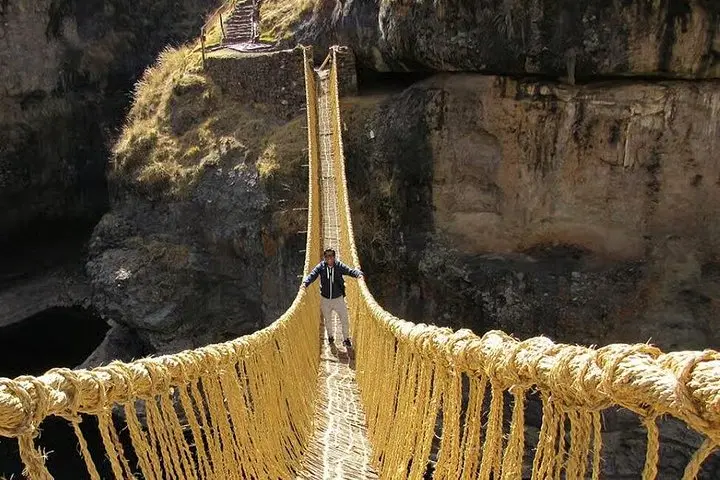
Culturally, the visit emphasizes people over relics: artisans, elders, and farmers explain the ritual and labor behind the bridge’s upkeep. Visitors can cross the braided span if conditions allow, step lightly across fiber ropes, and photograph the bridge angled against the canyon.
Practical notes: the full-day tour runs about 10 hours round-trip from Cusco with several hours of driving on paved and gravel roads. Expect short, uneven walking and high altitude—around 3,600–4,000 m (11,800–13,100 ft). Dress in layers, hydrate, and bring cash for snacks or market purchases; restroom facilities are limited. The experience pairs straightforward logistics with direct cultural exchange, making it a good single-day option for travelers who want history, landscape, and community-led heritage in one trip.
Expect about 2.5–3 hours each way depending on traffic and road conditions; the full tour is roughly 10 hours including stops.
Yes—many visitors cross under guide supervision; follow instructions, cross single-file, and avoid running or swinging the bridge.
Yes—Q’eswachaka sits around 3,600–4,000 m. Acclimatize in Cusco, drink water, eat light, and speak with your guide if you feel unwell.
Basic restrooms and a local restaurant lunch are included on most tours, but carry small change for snacks or souvenirs in rural markets.
Machupicchu Holiday operates guided outdoor trips and adventures with an emphasis on safety, stewardship, and memorable experiences.
Morning light strips across puna grass as the minibús climbs out of Cusco, and the Andes open in layers—rock, scrub, and the thin blue of high-altitude lakes. By midmorning the road threads through small Quechua communities; the guide points out stone corrals and fields cut into the slope, while the Apurímac River, far below, dares you to imagine crossing it on woven fiber.
Morning light strips across puna grass as the minibús climbs out of Cusco, and the Andes open in layers—rock, scrub, and the thin blue of high-altitude lakes. By midmorning the road threads through small Quechua communities; the guide points out stone corrals and fields cut into the slope, while the Apurímac River, far below, dares you to imagine crossing it on woven fiber.
Q’eswachaka is one of the last living examples of Inca suspension engineering. Every year local communities reweave the bridge from ichu grass using techniques passed down for centuries; UNESCO recognizes this rebuilding as Intangible Cultural Heritage. Geologically, the site sits where steep volcanic-and-sedimentary ridges feed narrow canyon walls, and the four nearby lagoons—Pomacanchi, Acopia, Asnaqocha, and Pampamarca—collect meltwater in basins rimmed by peat and puna grass.
Culturally, the visit emphasizes people over relics: artisans, elders, and farmers explain the ritual and labor behind the bridge’s upkeep. Visitors can cross the braided span if conditions allow, step lightly across fiber ropes, and photograph the bridge angled against the canyon.
Practical notes: the full-day tour runs about 10 hours round-trip from Cusco with several hours of driving on paved and gravel roads. Expect short, uneven walking and high altitude—around 3,600–4,000 m (11,800–13,100 ft). Dress in layers, hydrate, and bring cash for snacks or market purchases; restroom facilities are limited. The experience pairs straightforward logistics with direct cultural exchange, making it a good single-day option for travelers who want history, landscape, and community-led heritage in one trip.