THE ADVENTURE COLLECTIVE® · Independent discovery and booking for outdoor travel
Practice Taichi in a Taoist temple on Qingcheng Mountain, then settle into a guided tea-tasting that highlights local green, black, and white teas. This 2.5‑hour pairing is beginner-friendly and rooted in the mountain’s Taoist heritage.
Practice Taichi in a Taoist temple on Qingcheng Mountain, then settle into a guided tea-tasting that highlights local green, black, and white teas. This 2.5‑hour pairing is beginner-friendly and rooted in the mountain’s Taoist heritage.
Morning mist lifts through ancient cypress as participants step onto a temple courtyard at Qingcheng Mountain, the air cool and slow as a practiced breath. A local Taichi master leads a small group through deliberate movements grounded in Taoist practice — pushes and yields, a clear rhythm between motion and stillness. The mountain seems to watch, its slopes nudging visitors to slow down.
Verified experiences and guided adventures in the surrounding area.
Operated by tripApanda · Dujiangyan, Sichuan
Morning mist lifts through ancient cypress as participants step onto a temple courtyard at Qingcheng Mountain, the air cool and slow as a practiced breath. A local Taichi master leads a small group through deliberate movements grounded in Taoist practice — pushes and yields, a clear rhythm between motion and stillness. The mountain seems to watch, its slopes nudging visitors to slow down.
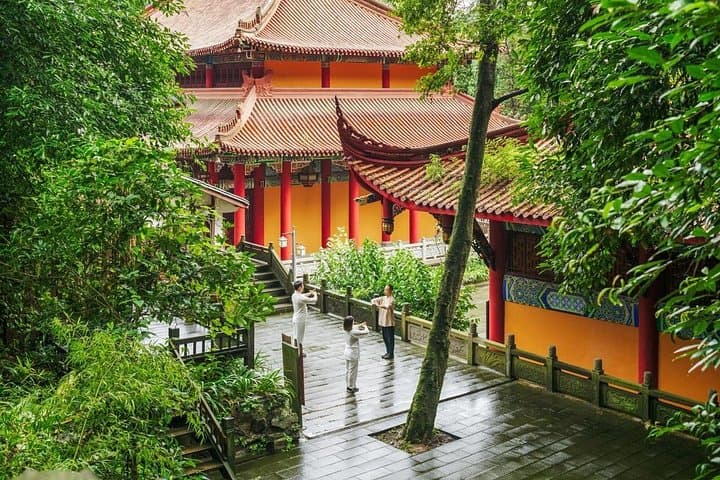
Qingcheng Mountain is one of China’s sacred Taoist sites, with carved pathways and centuries-old temples set against Sichuan’s folded hills. Geologically the area is weathered schist and sandstone, its humid climate feeding dense broadleaf forest that shades stone stairways. The Taichi tradition here is tied to Daoist cultivation: balance, internal energy, and a long relationship between ritual and landscape. After the class the group moves to a nearby tea house where a local host presents green, black and white teas and explains regional processing and tasting technique.
Practically, the experience is compact — about 2.5 hours — and designed for beginners. Expect uneven stone steps and cool, humid microclimates beneath the canopy. Bring quiet focus as well as light layers; the temple is an active place of worship and modest behavior is customary.
This pairing of movement and tasting offers a direct way to experience Qingcheng: embodied practice that connects to place, followed by a slow, sensory lesson in Sichuan tea culture. Plan for transport from Dujiangyan or Chengdu, and allow extra time to explore nearby temple trails if you want a longer outing.
No — the class is beginner-friendly and the master will teach foundational forms and breathing techniques.
Many local masters use slow demonstration; guides or hosts often translate, but check language availability when booking.
Dujiangyan is the nearest town; visitors can join a private transfer, take a bus, or reach the area by train/drive then local taxi to Qingcheng Mountain.
Yes — the tasting focuses on teas and light ceremonial snacks; notify the operator of dietary restrictions when booking.
tripApanda operates guided outdoor trips and adventures with an emphasis on safety, stewardship, and memorable experiences.
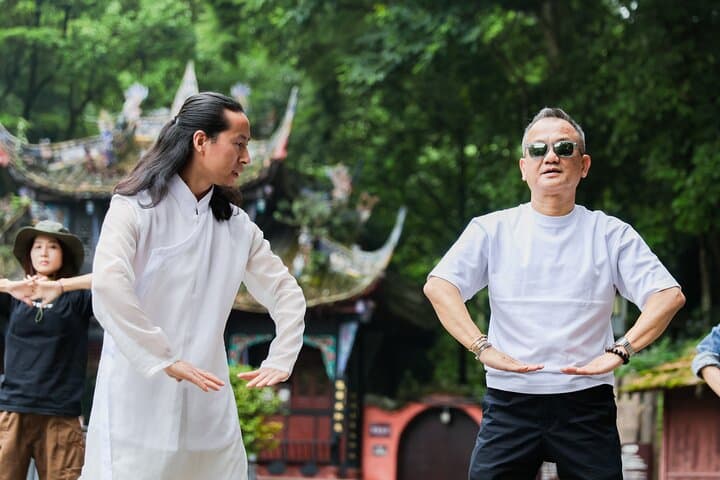
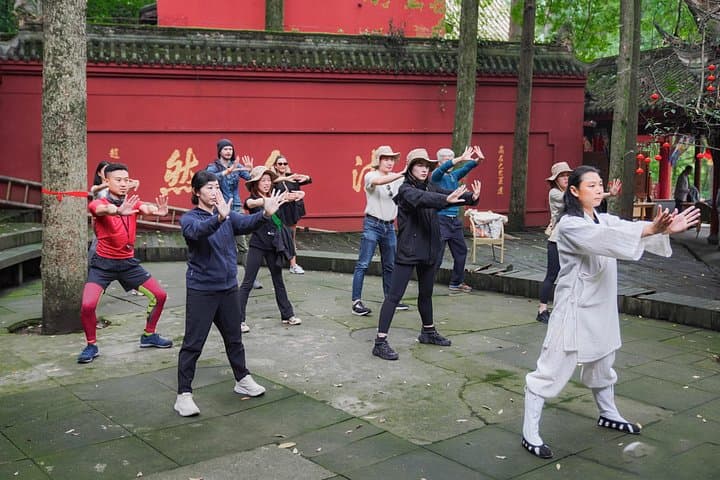

Morning mist lifts through ancient cypress as participants step onto a temple courtyard at Qingcheng Mountain, the air cool and slow as a practiced breath. A local Taichi master leads a small group through deliberate movements grounded in Taoist practice — pushes and yields, a clear rhythm between motion and stillness. The mountain seems to watch, its slopes nudging visitors to slow down.
Morning mist lifts through ancient cypress as participants step onto a temple courtyard at Qingcheng Mountain, the air cool and slow as a practiced breath. A local Taichi master leads a small group through deliberate movements grounded in Taoist practice — pushes and yields, a clear rhythm between motion and stillness. The mountain seems to watch, its slopes nudging visitors to slow down.
Qingcheng Mountain is one of China’s sacred Taoist sites, with carved pathways and centuries-old temples set against Sichuan’s folded hills. Geologically the area is weathered schist and sandstone, its humid climate feeding dense broadleaf forest that shades stone stairways. The Taichi tradition here is tied to Daoist cultivation: balance, internal energy, and a long relationship between ritual and landscape. After the class the group moves to a nearby tea house where a local host presents green, black and white teas and explains regional processing and tasting technique.
Practically, the experience is compact — about 2.5 hours — and designed for beginners. Expect uneven stone steps and cool, humid microclimates beneath the canopy. Bring quiet focus as well as light layers; the temple is an active place of worship and modest behavior is customary.
This pairing of movement and tasting offers a direct way to experience Qingcheng: embodied practice that connects to place, followed by a slow, sensory lesson in Sichuan tea culture. Plan for transport from Dujiangyan or Chengdu, and allow extra time to explore nearby temple trails if you want a longer outing.
