THE ADVENTURE COLLECTIVE® · Independent discovery and booking for outdoor travel

Throttle across low dunes with sweeping views of the Great Pyramids and the Sphinx. This guided quad-bike safari combines short off-road sections with photo stops and hotel pickup in Cairo.
Throttle across low dunes with sweeping views of the Great Pyramids and the Sphinx. This guided quad-bike safari combines short off-road sections with photo stops and hotel pickup in Cairo.
Sand sprays behind the throttle as the quad surges across low dunes, the three great pyramids resolved into a serrated horizon. The Sphinx watches from its limestone platform while the desert pushes and yields to the rhythm of your ride — wind nudging you toward wide, cinematic views of Cheops, Chephren and Mykerinus.
Verified experiences and guided adventures in the surrounding area.
Operated by Three Pyramids Tours · Giza, Giza Governorate
Sand sprays behind the throttle as the quad surges across low dunes, the three great pyramids resolved into a serrated horizon. The Sphinx watches from its limestone platform while the desert pushes and yields to the rhythm of your ride — wind nudging you toward wide, cinematic views of Cheops, Chephren and Mykerinus.
This short desert safari takes place on the Giza Plateau, a landscape of Pleistocene limestone and wind-sculpted sand that has held tombs and temples since the Fourth Dynasty, roughly 4,500 years ago. The stones you pass were quarried from nearby ridges; the terrain beneath the treads is the same that supported ancient processional ways and Bedouin travel routes for centuries. Culturally, the area around Giza blends Cairo’s urban energy with rural desert practices — expect local guides, occasional camel caravans, and vendors at the visitor edge.
Practically, the tour runs about four hours including hotel pickup and drop-off. Riders receive a short safety briefing and basic quad orientation before setting out on marked routes that keep a respectful distance from archaeological features. The desert is direct: sun can be brutal, dunes can hide ruts, and dust will find every seam. Hydrate, use sun protection, and wear closed shoes; keep speed steady if visibility is low.
This is a motorized way to feel the scale of the plateau — energetic, accessible, and anchored by one of the world’s oldest monuments. Expect photo stops, occasional crosswinds, and a guide who reads both the sand and the schedule.
No—guides provide a safety briefing and basic instruction; however, comfort with throttle/brake control is helpful.
Routes include panoramic viewpoints near the pyramids and Sphinx but follow regulations that keep vehicles off sensitive archaeological areas.
Operators typically have age bands and may require parental supervision for minors; travelers with spinal issues should avoid the tour.
Yes—pickup and drop-off from central Cairo/Giza hotels are included as part of the private tour service.
Three Pyramids Tours operates guided outdoor trips and adventures with an emphasis on safety, stewardship, and memorable experiences.
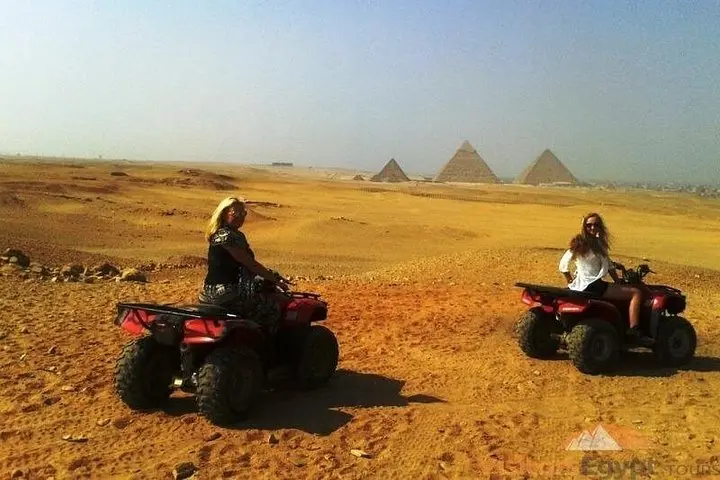
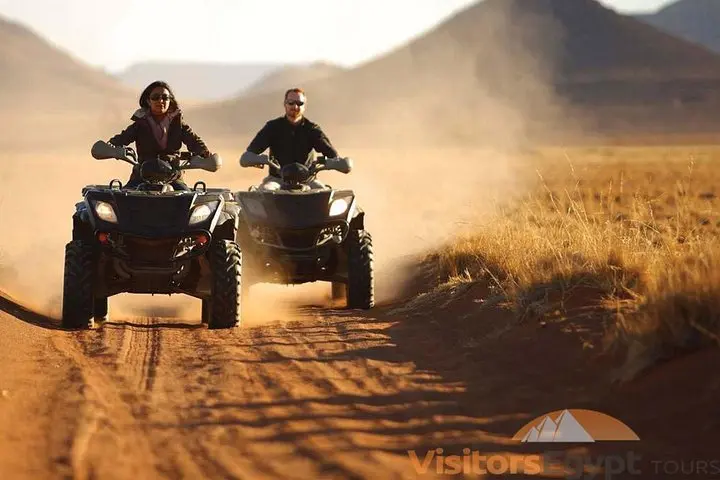
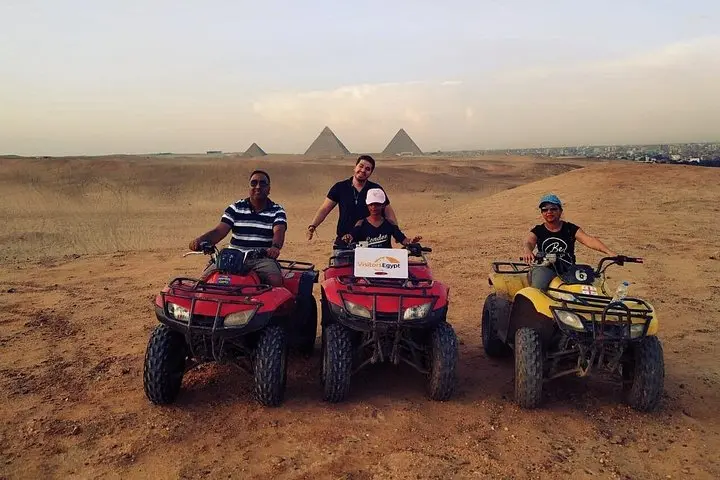
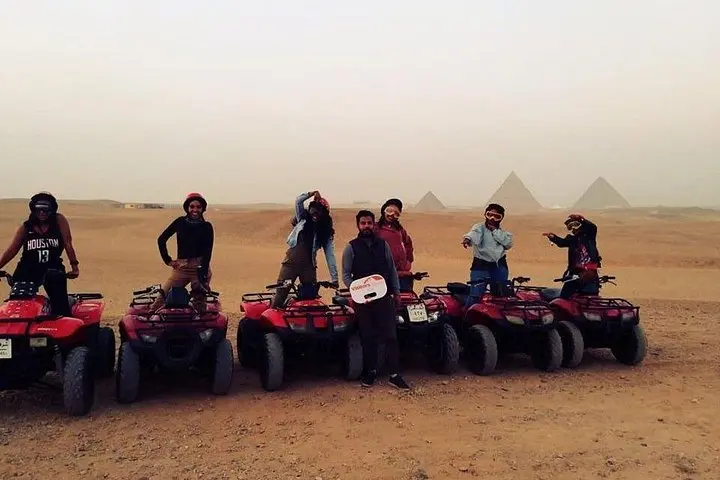
Sand sprays behind the throttle as the quad surges across low dunes, the three great pyramids resolved into a serrated horizon. The Sphinx watches from its limestone platform while the desert pushes and yields to the rhythm of your ride — wind nudging you toward wide, cinematic views of Cheops, Chephren and Mykerinus.
Sand sprays behind the throttle as the quad surges across low dunes, the three great pyramids resolved into a serrated horizon. The Sphinx watches from its limestone platform while the desert pushes and yields to the rhythm of your ride — wind nudging you toward wide, cinematic views of Cheops, Chephren and Mykerinus.
This short desert safari takes place on the Giza Plateau, a landscape of Pleistocene limestone and wind-sculpted sand that has held tombs and temples since the Fourth Dynasty, roughly 4,500 years ago. The stones you pass were quarried from nearby ridges; the terrain beneath the treads is the same that supported ancient processional ways and Bedouin travel routes for centuries. Culturally, the area around Giza blends Cairo’s urban energy with rural desert practices — expect local guides, occasional camel caravans, and vendors at the visitor edge.
Practically, the tour runs about four hours including hotel pickup and drop-off. Riders receive a short safety briefing and basic quad orientation before setting out on marked routes that keep a respectful distance from archaeological features. The desert is direct: sun can be brutal, dunes can hide ruts, and dust will find every seam. Hydrate, use sun protection, and wear closed shoes; keep speed steady if visibility is low.
This is a motorized way to feel the scale of the plateau — energetic, accessible, and anchored by one of the world’s oldest monuments. Expect photo stops, occasional crosswinds, and a guide who reads both the sand and the schedule.