THE ADVENTURE COLLECTIVE® · Independent discovery and booking for outdoor travel

Throttle across the Giza Plateau with the Great Pyramids and the Sphinx in view. This guided quad-bike desert safari combines accessible off-road riding with unmatched archaeological panoramas.
Throttle across the Giza Plateau with the Great Pyramids and the Sphinx in view. This guided quad-bike desert safari combines accessible off-road riding with unmatched archaeological panoramas.
A pickup car eases out of Cairo's traffic and into sun-bleached road; in minutes the city recedes and the desert stretches open, wind shaping low dunes that dare you forward. The tour drops you at the edge of the Giza Plateau where a line of quad bikes waits—throbbing, ready to carry you along sandy tracks with the three pyramids and the Sphinx keeping a silent, monumental watch.
Verified experiences and guided adventures in the surrounding area.
Operated by Three Pyramids Tours · Giza, Giza Governorate
A pickup car eases out of Cairo's traffic and into sun-bleached road; in minutes the city recedes and the desert stretches open, wind shaping low dunes that dare you forward. The tour drops you at the edge of the Giza Plateau where a line of quad bikes waits—throbbing, ready to carry you along sandy tracks with the three pyramids and the Sphinx keeping a silent, monumental watch.
This ride threads modern adventure through five millennia of history. The Great Pyramid of Khufu (Cheops), Khafre and Menkaure rise from a limestone plateau formed from ancient sea beds; the stones themselves tell a geological story older than recorded dynasty. Local culture remains visible—camel handlers, the call of vendors, and the long tradition of desert routes used long before motorized vehicles arrived.
Expect a mix of flat plateau tracks and short dune runs spread over roughly 15–25 km of desert terrain with negligible elevation gain but variable footing. The route focuses on views and accessible thrills rather than technical off-road maneuvers, making it suitable for first-time riders.
Practical guidance: arrive hydrated and sun-protected, wear closed shoes and long sleeves to guard against windblown sand, and follow the guide’s safety briefing—helmets and basic instruction are standard. Early morning or late afternoon slots stay cooler and offer the best light for photos. Respect archaeological boundaries: stay on permitted tracks and avoid approaching fenced monuments. After the ride you’ll be returned to your hotel, the city arriving again like a different world.
No — the tour is designed for beginners; guides provide basic instruction and the routes are not highly technical.
Yes — operators supply helmets and typically brief riders on safety before departure.
The route runs on authorized desert tracks offering panoramic views of the pyramids and the Sphinx; access to the monuments themselves remains restricted and protected.
For a full refund cancel at least 24 hours before the scheduled departure; bad weather may also prompt cancellation and refund.
Three Pyramids Tours operates guided outdoor trips and adventures with an emphasis on safety, stewardship, and memorable experiences.
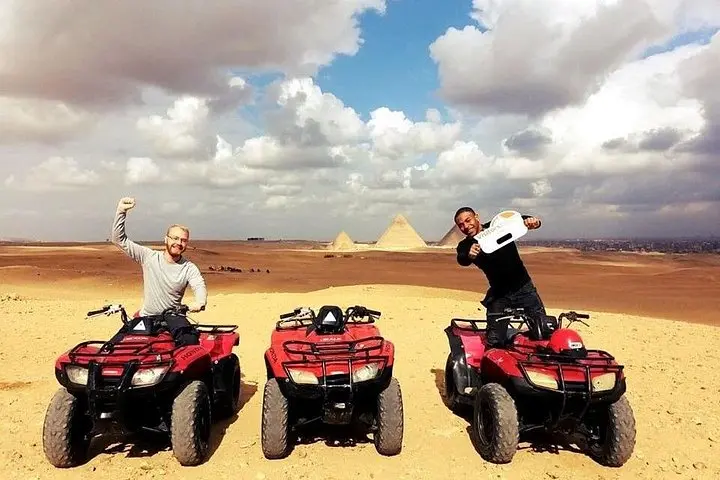
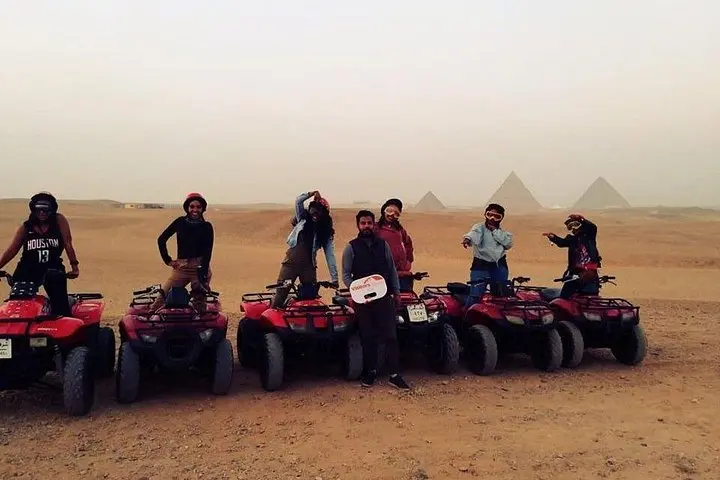
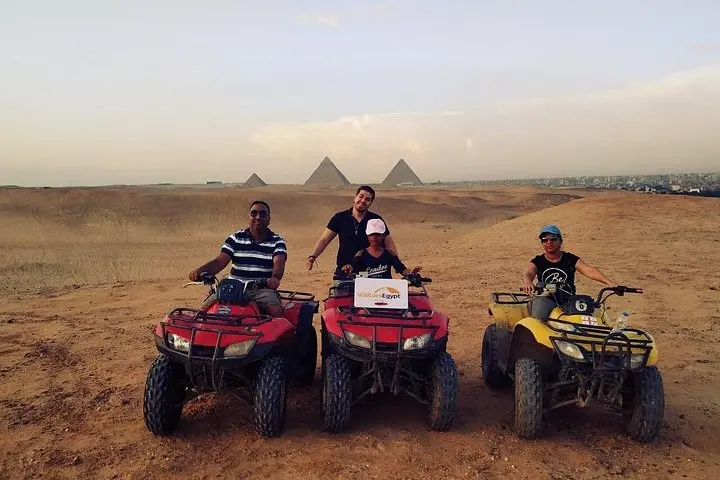
A pickup car eases out of Cairo's traffic and into sun-bleached road; in minutes the city recedes and the desert stretches open, wind shaping low dunes that dare you forward. The tour drops you at the edge of the Giza Plateau where a line of quad bikes waits—throbbing, ready to carry you along sandy tracks with the three pyramids and the Sphinx keeping a silent, monumental watch.
A pickup car eases out of Cairo's traffic and into sun-bleached road; in minutes the city recedes and the desert stretches open, wind shaping low dunes that dare you forward. The tour drops you at the edge of the Giza Plateau where a line of quad bikes waits—throbbing, ready to carry you along sandy tracks with the three pyramids and the Sphinx keeping a silent, monumental watch.
This ride threads modern adventure through five millennia of history. The Great Pyramid of Khufu (Cheops), Khafre and Menkaure rise from a limestone plateau formed from ancient sea beds; the stones themselves tell a geological story older than recorded dynasty. Local culture remains visible—camel handlers, the call of vendors, and the long tradition of desert routes used long before motorized vehicles arrived.
Expect a mix of flat plateau tracks and short dune runs spread over roughly 15–25 km of desert terrain with negligible elevation gain but variable footing. The route focuses on views and accessible thrills rather than technical off-road maneuvers, making it suitable for first-time riders.
Practical guidance: arrive hydrated and sun-protected, wear closed shoes and long sleeves to guard against windblown sand, and follow the guide’s safety briefing—helmets and basic instruction are standard. Early morning or late afternoon slots stay cooler and offer the best light for photos. Respect archaeological boundaries: stay on permitted tracks and avoid approaching fenced monuments. After the ride you’ll be returned to your hotel, the city arriving again like a different world.